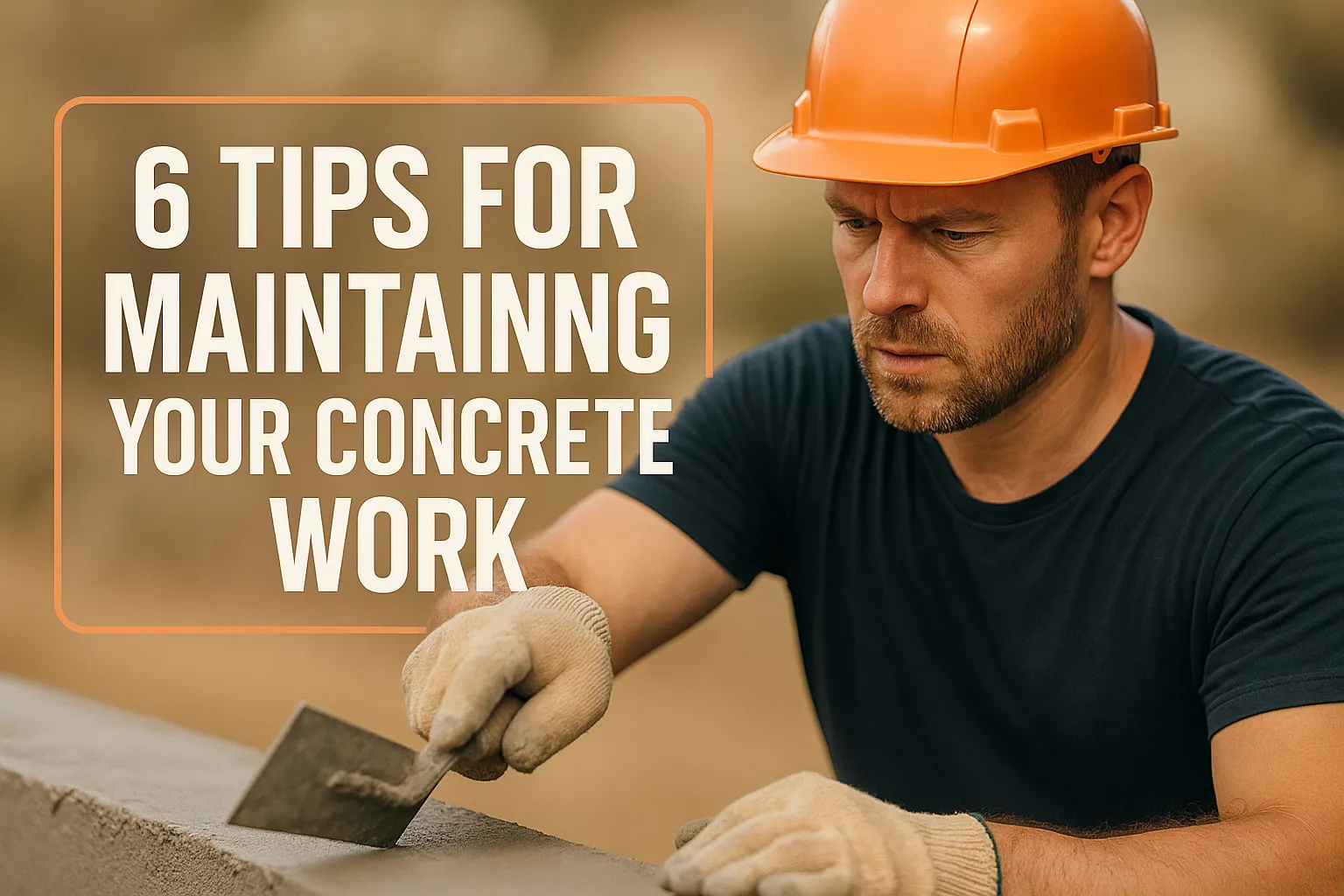
Concrete is one of the most durable and long-lasting materials used in construction. Whether it’s a driveway, patio, sidewalk, or even a concrete wall in your basement, keeping your concrete in good condition is essential to its lifespan and performance. Proper maintenance can help prevent cracks, stains, and other damage that can occur over time.
In this blog, we’ll share six simple tips for maintaining your concrete work. With just a little effort, you can keep your concrete surfaces looking great and functioning properly for years to come.
Why is Concrete Maintenance Important?
Concrete is a long-lasting construction material, and as with all other materials, it needs some attention to keep its strength and appearance. When you fail to maintain your concrete surfaces, then it may cause cracking, discoloration and even structural damage. This is the reason why concrete maintenance should be routine. This is just some of the reasons why it needs to be a part of your habit:
1. Prevent Cracking and Damage
Concrete is powerful, yet it may crack in some circumstances, like when it comes in contact with moisture, when it is subjected to a low temperature, or when it is hit heavily. These problems can be detected and solved early, and they do not translate into larger problems that require a lot of money to repair by doing regular maintenance.
2. Keep Concrete Surfaces Looking Good
Due to contact with dirt, oil, grease, and other substances, concrete may stain or become discolored. Regular washing of your concrete will make it look nice and will prolong its appearance. It could be a garage floor or an actual wall in the basement but with proper attention and care, you will have it looking fresh.
3. Improve the Lifespan of Concrete Work
The more you look after your concrete, the longer it will be. In the long run, moisture may creep into cracks or uncovered surfaces, making the concrete degrade. Regular maintenance will make the material remain strong and retain its structural integrity as long as possible.
What Are the Best Tips for Maintaining Your Concrete?
Having known the importance of concrete maintenance, now is the time to discuss the most effective methods of taking care of your concrete surfaces. These are six tips that should be considered:
1. Regularly Clean Your Concrete Surfaces
Stains such as dirt, oil and other dirt may accumulate upon concrete surfaces that making it appear cheap and worn off in the long run. Cleaning on a regular basis is the initial maintenance procedure of concrete. Here’s how you can do it:
- Sweep or Vacuum: You should sweep or vacuum your concrete surfaces on a regular basis to get rid of dirt, debris, and dust. This assists in avoiding dirt infestation on the surface.
- Pressure Wash: To remove the adamant dirt and stains, apply a pressure washer to clean your concrete. A pressure washer is particularly applicable in patios, driveways and sidewalks. Make sure that you are using the right nozzle setting and do not touch the surface too closely so as not to destroy it.
- Use a Mild Detergent: To clean the surface more intensively, combine a mild detergent and water and clean the surface using a stiff-bristle brush. Use no strenuous chemicals that might spoil the concrete.
2. Seal Concrete to Protect Against Water Damage
Concrete is porous and thus it can take up water, which can cause cracks, stains, or erosion. Surfacing: Concrete surfaces should be sealed to stop water see page into the material, leading to damage.
- Apply a Sealant: Use a concrete sealant that is of high quality and must be compatible with your surface. It has various sealants that can be applied to the outside surface, like the driveway and those used in the concrete inside, like the basement floor. Sealers create a protective coating that prevents the ingress of water and in addition, they can prevent stains caused by oil or chemicals.
- Reapply Periodically: As time passes, the sealants may decay. Always remember to apply them after every 1 to 3 years, depending on the amount of traffic or exposure to extreme weather conditions.
3. Fix Cracks and Chips Early
Cracking is one of the most common issues with concrete. The cracks may be a result of the change in temperature, movement of the ground, or wear and tear. When cracks are not treated, they may spread and lead to great damage. That is why it is critical to mend any cracks or chips as soon as possible.
- Concrete Crack Filler: In case of small cracks, you may apply the concrete crack filler or caulk. All one needs to do is clean the crack, reheat the filler, and smooth it. This will be useful in ensuring that the crack does not continue to expand and be destructive.
- Professional Repair: In case of bigger cracks or if you can see that your concrete is structurally incorrect, you should call a professional. They can examine the damage and apply the relevant equipment to correct the damage.
4. Protect Concrete from the Elements
Concrete is subjected to elements throughout the year. The winter low temperatures may cause the concrete to expand and contract, hence cracking. During summer, the surface can be parched by high heat and sun which damages the surface. Concrete will be damaged when you expose it to extreme weather, but these damages can be avoided through protection.
- Use a Concrete Driveway Cover: On external areas of concrete, such as a driveway or a patio, a cover or a tarp will be used when the weather is too extreme to work on that particular area a particularly in winter. This will prevent the freezing of your concrete by rain or snow.
- Salt-Free Ice Melt: When it is winter, do not use salt to clear your ice on your concrete. Concrete may be damaged by salt over time. Rather, apply ice melt that has no salt which is not harmful to the concrete.
5. Maintain Proper Drainage Around Concrete
Among the largest threats to concrete is water. When the concrete is surrounded by water, the water may creep into the concrete and crack and erode it. Keep your concrete work properly drained to have longevity.
- Ensure Proper Grading: It is necessary to ensure that the surrounding area of your concrete surfaces is sloped off the foundation of your home or other buildings. This assists in diverting water on the concrete area, and consequently, it does not accumulate around the concrete.
- Clean Gutters and Downspouts: A blocked gutter may lead to overflow of water on your concrete grounds. It is important to keep your gutters and downspouts clean regularly so that the rainwater does not fall onto your concrete surfaces.
6. Apply a Concrete Maintenance Product
Concrete is a material that can be maintained with several concrete maintenance products that assist in maintaining and prolonging its life. They can be used to avoid the surface being stained, wet and damaged.
- Concrete Resurfacer: Your concrete surface becomes old and has small cracks; therefore, concrete resurfacer can help to replace the look and the functionality of the concrete. This product leaves a smooth finish that is durable, and it gives the impression of new concrete.
- Concrete Wax: In another alternative, maintenance of indoor concrete surfaces can also be done using concrete wax. It offers a protective coating that serves to prevent stains and give the finish a glossy look.
Benefits of Concrete Maintenance
There are more benefits to keeping your concrete work that extend past merely ensuring that it appears nice. The following are some of the main advantages of the routine maintenance of concrete:
- Increased Longevity: Regular cleaning, sealing, and repairs help your concrete last longer, saving you money on costly repairs or replacements down the line.
- Improved Aesthetic Appeal: Well-maintained concrete looks clean, polished, and inviting. This improves the overall appearance of your property and increases its curb appeal.
Conclusion
Concrete maintenance is crucial to ensuring your concrete surfaces remain strong, durable, and visually appealing. By following these six simple tips cleaning regularly, sealing the concrete, fixing cracks, protecting the concrete from the elements, maintaining proper drainage, and using maintenance products you can extend the life of your concrete work and prevent costly repairs.
To explore more about maintaining and caring for your concrete surfaces, visit Lapans Basement Waterproofing for expert advice and services.
FAQs
It’s a good idea to clean your concrete surfaces every 2 to 3 months, or more often if the area experiences heavy foot traffic or exposure to dirt and stains.
For outdoor concrete surfaces like driveways, use a high-quality, weather-resistant concrete sealant. Make sure to apply it every 1 to 3 years for the best results.
Small cracks can be fixed using concrete crack filler or caulk. Clean the crack, apply the filler, and smooth it out with a putty knife for a clean finish.
No, using salt on concrete can cause damage over time. Instead, opt for a salt-free ice melt product that is safe for your concrete surfaces.
Yes, you can apply a concrete resurfacer yourself, but it’s important to follow the instructions carefully to achieve the best results. For large areas, consider hiring a professional.