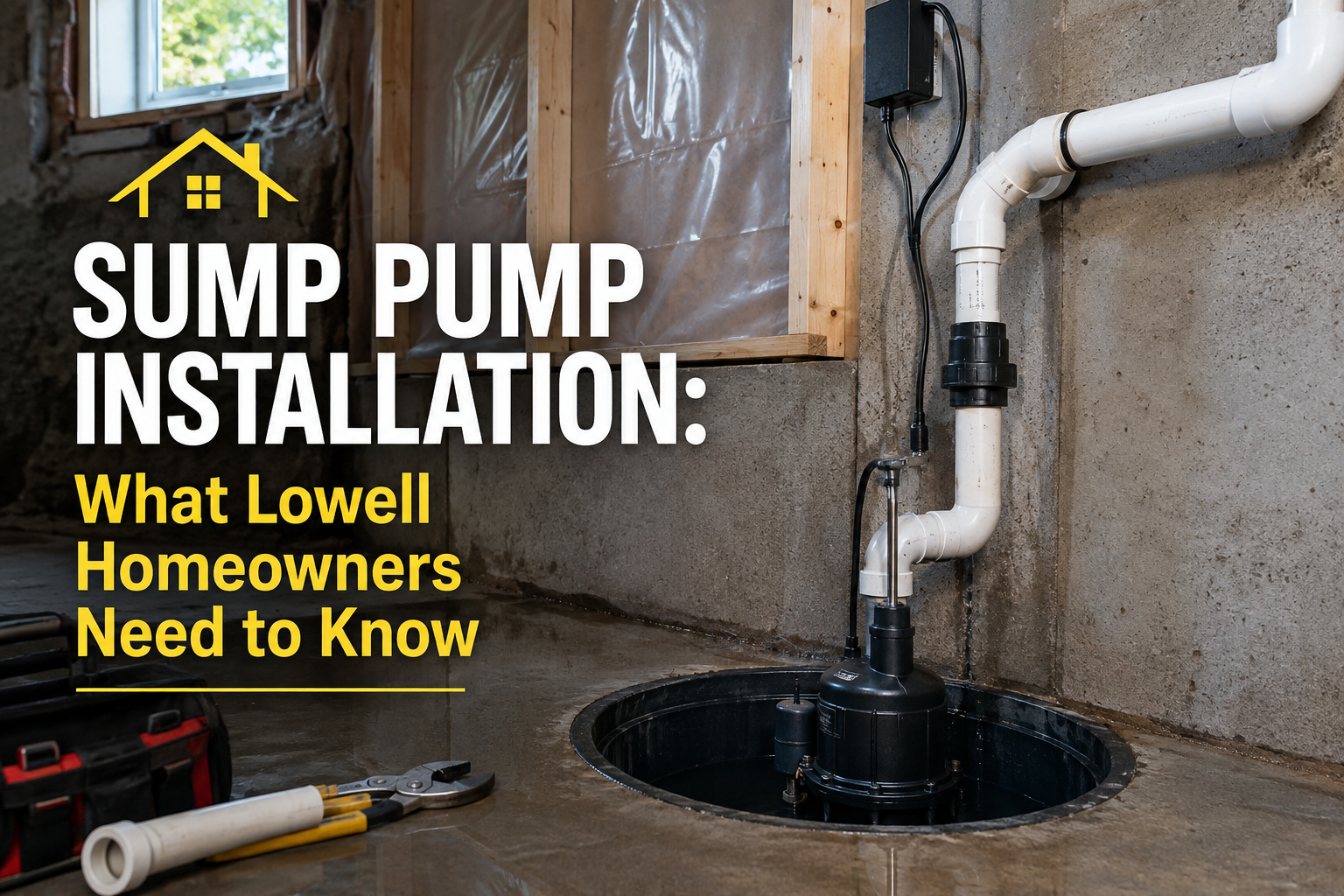
During heavy rains, snowmelt, or when the groundwater exerts pressure on the foundation, one of the most important pieces of equipment in a Lowell basement can be a sump pump. But having a pump is not enough. Sump pump installation needs to be done correctly so the system can collect, remove, and discharge water reliably.
The right installation starts with more than choosing a pump from a hardware store shelf. The performance of the system is influenced by pump capacity, size of sump pit, discharge piping, electrical requirements, and backup protection.
This guide provides some important points to consider when installing or replacing a sump pump at your Lowell home.
What Happens During Sump Pump Installation?
The purpose of a sump pump system is quite simple – it captures water at a low point and pumps it out of the house.
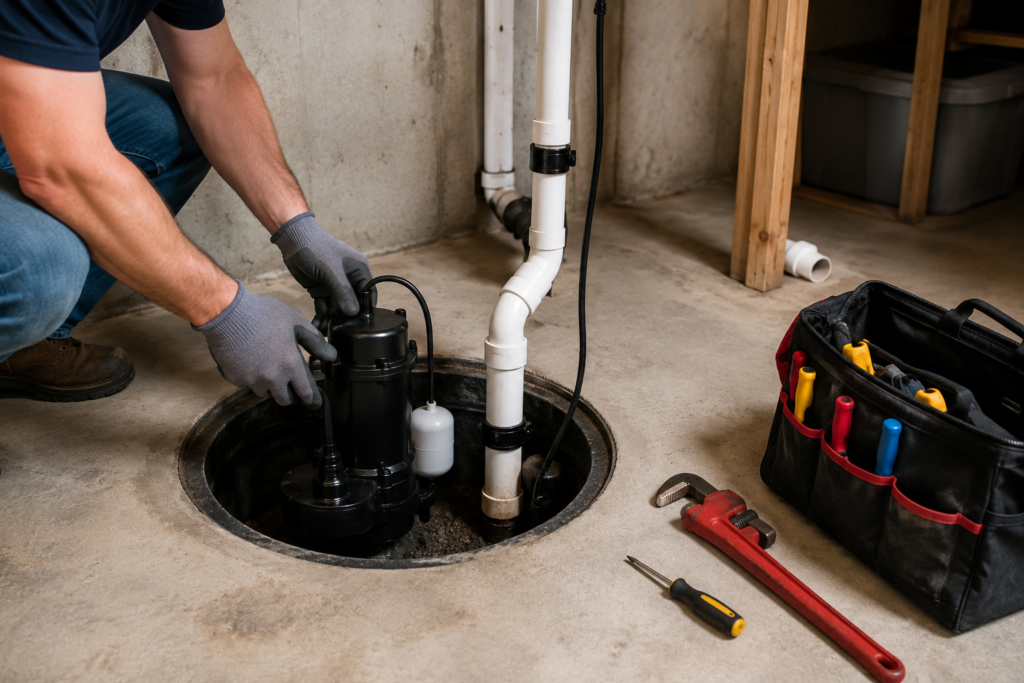
The installation usually consists of installing the sump pit, positioning the pump, connecting the discharge piping, and installing electrical and backup components.
The Main Installation Steps
| Step | What Happens |
| 1. Basement assessment | The water source and drainage conditions are evaluated. |
| 2. Pit preparation | A sump pit is installed, or an existing pit is prepared. |
| 3. Pump selection | The pump is sized according to water volume and discharge requirements. |
| 4. Pump placement | The pump is positioned securely inside the pit. |
| 5. Discharge connection | Piping carries pumped water away from the foundation. |
| 6. Electrical setup | The pump receives a safe and reliable power connection. |
| 7. Testing | The system is tested to confirm automatic operation and drainage. |
Every step is important, as a weak point can impact the entire installation.
Choosing the Right Sump Pump for Your Basement
Not all basement pumps are created equal. If the house receives water flow once every couple of years, it will have different needs than if the flow is significant during storms.
Gallons per hour (GPH) or gallons per minute (GPM) are frequently used to measure pump capacity. The pumping capacity of a residential pump can range from about 2,000 to 5,000 gallons per hour, although actual discharge rates will vary based on factors like pumping height, discharge-pipe length, and the pump’s specifications.
Common Pump Options
Submersible pumps are located in the sump pit and are immersed in the water during pump operation. They are a practical solution when owners wish to have a quieter system that can be covered to mask basement noise and odors.
Pedestal pumps have the motor above water and the pumping mechanism in the pit. They may be more easily accessible for service, but may be more obvious in the basement due to the exposed motor.
Installing the highest horsepower pump is not necessarily the best choice based on the water conditions, space, and installation requirements in the home.
| Helpful Note: A 1/2-horsepower pump is not automatically better than a 1/3-horsepower pump. If the system is poorly sized for the discharge height, a more powerful motor may still fail to deliver the expected performance. |
Preparing the Sump Pit Correctly
The purpose of the sump pit is to allow the water from the ground that comes into the site to be captured before it is pumped out. As such, its location and size are important.
The size of a residential sump pit is typically 18-24 inches wide and 20-30 inches deep, depending on the site and drainage system.
The pit should provide enough room for the pump and allow water to enter without constantly activating the float switch.
What Proper Pit Preparation Involves
- Selecting a suitable low point
- Creating adequate depth and diameter
- Stabilizing the pit
- Providing a proper water-entry path
- Keeping debris away from the pump
- Allowing enough space for maintenance
If the pit is not in the correct position, it may cause other portions of the basement to become waterlogged even if the pump is running.
Getting the Discharge Piping Right
Taking away water from the sump pit is just half the task. This system should also convey the water away from the foundation.
The discharge pipe should be designed so that pumped water does not flow back towards basement walls. The discharge point may need to be carefully planned according to the property, depending on the property, such as grading, landscaping, walkways, and neighbouring properties.
Important Discharge Components
Check valve: Prevents backflow of discharged water in the sump pit after the pump stops.
Proper pipe diameter: The piping should be the correct size for the pump and system, not unnecessarily restricting water flow.
Secure connections: Loose connections can cause leakage and compromise the discharge system’s effectiveness.
Safe outlet location: Water should be directed away from the foundation without creating new drainage problems.
This part of the installation can be important at times of significant rainfall when the pump could be operating continuously.
Electrical Requirements Should Not Be Overlooked
A sump pump won’t help if it doesn’t pump when water starts coming into the basement. This can make electrical installation an essential component.
The pump must have a reliable source of energy, and the wiring layout must be suitable for the existing electrical installation. Extension cords are not a good permanent solution for a sump pump installation.
What Homeowners Should Consider
- Properly located electrical outlet
- Ground-fault protection where required
- Secure power connections
- Protection from water exposure
- Adequate electrical capacity
- Backup power for outages
When installing a new system, especially in an older Lowell home, a professional should review the needs of the electrical system.
Why a Backup Sump Pump Can Be Worth It
The worst time for a sump pump to fail is in a storm. Unfortunately, that is when power outages and high water levels can happen.
A battery backup sump pump provides another way to remove water if the primary pump loses power or cannot keep up.
Backup Options
| Backup Type | Main Advantage | Important Consideration |
| Battery backup | Operates during power outages | Battery requires periodic inspection/replacement |
| Secondary pump | Adds pumping capacity | Requires adequate pit space |
| Water-powered backup | Does not rely on electricity | Requires a suitable municipal water supply |
For a basement with a history of flooding, combining a primary pump with a backup system can provide considerably more protection than relying on one pump alone.
| Quick Note: Test the back-up system prior to storm season, not after the power goes out, and you find the battery is dead or the back-up pump is not working |
How Much Maintenance Does a New Sump Pump Need?
Installation is only the beginning. Even a reliable sump pump needs occasional attention to remain ready for the next major rainfall.
A simple inspection every 3 to 6 months can help catch common problems before they become emergencies.
Check These Components
- Pump operation
- Float switch movement
- Discharge pipe
- Check valve
- Power connection
- Backup battery
- Sump pit debris
- Unusual vibration or noise
Another method of testing the pump is to slowly fill the sump pit with water. The float should turn on the pump, and the water level should start to fall.
If the pump runs continuously, cycles every few seconds, fails to start, or produces grinding sounds, it may require professional inspection.
When Should You Replace an Existing Sump Pump?
A sump pump can not always fail without warning. Any changes in performance can be a sign that the equipment is approaching the end of its life.
The average life of a residential sump pump is about 7-10 years, although this can be shortened by excessive use and operating conditions.
Replacement May Be Worth Considering When:
- The pump is more than 7 years old.
- It frequently runs for long periods.
- It struggles during heavy rain.
- The motor becomes unusually loud.
- The float switch sticks.
- The pump has stopped working more than once.
- Replacement parts are becoming difficult to find.
Replacing an aging pump before the next major storm can be preferable to discovering a failure when the basement is already taking on water.
Professional Sump Pump Installation vs. DIY
A number of homeowners are happy to replace a pump within an old pump pit. But it can take much more than installing a new pump to complete the installation.
The system (pit, drainage, discharge pipes, pump size, electrical wiring, backup system, etc.) can be evaluated with a professional installation.
For homeowners looking into sump pump installation services in Lowell, Lapans Basement Waterproofing can be a useful option when the goal is to address the pump as part of the basement’s overall water-management system rather than treating the pump as an isolated appliance.
Signs Your Installation May Need Attention
Even a relatively new system can develop problems if a component was poorly installed or the basement’s water conditions have changed.
Watch for these warning signs:
- Water continues collecting outside the sump pit.
- The pump runs almost continuously.
- Water flows back into the pit after shutdown.
- The discharge area becomes saturated.
- The pump vibrates excessively.
- The float switch gets stuck.
- The basement remains unusually damp.
- The backup system does not activate during testing.
These issues don’t always indicate that the pump is broken. This could be due to drainage, discharge piping, pump size or water coming in from another source into the basement.
Frequently Asked Questions
How long does sump pump installation take?
Sometimes replacement of a pump in an existing, well-prepared pit can only take 1-3 hours. Installing the new sump pit and doing the drainage work, piping the discharge, and adding more waterproofing can take significantly longer as there is a much larger scope of work
What size sump pump is best for a Lowell basement?
Many systems are equipped with pumps that range from 1/3 to 1/2 HP; other equipment may be needed for homes with increased water flow or discharge distances. When selecting a pump, it should be based on the flow of water into the pump, as well as the vertical lift of the pump in feet
How often should a sump pump run?
The number of cycles a day varies from person to person. It can lay dormant for extended periods of time in dry years, or it can discharge multiple times as it fills during wet years or during snow melt. If the pump is on almost all the time when it’s relatively dry, it should be checked.
Is a backup sump pump really necessary?
It works particularly well for flood-prone houses or homes where water must be pumped out of a sump. A battery backup can power a pump during a power outage, and a secondary pump can be a backup if the primary pump is overloaded.
Can I install a sump pump myself?
Replacing a pump in an existing system may be manageable for an experienced homeowner, but a complete installation involves pit preparation, drainage, discharge piping, electrical considerations, and pump sizing. Professional installation is generally more appropriate when creating a new system or addressing recurring basement flooding.
Final Thoughts
A reliable sump pump system is about more than placing a pump inside a pit. Proper sump pump installation requires the right equipment, adequate pit preparation, effective discharge piping, dependable power, and appropriate backup protection.
For Lowell homeowners dealing with groundwater or recurring basement moisture, addressing these details before the next period of heavy rain can make the system far more dependable. Lapans Basement Waterproofing can help homeowners evaluate their basement water-management needs and determine whether a new sump pump system or additional waterproofing measures are appropriate.