A wet basement can quickly become more than a nuisance. Heavy rain, snowmelt, groundwater, and a high water table in Lowell, MA can exert extra stress on basement walls and floors, allowing water to intrude.
A sump pump is one way to deal with that water before it can collect in your basement. It funnels groundwater to a sump pit and then moves it away from the foundation via a discharge system.
But how does the system actually work, and when does a Lowell homeowner need one? Let us break down the basics.
What Does a Sump Pump Actually Do?
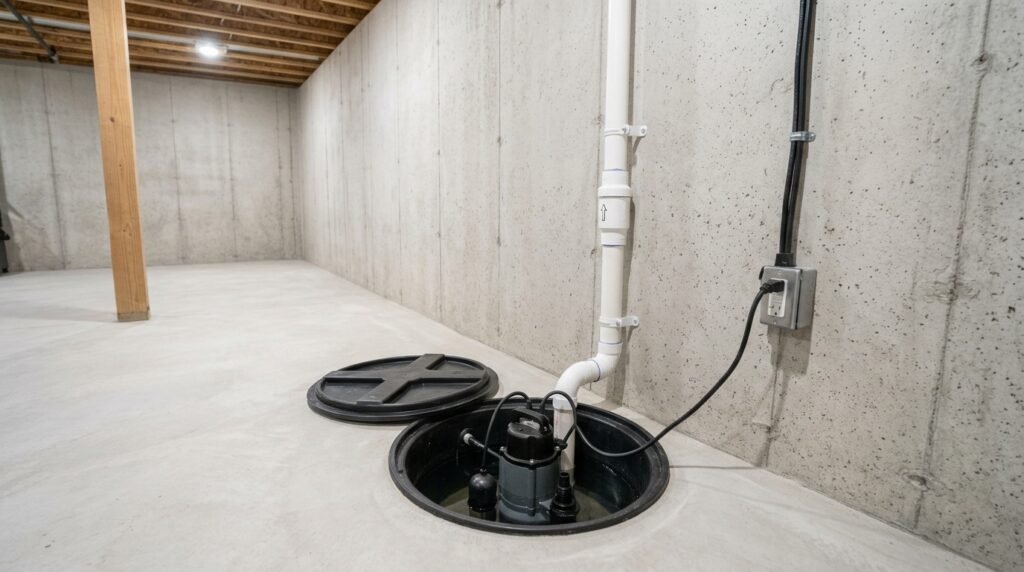
A sump pump is a mechanical water extraction device that is used to remove water that accumulates under or around a basement. The pump is usually located in a specially designed sump pit that is a place to collect groundwater.
When the water reaches a predetermined level, a switch activates the pump. Water is then pushed through a discharge pipe and directed away from the foundation.
The Basic Process
- Groundwater enters the sump pit through drainage channels or surrounding soil.
- The water level rises inside the pit.
- A float switch or pressure sensor activates the pump.
- The pump pushes the water through the discharge pipe.
- The water is released at a safe location away from the foundation.
This process helps to prevent excessive water from sitting on basement walls and floors for a long period of time.
Why Lowell Basements Can Be Vulnerable to Water
Basement water problems do not have to be due to a major flood. The sources of persistent moisture can be various, such as groundwater, surface runoff, foundation seepage, and melting snow.
Heavy precipitation can occur at any time of the year for Lowell homeowners, so it is particularly crucial to have effective drainage.
Common Sources of Basement Water
| Water Source | Potential Basement Problem |
| Heavy rain | Increased groundwater and surface runoff |
| Snowmelt | Rapid increase in soil moisture |
| High water table | Pressure against the foundation |
| Poor grading | Water flows toward the house |
| Clogged gutters | Concentrated water near foundation walls |
| Foundation seepage | Moisture enters through cracks or joints |
A sump pump is not meant to take the place of exterior drainage or waterproofing, but can be a critical component of an overall basement waterproofing system.
How a Sump Pump Helps Protect Your Basement
The primary advantage is simple – it gets rid of water before it can cause issues.
It Helps Prevent Basement Flooding
The pump can be used for automatic removal of water when it enters the sump pit. This can be of particular benefit during periods of heavy rainfall when groundwater can rise rapidly.
With a system that works properly, water should not be able to spread on the floor of the basement, or to stored items and completed rooms.
It Reduces Moisture-Related Problems
If the basement is damp and waterlogged for extended periods of time, the humidity may rise, and odors may develop. Moisture can also cause mold to grow and be a problem.
Removing collected groundwater can help maintain a drier basement environment.
It Helps Limit Water Damage
Exposure to moisture can cause problems with flooring, drywall, insulation, furniture, and more. Serious water intrusion can also aid in the deterioration around foundation elements.
The sump pump is an active water damage prevention method, as it pumps accumulated water out of the system before it creates a bigger problem.
Does Every Lowell Home Need a Sump Pump?
Not necessarily. If a house has no sign of water seeping through the foundation and has very good drainage, it may require less or none.
However, installation becomes more worth considering when several risk factors are present.
Consider a Sump Pump If Your Home Has:
- A history of basement flooding
- Visible groundwater seepage
- A high water table
- Frequent moisture around basement walls
- Poor exterior drainage
- A basement below the surrounding water table
- A French drain or interior drainage system that collects water
Don’t assume that a sump pump is needed in every basement—have a professional look at your basement to decide.
What Happens When the Pump Turns On?
Homeowners do not usually have to check the water level manually as modern sump pumps are able to work automatically.
The float switch is one of the most common activation mechanisms. The float moves along with the water level. When it reaches a predetermined amount, the pump turns on and will run until the amount of water decreases.
A Typical Cycle
Water enters → water level rises → switch activates → pump removes water → water level falls → pump shuts off
The exact cycle varies according to rainfall, groundwater conditions, pit size, pump capacity, and the amount of water entering the system.
What About a Backup Sump Pump?
A primary pump is a good way of pumping water, but it still requires mechanical parts and electric power. If you don’t have a backup, a power outage during a large storm can cause a big issue.
A battery backup sump pump can provide another layer of protection when the primary system cannot operate.
Backup Protection Can Be Especially Valuable If:
- Your basement has flooded before.
- Your home relies heavily on a sump pump.
- Power outages occur during storms.
- You have a finished basement.
- Groundwater levels rise quickly after heavy rain.
Back-up protection may be a viable solution for homes that experience a high amount of water exposure as an effective basement flooding solution.
Sump Pump Maintenance: What Should You Check?
A sump pump is not 100% maintenance-free. There are a few simple tests that can be performed to determine problems before the next big storm comes along.
Simple Homeowner Checklist
- Test the pump by adding water to the sump pit.
- Make sure the float switch moves freely.
- Check that the discharge pipe is not blocked.
- Look for unusual noises or vibrations.
- Confirm that discharged water moves away from the foundation.
- Inspect the pit for excessive debris.
- Check the backup battery if your system has one.
If there is a pump that is running but not starting, or if it starts and makes strange noises, it needs professional care.
A Sump Pump Works Best With Proper Drainage
A sump pump is only one part of basement water protection. If water repeatedly reaches the foundation, it is also worth examining where that water comes from.
Other Measures That Can Help
| Protection Measure | Main Purpose |
| Gutters and downspouts | Direct roof water away from the foundation |
| Proper yard grading | Reduce surface water flowing toward the basement |
| Exterior waterproofing | Help prevent water from entering through foundation walls |
| Interior drainage | Collect water that reaches the basement perimeter |
| Sump pump | Remove collected groundwater |
For someone looking into professional sump pump services in Lowell, a complete evaluation can help identify whether the pump alone is enough or whether drainage improvements are also needed. Lapans Basement Waterproofing can be considered when assessing the right approach for a basement with recurring water problems.
When Should You Consider Professional Sump Pump Installation?
The right sump pump depends on the following: how wet your basement is, the dimensions and depth of the sump pit, discharge distance, as well as the drainage setup within your home.
Just because one pump is rated at a higher horsepower than another does not mean it will be the best choice for your needs.
Professional installation can also address details such as:
- Proper pit placement
- Pump sizing
- Discharge routing
- Check valve installation
- Backup protection
- Connection to existing drainage systems
It is not just about putting in a pump. The objective is to develop a system capable of effectively diverting water from the house as required.
Frequently Asked Questions
How long does a sump pump usually last?
Although most sump pumps typically have a lifespan of about 7 to 10 years, excessive use, poor maintenance, dirt and debris, as well as pump quality can influence the length of time, so your actual mileage may vary. If yours is nearing the 10-year mark, it only makes sense to have it checked before a big storm season.
How deep should a sump pit be?
Residential sump pits are typically 18 to 24 inches deep, but the right size depends on your drainage system and basement conditions. The pump should be large enough that it does not cycle too much within the sump.
How much water can a sump pump remove?
Pump capacity varies considerably. A normal home well pump can normally carry up to 2,000 to 5,000 gallons of water hourly, but this capacity reduces as the discharge distance (either vertical or horizontal) increases.
How often should I test my sump pump?
Testing it every couple of months is a good practice, and one more before times when heavy rain is anticipated. The float switch is supposed to turn on the pump when you pour several gallons of water into the pit.
Can a sump pump prevent all basement flooding?
No. The purpose of a sump pump is to drain away water that finds its way down into the sump pit. This does not mean that a pump failure, clogged discharge pipe, drainage system overflow, or ingress of water through other routes may not be followed by flooding. Implementing a full basement water-control strategy may involve numerous measures.
Final Thoughts
Well, a sump pump is one of the most effective ways to make a grab for a drier basement, enabling it to run in a mechanism that collects groundwater at an accumulating point as well as moves it away from the foundation. With the proper grading, functional gutters and drainage, and appropriate waterproofing, it simply offers a greater level of basement flood protection.
If you are noticing recurring water around your basement walls or floor, do not wait until the next major storm to investigate the problem. Lapans Basement Waterproofing can help you evaluate your basement’s water conditions and determine whether a sump pump or a broader waterproofing solution makes sense for your home.