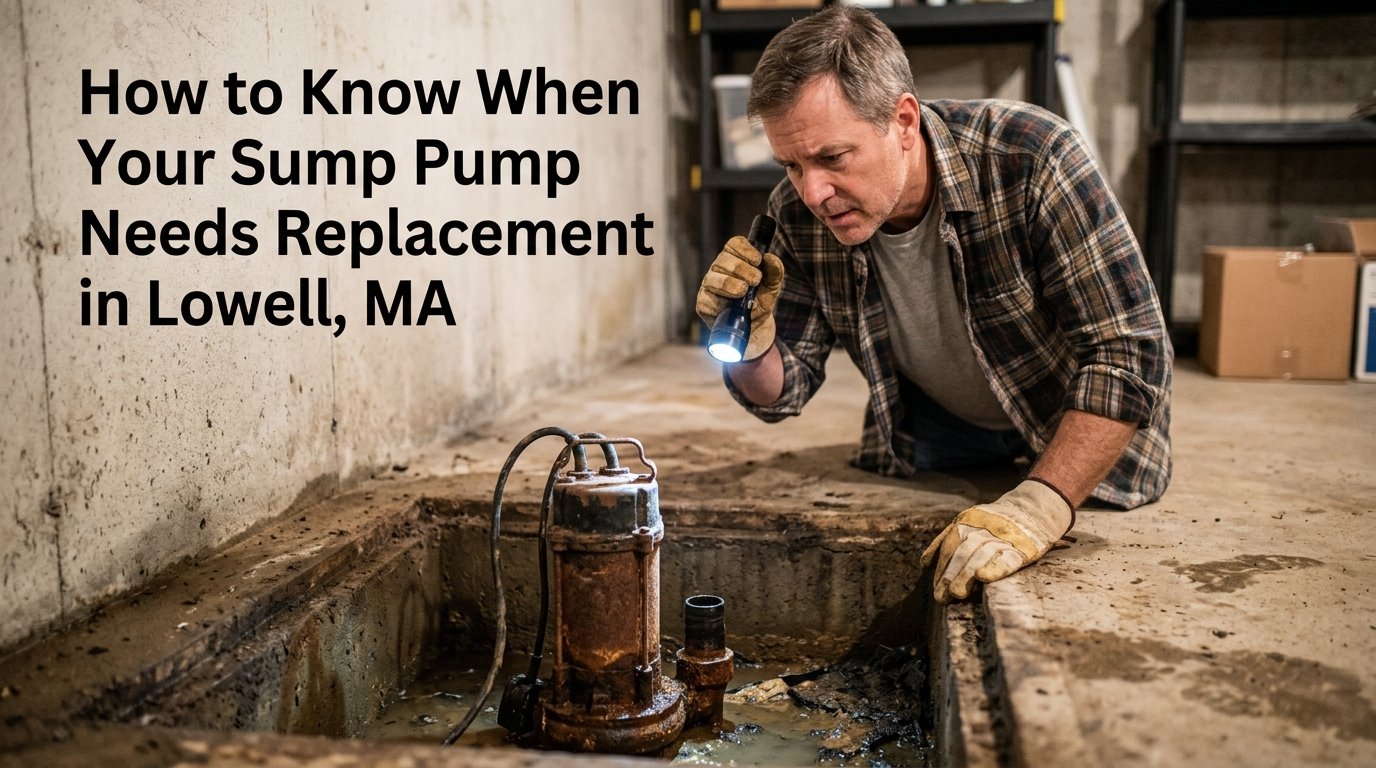
A sump pump is typically not visible until water enters the basement. This is why many homeowners don’t know they have a problem until the equipment begins to foul up in the wet or in the event of a rise in groundwater levels.
When homeowners are looking for sump pump replacement in Lowell, they need to be aware of the warning signs to avoid a small equipment issue becoming a water damage issue. Regular sump pump maintenance is also crucial for extending the life of the system. Some of the challenges facing a basement waterproofing system in Lowell, MA, may be from older homes, wet weather, melted snow, or drainage problems.
Below are the signs you can look out for to determine if your sump pump is reaching the end of its lifespan.
1. Your Sump Pump Is Getting Old
Age alone does not automatically mean a sump pump needs immediate replacement, but it is an important starting point. The life of a sump pump ranges from about 7-10 years, depending on the frequency of pump operation, the quality of the pump, its installation, maintenance, and local water conditions. A pump that pumps water regularly could wear out faster than a pump that pumps water infrequently.
If you cannot find information about your sump pump’s installation date, inspect it or review any installation records you may have. An older pump may still appear to work during a quick test while having worn components that could fail under heavier demand.
2. The Pump Runs Constantly
A sump pump should automatically start pumping when the water level in a sump pit is at a specific elevation and stop pumping once the water has been pumped out.
If the pump runs continuously, several problems could be involved:
- A stuck or damaged float switch
- A malfunction in the electrical controls
- A discharge line problem
- A pump that cannot keep up with incoming water
- Excessive groundwater is entering the sump pit
If a pump is constantly operating, it can result in further degradation of equipment. The use of the motor over a long period of time can lead to increased wear and a higher likelihood of a system failure, even if the motor is still in operation. This is particularly critical for Lowell homeowners when it rains heavily or during times of fast snow melt, when the pump could already be working overtime.
3. Water Is Not Leaving the Sump Pit Fast Enough
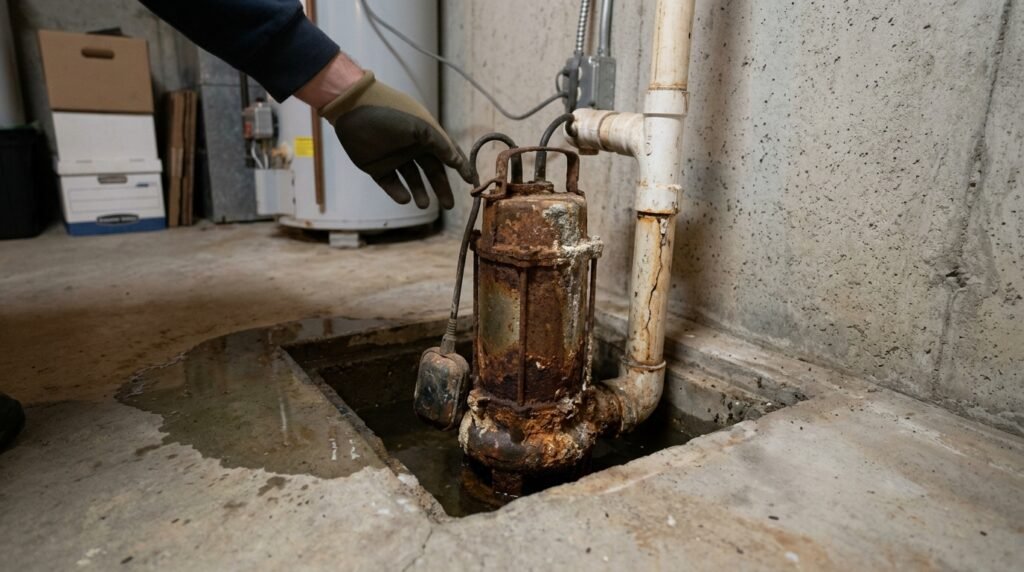
One of the clearest sump pump failure signs is inadequate water removal. Water may not be moving through the equipment efficiently if it is still high in the sump pit while the pump is operating. The issue may also relate to a clogged discharge pipe, a faulty check valve, or another water flow problem.
Look for changes such as:
- Water is taking longer than usual to leave the pit
- The pump is cycling repeatedly
- Water is approaching the top of the sump pit
- The pump is running without noticeably lowering the water level
It is not appropriate to ignore a pump that is having trouble pumping out water. When more water enters the system than it can remove, basement flooding is a possibility.
4. You Hear Grinding, Rattling, or Other Unusual Noises
Sump pumps generally have a certain level of noise when operating, so if it is unusually loud or there is no noise at all, there may be an issue with the equipment. Worn internal components can make noises of grinding or rattling. A loud vibration may also be associated with the motor, impeller, or other mechanical components.
Listen for any changes in the pump’s sound. A sudden increase in the noisy operation of a system may indicate that the pump is experiencing a performance loss. Sometimes there may be a possibility of replacing a failed component. But sometimes a worn pump has a number of problems, and replacement is more feasible than the repeated maintenance of old pumps.
5. The Pump Turns On and Off Irregularly
The float switch is used to start and stop the sump pump depending on the water level. However, the pump may fail to function when it is needed if this switch fails or becomes blocked.
You may notice the pump:
- Failing to turn on when the water rises
- Starting and stopping too frequently
- Running when the water level is low
- Cycling unpredictably
Periodic testing of the pump will assist in identifying these problems in advance of a major storm. A simple test may simply be to carefully fill the sump pit with water and observe if the float operates the pump and if the water flows out. If the system is not reacting properly, then it is best to have a professional inspection.
6. Your Basement Has Had Water Problems Despite a Working Pump
Even if the sump pump is operating but basement is still damp.
If the basement experiences water damage, damp areas, musty smells, or evidence of water around the basement, the existing pump may not be of sufficient size, may fail to meet demands, or may be part of a larger drainage problem. The discharge lines and discharge pipe should also ensure good water removal.
The issue may not come from the pump alone. Overall performance can be impacted by foundation drainage, groundwater conditions, electrical connections, or a clogged discharge system. That is why it can sometimes result in the same water issue occurring again later if the sump pump is replaced without determining the cause of the water problem.
Why Lowell Homes May Need Extra Attention
Lowell homeowners can find seasonal situations that stress waterproofing gear in various ways. During the rainy season, groundwater may swell around the house, and during the winter season, snow cover can lead to increased water with rising temperatures and snowmelt. In older homes, you might also have an older drainage system or basement setup that puts a greater emphasis on water management.
The key issue is not simply how much rain falls in one day. Water can move through soil and around the foundation over time, creating pressure on the drainage system after prolonged wet conditions. A sump pump that seemed adequate years ago may no longer provide the same level of protection if the equipment has aged or the property’s drainage conditions have changed.
Sump Pump Repair or Replacement: How Do You Decide?
Not all systems will fail in a manner that requires an entire replacement of the pump. A newer unit that has a minor float switch or check valve problem might be able to be fixed.
Replacement becomes more likely when the pump is older and showing multiple warning signs.
| Situation | Repair May Make Sense | Replacement May Make More Sense |
| Pump age | Relatively new | Near or beyond expected lifespan |
| Float switch | Isolated issue | Repeated failures |
| Water removal | Minor blockage or discharge issue | The pump cannot keep up with the water |
| Noise | Small service issue | Persistent grinding or mechanical wear |
| Reliability | First significant problem | Multiple pump failures |
The goal is to consider the condition of the entire system rather than focusing on one symptom.
What Happens During the Sump Pump Replacement Process?
A replacement typically begins with assessing the existing equipment and identifying why it is no longer performing properly. The process may include checking the sump pit, pump capacity, discharge lines, check valve, electrical connections, and how water moves away from the home. The new pump should be appropriate for the property’s actual water management needs rather than simply matching the old equipment.
Once installed, the system should be tested to confirm that it activates correctly and moves water through the discharge line as intended. For homeowners who want help evaluating an aging or unreliable system, Lapans Basement Waterproofing can assess the equipment and help determine whether repair or replacement is the more practical option.
Do Not Forget About Power Outages
A sump pump depends on electricity unless a backup system is available. This creates another possible issue during harsh weather. Heavy storms can bring increased water levels; at the same time, a power outage prevents the primary pump from working.
Homeowners with a history of basement water issues may want to discuss backup options as part of a replacement plan. The right solution depends on the home’s water conditions and the level of protection needed.
When Should You Replace Your Sump Pump?
Do not wait until water is already entering the basement. Consider scheduling an evaluation if your pump is older, runs continuously, makes unusual noises, cycles unpredictably, or struggles to remove water from the sump pit. Regular maintenance and periodic testing can also help identify replacement indicators before a complete failure occurs.
Frequently Asked Questions
How often should a sump pump be replaced?
Many sump pumps last around 7 to 10 years, although lifespan can vary significantly based on usage, maintenance, installation quality, and local water conditions. A frequently used pump may require replacement sooner.
What are the signs my sump pump is failing?
Common signs include unusual noises, constant running, irregular cycling, poor water removal, failure to activate, and visible water accumulating in the basement or sump pit.
Can I test my sump pump myself?
Yes. You can carefully add water to the sump pit and observe whether the float switch activates the pump and whether water is discharged properly. If the system does not respond correctly, further inspection may be needed.
Does a constantly running sump pump need replacement?
Not always. The problem could involve the float switch, discharge line, or incoming water volume. However, continuous operation can wear out the equipment and should be investigated.
What should I do if my sump pump fails during heavy rain?
Take steps to reduce immediate water damage if it is safe to do so, but avoid handling electrical equipment near standing water. Contact a qualified professional to determine whether the pump can be repaired or needs replacement.
Final Thoughts
A sump pump is one of those pieces of equipment that homeowners may not think about until it fails. Paying attention to pump age, unusual noises, irregular operation, and declining water removal can provide an opportunity to address the problem before basement flooding occurs.
For Lowell homeowners, seasonal rain, snowmelt, and changing groundwater conditions make reliable water management particularly important. Lapans Basement Waterproofing can help evaluate replacement signs and determine the right next step for protecting your basement from future water damage.