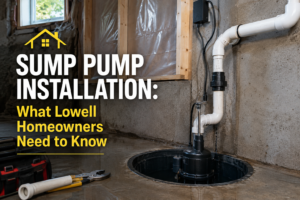
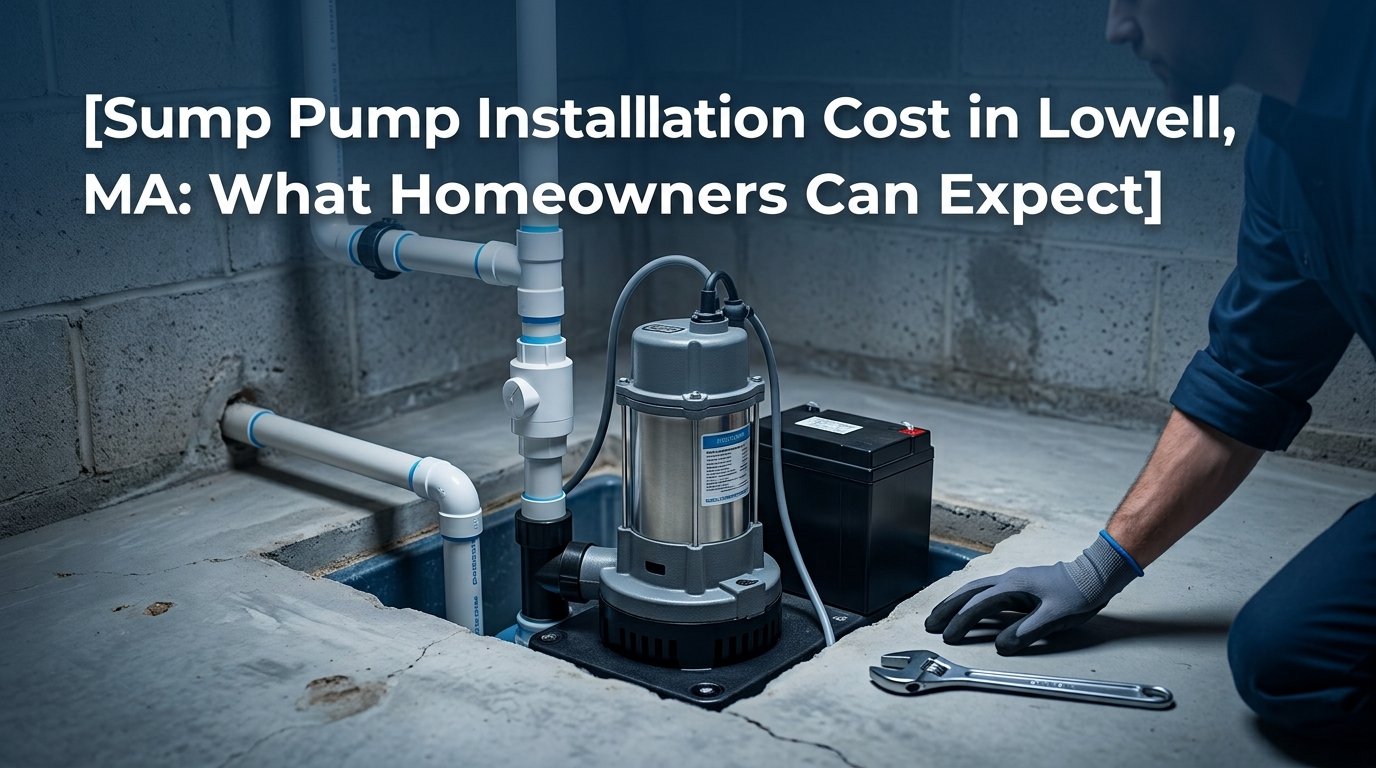
An existing pit and discharge system can make a sump pump a relatively easy replacement. A first-time installation is a different project. Excavation, drainage work, electrical connections, and the condition of the basement can all affect the final sump pump installation cost.
Local factors are also important to Lowell homeowners. Regular and persistent precipitation and freezing winter temperatures are possible, and basement drainage issues may be more pronounced during heavy rain and snowmelt. This guide will discuss realistic estimates of the costs for 2026, the reasons for these costs, and questions to consider before approving an install.
What Does Sump Pump Installation Cost in Lowell?
The installation requirements vary among Lowell properties, so there is no published price for every property. As a useful regional benchmark, current 2026 pricing data for the Boston area places professional sump pump installation between $800 and $6,000. It’s a general guideline that Lowell homeowners can use for the range throughout Massachusetts, but if a property needs a new pit, much drainage, or electrical work, it may be on the higher side.
A practical breakdown looks like this:
| Installation scenario | Typical cost range |
| Replace an existing sump pump | $645–$2,120 |
| Straightforward new installation | Around $800–$2,500 |
| New installation with pit and drainage work | Roughly $2,000–$4,500 |
| Complex installation with major drainage or electrical work | $4,500–$6,000+ |
| Battery backup addition | About $1,500–$2,500 |
As the replacement range above is based upon current 2026 pricing data from across the country, the new-installation and backup values give useful regional indicators for estimating budgets. The actual quote depends on the basement and the work required.
The Biggest Factors Behind the Final Price
The pump is just one component of the project. When the house requires extra work to be done for proper collection and discharge of the groundwater, the installation costs may also be higher.
Pump Type and Equipment
The cost of submersible pumps is typically higher than that of simple pedestal pumps; however, the type of pump that works best will depend on the size of the pit, the amount of expected water usage, available space, and system design.
Horsepower also has an impact on equipment costs. A larger pump is not automatically better. If the unit is too large and/or oversized, it can cycle in an improper manner, and if it is undersized, the pump may have trouble pumping during high water flow. Don’t choose a pump because it’s the cheapest – a professional evaluation can find the right pump size.
Sump Pit Excavation
If there is no sump basin in the basement, the contractor will have to cut through the floor and dig the pit, then install the basin and link it to the drainage system. Labor costs can be higher because of difficult soil conditions, limited access, and concrete floors. One of the biggest reasons first-time installations tend to exceed the replacement cost of an existing unit is because of this.
Discharge Line Installation
Water must be discharged to some place after the pit is drained by the pump. Exterior piping, routing, and protection from issues like freezing and water returning towards the foundation may be needed for a discharge line.
The distance from the basement to the discharge site could impact material and labor costs. Local stormwater ordinances and property specifics may also help determine the approach used for stormwater work in Lowell. The city oversees stormwater management and has separate permitting information about stormwater related to construction and trade work.
Electrical Work and Permits
Most sump pumps have to be plugged into a reliable electrical outlet. If the project needs new electrical work, then that will increase the overall project cost.
The city processes electrical and other trade permits through Development Services and has separate applications and requirements for those trades. The needs of permits vary based on the work; thus, homeowners should verify what is applicable to them for their installation prior to the start of work.
Why Lowell Basement Conditions Matter
While location alone does not dictate the price, the local climate may influence the necessity for a sump pump in a home, as well as how it should be configured.
The National Oceanic and Atmospheric Administration (NOAA) climate data for Lowell indicate that winter weather conditions often involve freezing temperatures and that precipitation happens year-round. Some properties may experience the combination of the above conditions and may be subject to rainfall, snowmelt, and seasonal groundwater issues.
If leaks in the basement have been a problem in the past, a pump may be only part of the solution. Interior drainage channels, foundation drainage improvements, or discharge modifications can increase the project scope.
Quick Budgeting Example
Consider two Lowell homes:
- Home A has an existing sump pit/discharge line but requires a replacement pump. The project might be more within the usual replacement range.
- Home B has no existing pit and requires concrete cutting, excavation, a basin, a pump, drainage connections, and electrical work. That project can cost several thousand dollars more.
For this reason, an online average is helpful for initial planning but does not shed light on the need for an inspection.
Is a Battery Backup System Worth the Extra Cost?
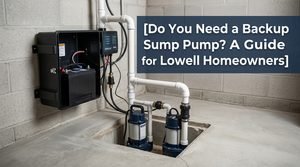
A primary sump pump is electric-powered. A power outage can cause a problem at the time it is most needed during a storm. The current estimate in the Boston area is $1,500 – 2,500 for an addition to provide a backup sump pump system. It could be worthwhile in an area that has experienced water problems in the basement, has a good amount of finished space, and/or has had power outages.
But there are also maintenance needs for backup systems. Homeowners should periodically test the battery and system to ensure that the backup is ready when needed.
Replacement vs. First-Time Installation
Replacement is typically more cost-effective due to the pre-installed infrastructure. The existing pit, discharge line, and electrical connection can lessen the amount of labor.
Current 2026 replacement data places the typical range between $645 and $2,120, with an average of about $1,363. If there are any problems related to the drainage or electrical system, that range can be expanded.
A first-time installation requires more planning. Before comparing quotes, make sure the estimate clearly includes:
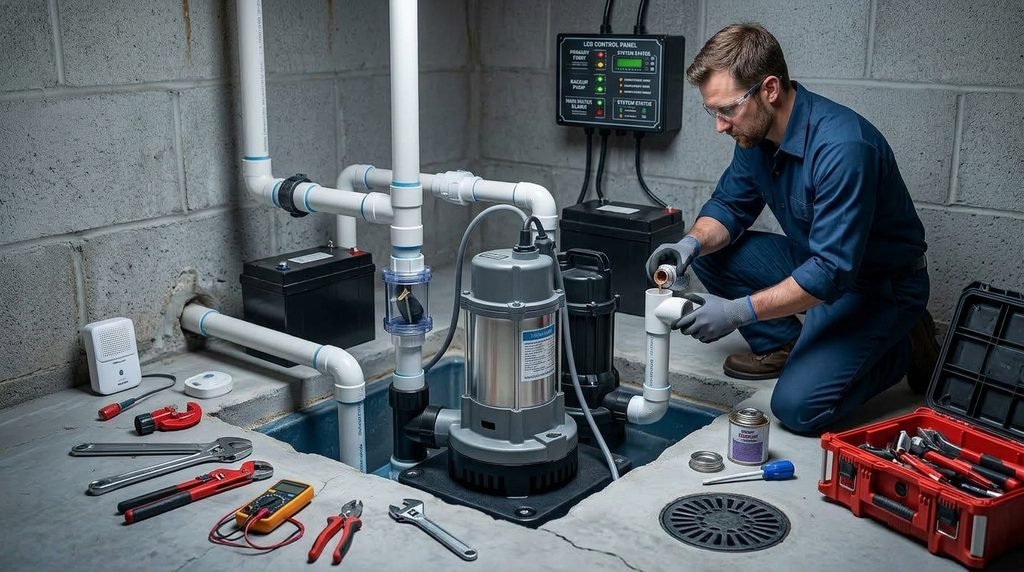
- The sump basin and excavation
- The pump and check valve
- Interior drainage connections, if needed
- Discharge line installation
- Electrical work
- Required permits or inspections
- Cleanup and concrete repair
In order to make accurate comparisons between two quotes, the comparisons should be based on the similarities found in the content, and not only on the price.
How Long Does Installation Take?
If you’re just swapping out an old sump pump for a new one, the job usually wraps up in a few hours. That changes fast if you’re dealing with a first-time installation, especially if there’s concrete cutting, digging, drainage work, or electrical updates involved. Then, set aside a whole day or maybe more.
Permits and inspections also have a way of slowing things down. In Lowell, you’ll run into separate processes for building and trade permits, so don’t assume you can get started right away. It’s a good idea to double-check the schedule before lining up your crew.
Can You Save Money With a DIY Installation?
Swapping out an old pump can look simple, especially if you’re handy, but doing a complete sump pump installation for the first time is another story. It’s a lot more complicated than dropping a pump in a hole.
If you get the pit size wrong, mess up the discharge line, miss a detail with the wiring, or pick the wrong pump, you’ll probably end up dealing with leaks or bigger water problems later.
A detailed quote from Lapans Basement Waterproofing can help homeowners understand whether the property needs a basic pump replacement or a more complete basement drainage solution.
Frequently Asked Questions
What should you expect to pay for sump pump installation in Lowell, MA?
If the job is simple, you might pay around $800, but costs jump quickly for complex work. For bigger projects like a first-time install with excavation, a sump pit, new pipes, and wiring, you could be looking at $6,000 or even more. Replacement jobs are usually cheaper than starting from scratch. A property inspection provides the most reliable estimate.
What is the typical cost to replace a sump pump?
As of 2026, most homeowners spend between $645 and $2,120 to replace a sump pump, averaging around $1,363. Labor, pump type, system access, and whether you need to update the discharge line or electrical connection all factor into the final price.
Does a sump pump installation require a permit in Lowell?
It depends on the scope of work. Building, plumbing, and electrical permits all go through Lowell’s Development Services department. If your job includes electrical or any regulated work, check the permit requirements before you start.
How long does a sump pump installation take?
A basic replacement can often be completed within a few hours. A first-time installation may take a day or longer, especially when concrete cutting, pit excavation, drainage installation, or electrical work is required. Permit scheduling or inspections can also affect the overall project timeline.
Final Thoughts: The Right Installation Depends on the Basement
When it comes to cost, the sump pump itself isn’t really the main factor. The real expense and the real work come from what your basement needs to keep water out for good. Replacing a pump is usually pretty straightforward, but adding a new pit, updated drainage, discharge lines, or backup systems hikes the price up fast.
The best approach is to compare detailed estimates rather than choosing based only on the lowest advertised price. Lapans Basement Waterproofing can help homeowners evaluate the installation requirements and understand which parts of the project are necessary for their specific basement.