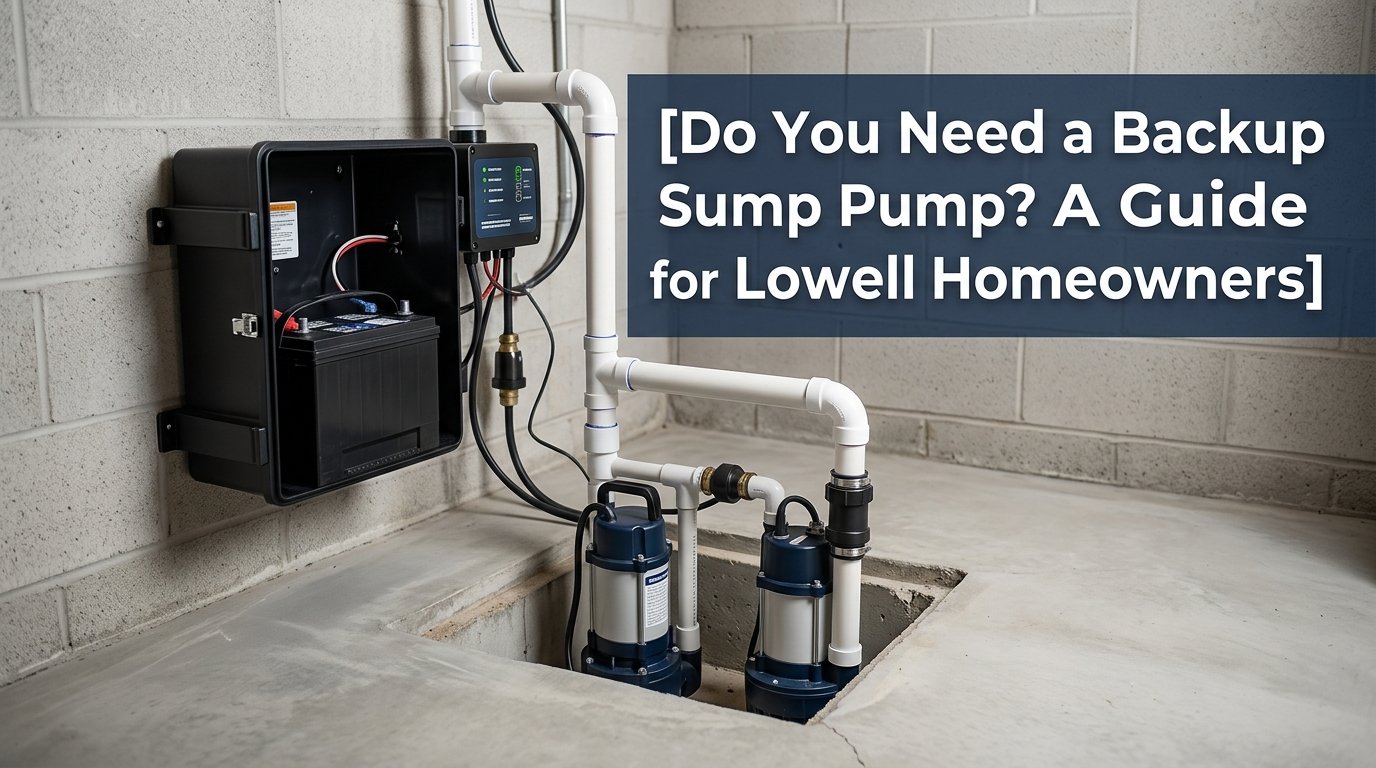
One of the most vital pieces of equipment to keep unwanted water out of the basement is a sump pump. Unfortunately, many homeowners don’t consider one of the most important aspects: the main pump can break down at the critical moment.
A backup sump pump also serves as a safety measure if the main pump fails, if it goes out of power, or if it is unable to keep up with the rising water levels. That extra protection can make a huge difference for Lowell, MA, homeowners who experience heavy rain, snowmelt, and seasonal storms that can strain basement drainage systems.
What Is a Backup Sump Pump?
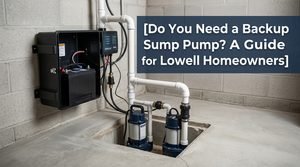
A backup sump pump is a secondary pump that activates when the primary pump cannot handle the situation. Depending on the system, it may turn on when the main pump fails, when water levels rise above the primary pump’s capacity, or during a power interruption.
The most common option is a battery-operated backup, which can continue pumping during a power outage. Some systems also use a second AC-powered pump for additional capacity, creating a dual-pump system that handles unusually high water flow.
Massachusetts emergency guidance also suggests that basement or low-level sump pumps in areas that are vulnerable to flooding should have a backup power supply.
Why Can a Primary Sump Pump Fail?
A sump pump, even if installed correctly, will not last forever. There are a few issues that may cause the normal operation to be interrupted:
- A power outage stops an electric pump.
- The pump motor fails because of age or wear.
- A float switch becomes stuck or malfunctions.
- The pump cannot keep up with unusually heavy water flow.
- A clogged discharge line prevents water from leaving the system.
- Electrical problems or power surges affect the equipment.
What is essential to remember is that failure of one of the primary pumps does not necessarily indicate that the pump is old. The pump may actually be operating properly, but sometimes it does not match the rate of water change quickly enough. That is where system redundancy becomes valuable.
Why Lowell Homeowners May Want Additional Protection
Lowell has a long history of managing flooding and stormwater concerns. The city maintains flood-protection infrastructure and has documented local flooding and sewer-related concerns in various planning reports.
A city hazard report also identifies approximately 47 inches of average annual precipitation and notes that heavy precipitation events have become more significant across the Northeast. This does not mean every Lowell homeowner needs a backup system. However, a home with a history of basement water, an aging primary pump, or significant groundwater pressure may have more to lose if the primary system stops working during a storm.
Types of Backup Sump Pump Systems
Battery-Operated Backup Pump
A battery backup pump is used mostly for power interruption protection. If there is a power outage, the backup battery provides electricity to the secondary pump to keep the water being removed. This can be especially helpful when severe storms occur because they can cause both extra water to enter the drainage system and an increase in the risk of electrical power being lost.
Regular testing and battery replacement, as recommended by the manufacturer, are necessary for battery systems.
Dual Pump System
A dual pump system is more than one pump in the same overall system. There are two pumps, one for normal water and one that can turn on if water gets to a higher level.
This type of configuration can be used where the main issue is not only power loss but also excessive volumes of water. For instance, a documented installation of basement waterproofing in Lowell had a secondary pump for heavy rain or snowmelt conditions and a battery backup in the case of a power outage.
Combination Systems
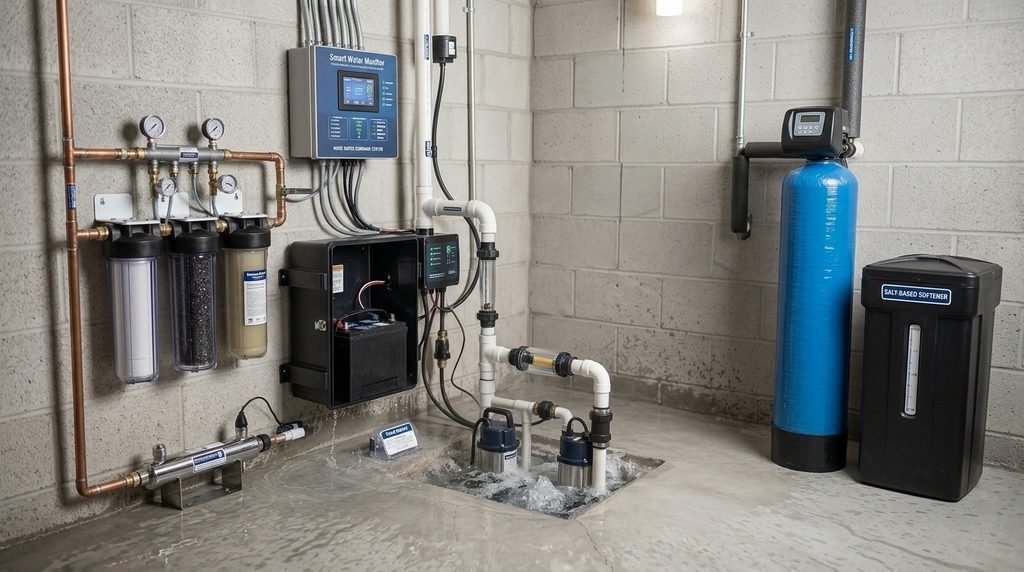
A few homeowners select a combination system, which incorporates an initial pump, a second pump for increased water levels, and battery-operated emergency protection. The proper setup will depend on the amount of water the basement system normally uses and what kind of failure poses the highest risk.
Signs You May Need a Backup Sump Pump
A backup system may be worth considering if one or more of these situations apply to your home:
| Situation | Why Backup Protection May Help |
| Frequent power outages | The primary electric pump cannot operate without power |
| The basement has flooded before | Another failure could cause additional water damage |
| The primary pump is aging | Equipment failure becomes more likely over time |
| The pump runs frequently | Continuous use can increase wear |
| Heavy rain causes a rapid rise in water levels | A second pump can provide additional capacity |
| Finished basement or valuable storage | The consequences of water damage are higher |
A backup may not be as critical if your sump pump only runs when it’s needed and you have never had a basement water issue. It is to be determined by the existing water risk and the water that has been stored or finished in the basement.
Backup Sump Pump vs. Replacing an Old Pump
A backup system does not automatically solve problems with a failing primary pump. If the main pump is making unusual noises, running continuously, not starting, or is otherwise a sign of a system failure, the pump may need to be repaired or replaced. Installing a backup should provide additional protection, not become an excuse to ignore a pump that has already stopped working.
Ideally, the primary pump should handle normal water levels, while the backup remains available for emergencies. For homeowners who are unsure about their current system, Lapans Basement Waterproofing can evaluate the sump pit, pump performance, float switch, discharge lines, and overall basement protection needs.
How to Maintain a Backup System
The backup sump pump should be kept in the same manner as the primary sump pump. Check the system periodically for correct activation of the pump. Inspect the sump pit for debris, inspect the discharge pipe for obstructions, and test the float switch.
If the system is battery-operated, the battery must be taken care of as well. If the backup pump has not been charged or is not ready to go if an emergency strikes, it is not going to help in the event of a disaster.
A simple maintenance routine can include:
- Testing the primary pump periodically.
- Checking that the float switch moves freely.
- Inspecting discharge lines for blockage or freezing.
- Testing the backup system according to the manufacturer’s instructions.
- Checking the battery condition and replacing it when necessary.
In Massachusetts, homeowners who have sump pumps are also being encouraged to “test them periodically for proper operation, especially during flooding or bad weather.
Do You Need a Backup Sump Pump? A Quick Checklist
You may benefit from a backup system if you can answer yes to several of these questions:
- Has your basement experienced water intrusion before?
- Does your sump pump run heavily during storms or snowmelt?
- Have you experienced power outages during severe weather?
- Is your primary pump approaching the end of its useful service life?
- Do you have a finished basement?
- Would basement flooding cause significant water damage or insurance complications?
- Does your current system have only one pump and no emergency power supply?
The more risks that apply to your home, the stronger the case for additional protection.
Frequently Asked Questions
Does every sump pump need a backup?
Not necessarily. The level of system redundancy may not be as strict for homes with little water exposure. But if you own a house that has been flooded in the basement, uses a pump on a regular basis, or experiences power outages, you might want to install a backup.
Can Your Battery Backup Keep Working When the Power Goes Out?
Yes, with proper installation, maintenance, and charging of the battery-operated system. The amount of time it operates will depend on the battery, the pump demand, and the amount of water entering the sump pit.
Can a backup pump handle heavy rain?
An additional pump may be added to the system to give more pumping power, but the system must be properly sized for the water conditions in the home. The capacity of a battery backup could be different than a full secondary AC-powered pump.
How often should I test my backup sump pump?
Perform manufacturer-recommended maintenance. It is significant to test regularly, particularly before rainy or snowy weather that might cause water levels to rise.
Can I add a backup to my existing sump pump?
In many cases, yes. It varies from installation to installation depending on the size and condition of the existing sump pit, the discharge system, the electrical system, and available space.
Final Thoughts
A backup sump pump does not have to be installed in every Lowell home, but it can be very useful if the impact of the failure of the first pump is severe. If the basement is protected by only one pump, it could be vulnerable during power outages, equipment failures, or unusually heavy water flow.
For a home with recurring water issues or a finished basement, Lapans Basement Waterproofing can help determine whether a battery-operated backup, secondary pump, or another basement waterproofing solution makes the most sense.
The objective is clear: Your basement protection system should have more than one plan in place if water levels rise.