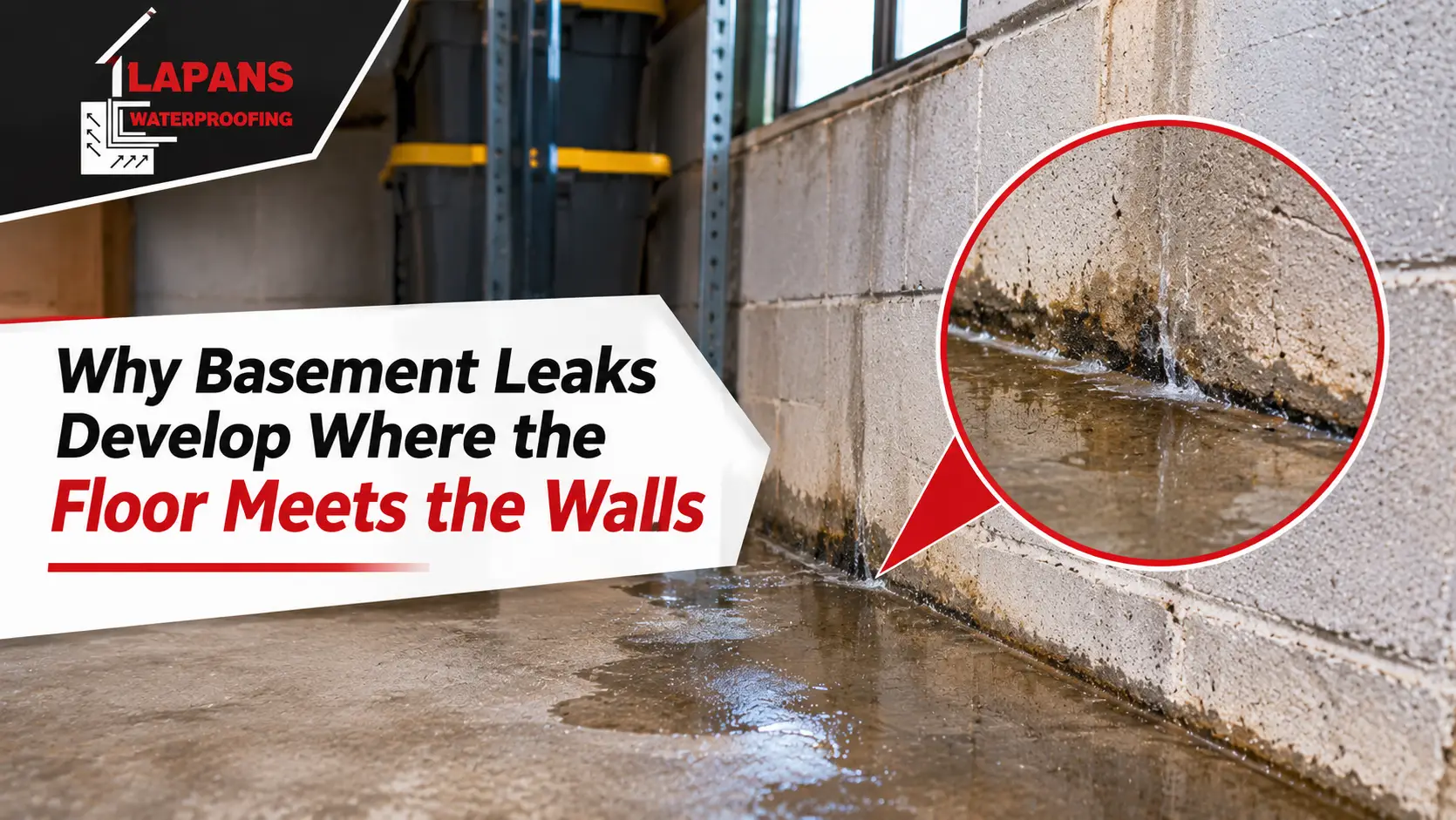
After heavy rain, you may notice water collecting along the edges of your basement floor, right where the concrete floor meets the foundation walls. This area is known as the cove joint, and recurring moisture here can indicate that groundwater is building up around your foundation.
The problem is not always a crack in the wall or a damaged concrete floor. Saturated soil, hydrostatic pressure, and drainage problems can force water toward this vulnerable connection. Understanding why seepage occurs helps homeowners identify the source instead of repeatedly cleaning up the water.
What Makes the Basement Wall-Floor Joint Vulnerable?
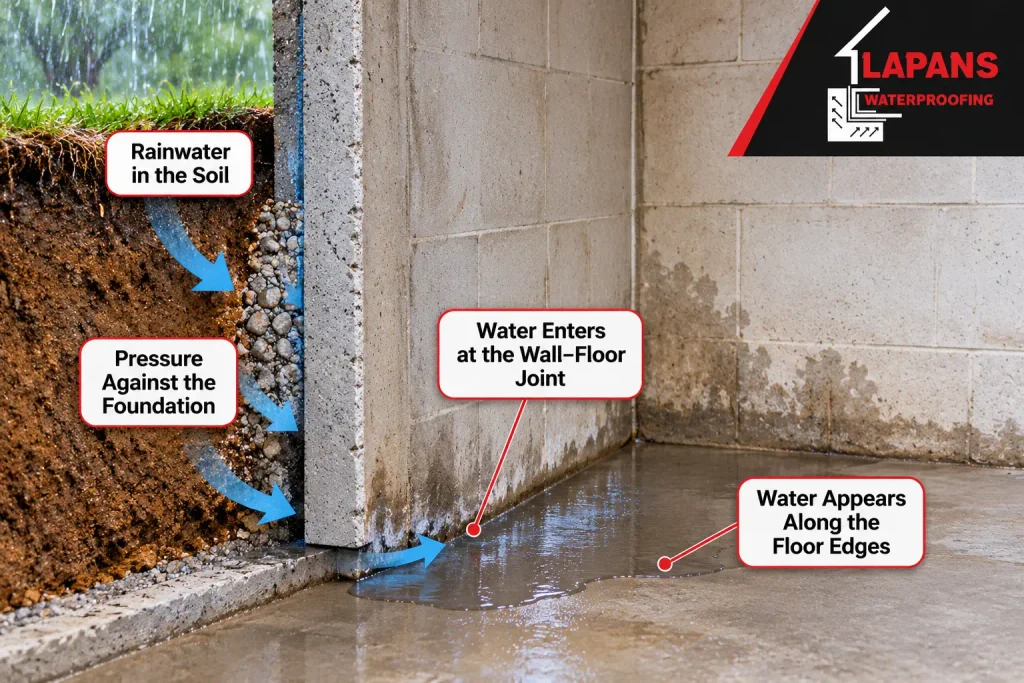
Basement moisture can enter through the small gap connecting the concrete floor to the foundation wall. These are separate concrete elements, and the connection may provide a pathway for groundwater to enter when pressure builds around the foundation.
Water can collect outside the basement wall, move down toward the foundation footing, and accumulate beneath or beside the slab. If the surrounding drainage system cannot relieve that pressure, moisture may eventually find its way through the wall-floor connection.
This is why a basement can leak at the floor perimeter even when the visible foundation walls appear intact.
Why Does Water Seep Through the Cove Joint After Rain?
1. Saturated Soil Allows Groundwater to Accumulate
During prolonged or heavy rainfall, surrounding soil absorbs water until it has limited capacity to accept more. Excess moisture moves downward and can collect around the foundation footing.
When this happens, groundwater may build up along the basement perimeter. The resulting pressure can push water toward small gaps and openings at the cove joint.
2. Hydrostatic Pressure Pushes Water Toward the Basement
When surrounding soil becomes waterlogged, the trapped moisture pushes against the foundation and creates pressure. As groundwater levels rise, pressure against below-grade surfaces can increase.
Concrete may appear solid, but the wall-floor connection, construction joints, and existing openings can become easier routes for water to follow. Seepage may begin during a storm or continue after rainfall stops because the surrounding soil remains saturated.
3. The Perimeter Drainage System May Be Failing
Groundwater is captured by foundation drains and carried away to help keep the structure dry. However, a blocked, damaged, poorly installed, or overwhelmed perimeter drain may not remove water effectively.
Common contributing problems include:
- Clogged or damaged drain pipes.
- Sediment restricting water movement.
- An inadequate drainage route.
- A sump pump that cannot discharge water properly.
- A failed connection between the drain and sump system.
When drainage cannot keep up with groundwater accumulation, pressure can increase around the basement slab and foundation walls.
Why Does Water Appear Along the Floor Edges Instead of the Wall?
Water often follows the path of least resistance. The foundation footing, wall, and concrete slab meet near the basement perimeter, creating a location where small gaps or construction joints may allow moisture to enter.
You may notice a thin line of water, damp concrete, or small puddles extending along one or more walls. The location does not automatically prove that the cove joint is the only problem, however. Water from a wall crack, plumbing leak, or another entry point can travel across the surface before collecting at the floor edge.
Signs That Groundwater or Drainage Problems May Be Responsible
Pay attention to when and where the moisture appears. These details can help distinguish recurring groundwater seepage from an isolated spill or plumbing issue.
| What You Notice | What It May Indicate |
| Water appears after heavy rain | Groundwater accumulation |
| Seepage follows several basement walls | Perimeter drainage concerns |
| Dampness continues after rainfall | Saturated soil or a high water table |
| White mineral deposits on concrete | Repeated moisture movement |
| Water returns in the same location | A persistent entry pathway |
| Sump pump runs frequently | Increased groundwater collection |
These clues are useful, but a professional inspection is needed to confirm the actual source.
Why Lowell, MA Homes Can Experience Rain-Related Basement Seepage
Lowell, MA homeowners should pay attention to how rainfall interacts with local drainage conditions. The City of Lowell identifies extreme precipitation and stormwater flooding as local concerns. Its climate resilience planning also highlights drainage deficiencies in the Pawtucketville area near Claypit Brook.
NOAA’s 1991–2020 climate normals for its Lowell weather station record approximately 48.51 inches of average annual precipitation. This is a long-term average, not a prediction for any individual year, but it illustrates why managing water around foundations matters locally.
A property’s slope, soil conditions, nearby drainage infrastructure, and groundwater level all influence its basement’s exposure. Two homes in Lowell can therefore experience very different seepage patterns, even after the same storm.
Can Caulk or Waterproof Paint Stop Cove Joint Seepage?
Surface sealants may temporarily cover a visible opening, but they do not necessarily address the pressure pushing water through the joint. If groundwater continues accumulating outside or beneath the slab, moisture may find another pathway or return through the same location.
The more useful question is whether the water needs to be collected and redirected before it enters the basement. Depending on the inspection findings, an interior drainage channel and properly functioning sump pump may help manage recurring groundwater intrusion.
When Should You Consider a Professional Drainage Evaluation?
Recurring water at the wall-floor joint deserves attention, especially when it appears after multiple storms or spreads across several sections of the basement. A professional can inspect the cove joint, foundation walls, sump pump, discharge route, and drainage components to identify likely entry pathways.
If the system is overwhelmed or failing, a suitable drainage system installation may help manage groundwater before it enters the basement. During an inspection, Lapans Basement Waterproofing can help determine whether the seepage is connected to hydrostatic pressure, inadequate perimeter drainage, or sump pump problems.
Do not ignore persistent seepage, musty odors, visible mold, or water near electrical equipment. Address immediate safety concerns and arrange an assessment before moisture damages stored belongings or finished basement materials.
Frequently Asked Questions
Is water coming through the basement floor edges a serious problem?
Recurring seepage can damage flooring, encourage mold growth, and indicate unresolved groundwater pressure. The severity depends on how much water enters and how frequently it occurs.
Can a sump pump stop basement cove joint leakage?
A properly designed and functioning sump pump can remove collected groundwater, helping reduce water accumulation beneath or around the basement. Its effectiveness depends on the drainage system feeding it and the discharge arrangement.
Why does my basement leak after rain but stay dry during sunny weather?
Rain increases soil moisture and can raise groundwater levels around the foundation. When the soil becomes saturated, pressure may push water through the cove joint or other vulnerable openings.
Final Thoughts: Addressing the Water Before It Reaches the Floor
Water seeping through the basement wall-floor joint is often a sign that groundwater is accumulating faster than the surrounding drainage system can manage. Identifying the entry pathway and understanding the property’s drainage conditions are essential for choosing an appropriate solution.
For homeowners experiencing recurring basement seepage, Lapans Basement Waterproofing can help evaluate the drainage concerns and identify suitable ways to manage water intrusion. Addressing the underlying cause is more effective than repeatedly sealing the visible wet spot.