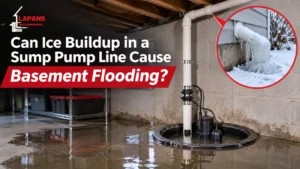
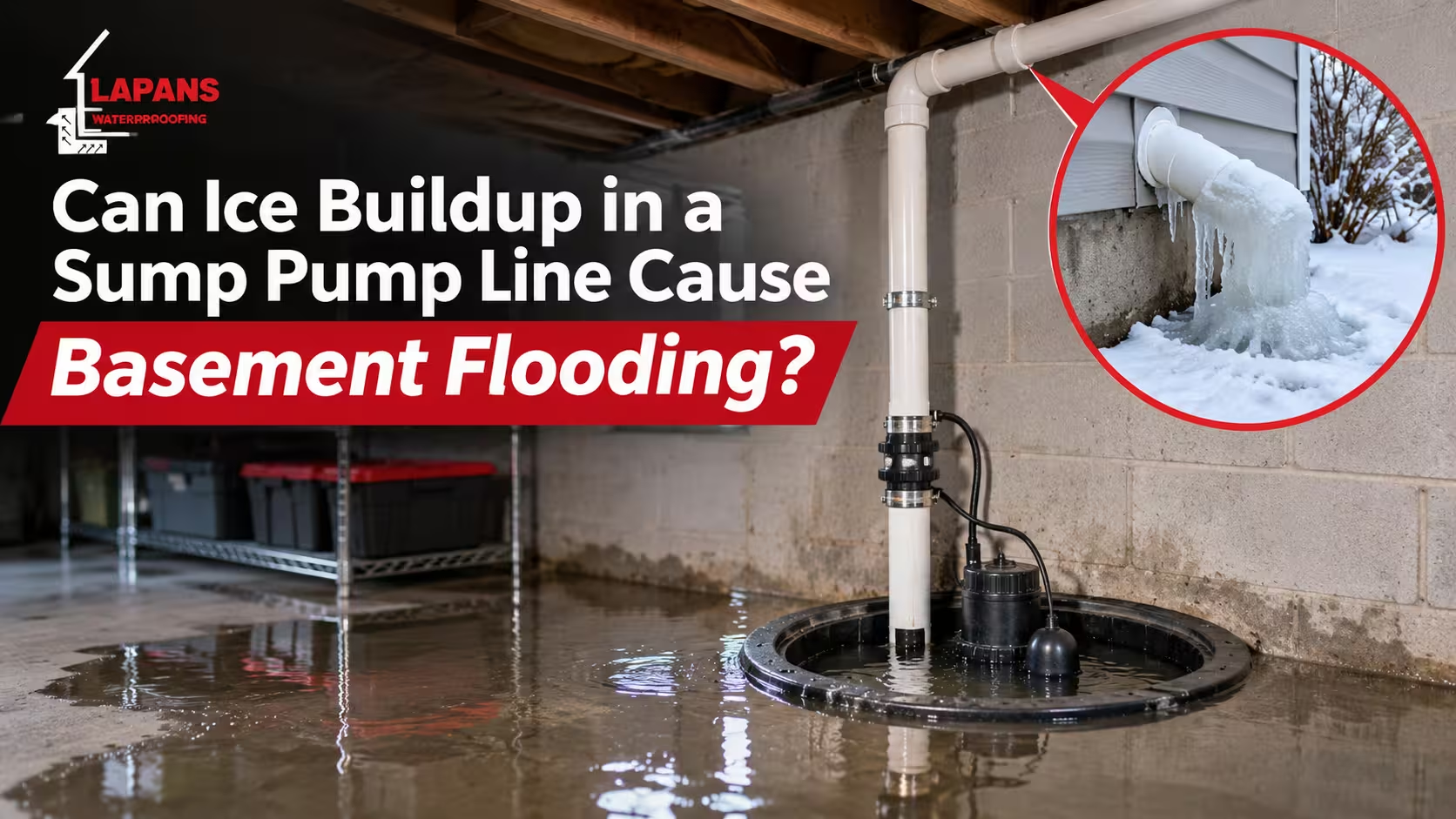
A sump pump protects a basement by collecting groundwater and moving it away from the foundation. However, the system depends on an open discharge line to carry that water outdoors. During winter, freezing temperatures can turn this important drainage route into a blockage, preventing the pump from removing water effectively.
Even if the pump operates normally, a frozen discharge pipe can prevent water from draining away properly. Ice inside the pipe restricts water movement, allowing the sump basin to fill and potentially overflow. Understanding why discharge lines freeze, how to recognize a blockage, and what reduces the risk can help homeowners protect their basements during winter.
How Does an Iced-Over Discharge Pipe Lead to Basement Flooding?
When groundwater enters the sump basin, the float switch activates the pump. Water then travels through the discharge pipe and exits away from the foundation. If ice blocks that route, the pump cannot move water through the system normally.
The consequences depend on how severe the blockage is and how quickly groundwater continues entering the basin.
- Restricted drainage: Water cannot pass through the frozen section at the required rate.
- Rising sump water: Incoming groundwater continues filling the basin.
- Repeated pump operation: The motor may continue attempting to discharge water against the obstruction.
- Water returning to the basin: Depending on the pipe configuration and check valve, water remaining in the line may flow backward.
- Basement flooding: If the basin fills beyond its capacity, water can spill onto the basement floor.
The motor may continue running or producing sound even when the discharge pipe is clogged. That does not mean water is reaching the outdoor drainage outlet.
Why Do Sump Pump Discharge Pipes Freeze?
Outdoor sections of discharge piping are exposed to cold air, wind, snow, and ice. Water left inside these sections can freeze when temperatures remain below 32°F.
Several installation and drainage conditions increase the risk:
Standing water inside the pipe: Low spots, dips, or an incorrect slope can leave water trapped after each pumping cycle. That water can freeze and gradually restrict the opening.
Poor discharge routing: Long exterior pipe sections and exposed bends create more opportunities for water to remain in cold areas.
Blocked outdoor outlets: Snow, ice, leaves, or debris can prevent water from exiting. Restricted drainage may leave water inside the pipe, increasing freeze risk.
Incorrect pipe installation: A discharge line that does not drain properly can retain water between pump cycles. Proper routing and slope help reduce this problem.
Why Lowell, MA, Homes Need Winter Discharge Protection
Winter conditions in Lowell make exterior sump pump piping particularly vulnerable. NOAA’s 1991–2020 climate normals for Lowell show an average January daily low of approximately 15.8°F and a February daily low of approximately 16.9°F.
These averages are well below freezing. Although temperatures change throughout the winter, prolonged cold periods can freeze standing water in exposed pipes. Snow accumulation and repeated freeze-thaw cycles can also obstruct outdoor discharge outlets.
Homeowners should pay attention to the entire discharge route, not just the section immediately outside the foundation.
Signs That Your Sump Pump Discharge Line May Be Frozen
A frozen pipe can resemble other drainage problems, so homeowners should look at how the pump behaves and whether water reaches the outlet.
Common signs include:
- The pump runs, but little or no water comes out of the discharge outlet.
- Water remains unusually high inside the sump basin.
- The discharge outlet is covered with ice or packed snow.
- Water appears to flow backward after the pump stops.
- The pump operates repeatedly without lowering the basin water level.
These symptoms can also indicate a clogged pipe, failed check valve, or pump problem. A professional inspection can help distinguish between them.
How Should You Respond to a Frozen Sump Pump Discharge Pipe?
If you suspect an ice blockage, avoid forcing the pump to operate against a restricted pipe. Continued operation can strain the motor, particularly if it cannot discharge water properly.
Take these steps:
- Check the outdoor outlet: Look for visible snow, ice, or debris blocking the pipe opening.
- Observe the sump basin: Check whether the water level continues rising while the pump operates.
- Avoid damaging the pipe: Do not strike frozen PVC or pour boiling water into the line. Sudden temperature changes and physical force can damage piping.
- Contact a professional: Have the blockage, pipe slope, check valve, and discharge routing inspected.
- Monitor basement water levels: Watch for signs of overflow while the drainage problem is being addressed.
If water is approaching electrical equipment or outlets, stay clear of the affected area and seek appropriate emergency assistance.
What Steps Can Help Keep Sump Pump Discharge Pipes From Freezing?
Preventing ice buildup starts with making sure the discharge system removes water completely between pumping cycles. Simply installing a larger pump will not correct poor pipe routing or an outdoor drainage obstruction.
Useful preventive measures include:
| Prevention measure | Why it matters |
| Correct pipe slope | Reduces standing water in exterior sections |
| Proper discharge routing | Limits unnecessary exposed pipe sections and low spots |
| Clear outlet location | Prevents snow and debris from blocking drainage |
| Appropriate freeze protection | Helps reduce exposure to freezing conditions |
| Seasonal inspection | Identifies drainage restrictions before severe cold arrives |
A professional can evaluate whether the existing PVC pipe layout needs adjustment or additional freeze protection. The correct approach depends on the property’s drainage arrangement and local conditions.
When Should You Arrange a Professional Inspection?
A frozen discharge line should not be treated as a minor inconvenience when groundwater continues entering the basement. Repeated pump operation, rising basin levels, and recurring ice blockages indicate that the drainage system needs attention.
A professional inspection should consider pipe slope, trapped water, outlet placement, check valve operation, and the condition of the sump pump. Lapans Basement Waterproofing can help homeowners assess winter drainage concerns and determine whether the discharge line needs repair or improved routing.
Frequently Asked Questions
Can a frozen sump pump discharge line flood a basement?
Yes. If ice prevents water from leaving the discharge pipe, groundwater can accumulate in the sump basin until it overflows. The risk increases when groundwater continues entering during freezing weather.
Should I keep my sump pump running if the discharge pipe is frozen?
Do not allow the pump to continue operating against a confirmed blockage. A restricted discharge can strain the motor. Have the obstruction assessed and follow professional guidance.
Can a check valve prevent a discharge line from freezing?
A check valve helps prevent discharged water from flowing backward into the sump basin. However, it does not prevent exposed water in the discharge pipe from freezing.
Does snow around the outlet cause sump pump problems?
Yes. Snow and ice can cover the discharge opening and restrict water flow. Keep the outlet clear according to the system’s installation requirements so water can drain away from the foundation.
Final Thoughts: Protect Your Basement From Frozen Discharge Lines
A frozen discharge pipe can prevent a properly operating sump pump from protecting your basement. Standing water, poor pipe slope, exposed sections, and blocked outlets all increase winter drainage risks.
Inspecting the discharge route before freezing weather arrives can help identify problems early. If your system repeatedly freezes or struggles to remove water, Lapans Basement Waterproofing can help determine what needs attention to keep basement drainage working through winter.