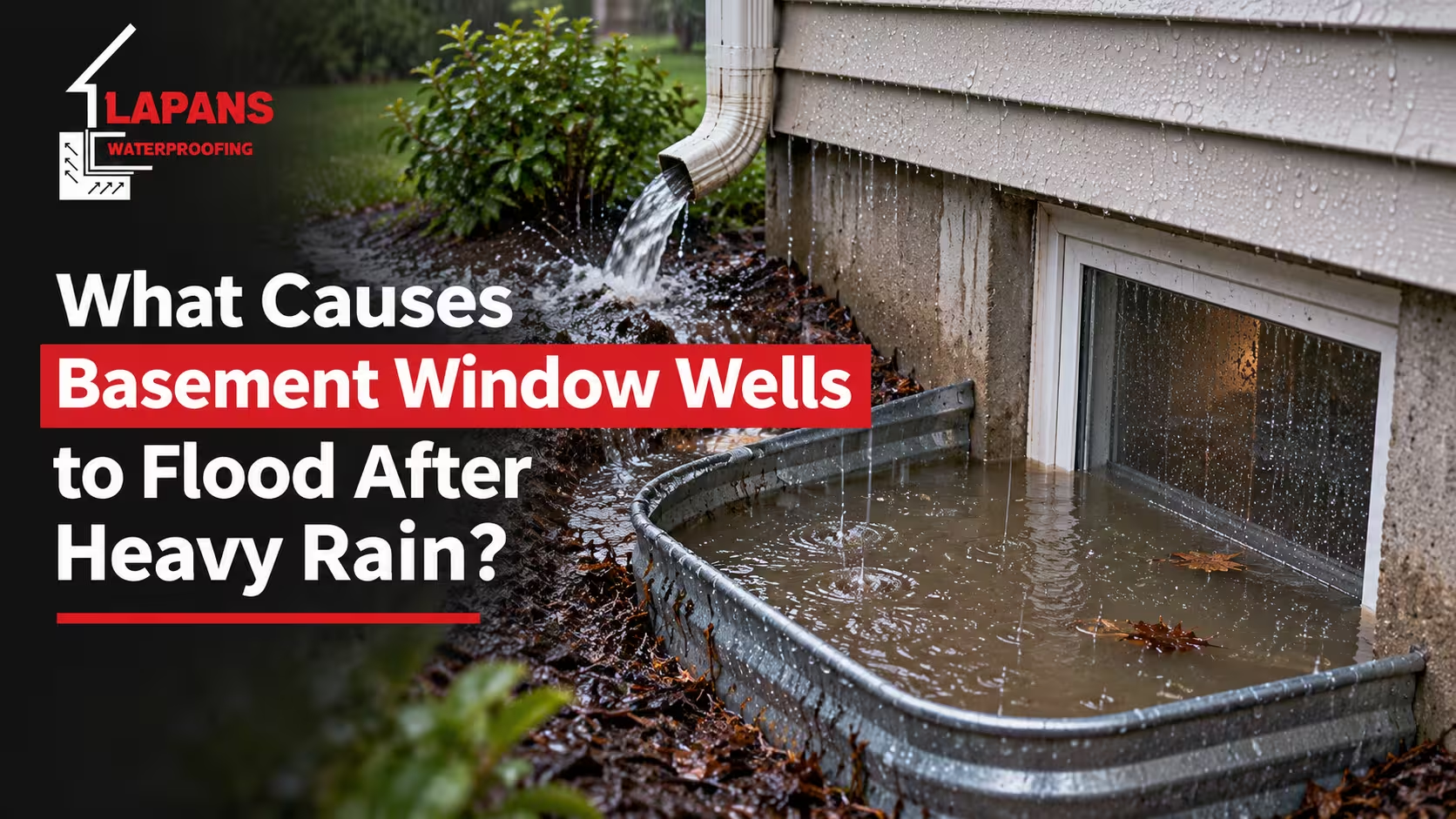
A basement window well is designed to keep soil away from the window while allowing natural light into the basement. However, after a heavy storm, the well may collect several inches of standing water. When water rises faster than it drains, it can reach the window frame, seep past worn seals, and enter the basement.
The cause is not always a damaged window. Clogged drainage, poor grading, roof runoff, compacted gravel, and saturated soil can all send water toward the well. Finding the source matters because adding gravel or installing a cover will not correct every drainage problem.
How a Basement Window Well Is Supposed to Drain
A properly functioning window well gives rainwater a route away from the basement window. The surrounding soil should direct surface runoff away from the foundation, while the well’s drain and drainage gravel help prevent water from collecting at the bottom.
In some homes, the window well drain connects to a foundation drainage system or another approved discharge point. The exact arrangement depends on the property’s construction. If the drain is blocked, disconnected, or missing, water may have nowhere to go.
Why Water Collects in Window Wells After Heavy Rain
Several conditions can overwhelm or interrupt window well drainage. More than one may contribute to the same flooding problem.
| Cause | How it leads to water buildup | What to look for |
| Clogged window well drain | Leaves, soil, and debris restrict the outlet | Water remains after nearby areas dry |
| Poor grading | Ground slopes toward the foundation and directs runoff into the well | Soil or mulch appears higher near the house |
| Roof runoff | Gutters or short downspouts discharge water near the well | Overflow or concentrated flow during storms |
| Compacted or dirty gravel | Sediment fills spaces between stones and slows drainage | Mud, fine soil, or a hardened surface |
| Saturated soil or groundwater | Wet surrounding soil limits how quickly water can drain | Several wells or low areas collect water |
| Damaged well or window seals | Water enters through gaps or deteriorated materials | Rust, cracks, loose joints, or dampness near the frame |
A useful distinction is whether water is entering from above or rising from below. A downspout aimed at the well creates concentrated surface runoff. Water that remains despite clear surface conditions may point to a blocked drain, saturated soil, or a problem with the drainage outlet.
Warning Signs That the Drainage Problem Needs Attention
Standing water is the clearest sign, but other clues can reveal repeated exposure before a basement leak becomes obvious.
- Water remains in the well long after rainfall has stopped.
- Mud, leaves, mulch, or sediment repeatedly collect around the drain opening.
- The window frame or sill shows rust, peeling paint, or deteriorating sealant.
- Damp carpet, staining, or musty odors appear near the basement window.
- Water spills over the top of the well during storms.
- The same well floods after moderate rain while other areas remain dry.
These signs do not prove that the drain itself is clogged. A damaged window frame, poor grading, or a blocked downstream connection can produce similar symptoms. The source should be checked before choosing a repair.
What Homeowners Can Check After a Storm
Start with visible conditions and avoid entering a flooded or unstable well. Do not remove a heavy cover alone or reach into standing water where electrical equipment, sharp debris, or hidden damage may be present.
- Look at the downspouts. Check whether they discharge beside the window well or send water across the ground toward it.
- Inspect the surface. From a safe position, note leaves, mulch, soil, or other debris covering the drain area.
- Check the ground slope. Look for settled soil or landscaping that directs runoff toward the foundation.
- Observe the window. Note whether water appears around the frame, sill, or foundation wall after the well fills.
- Record the pattern. Take photos and note how much rain occurred, how high the water reached, and how long it remained.
| Helpful note: A window well cover can reduce leaves, debris, and direct rainfall entering the well. It cannot repair a blocked drain, redirect roof runoff, or correct negative grading. A cover should not be treated as a complete drainage solution. |
Which Repairs Address the Actual Cause?
The right correction depends on where water enters and why it cannot drain. Clearing accessible debris may help when the outlet is simply obstructed. Persistent flooding may require drain repair, a corrected discharge route, or improvements to the surrounding grade.
| Problem found | Possible improvement |
| Debris blocking an accessible drain opening | Remove the obstruction and monitor drainage |
| Downspout discharging beside the well | Extend or reroute the downspout to a suitable discharge area |
| Ground sloping toward the foundation | Regrade the area to direct surface water away |
| Damaged or ineffective window well drain | Repair or install an appropriate drainage connection |
| Cracked well liner or deteriorated window seals | Repair the well structure or address the window perimeter |
Do not assume a window well drain should simply be connected to any nearby pipe. Its discharge route must be suitable for the property’s drainage design and local requirements. A professional can assess whether the existing foundation drain is appropriate for that connection.
When Professional Drainage Improvements Are Needed
Repeated flooding, water entering the basement, a drain that does not appear to function, or several window wells collecting water are reasons to arrange an inspection. A professional assessment can trace surface runoff, examine the well and drain, and determine whether the problem involves the outlet, grading, or groundwater conditions.
In Lowell, MA, heavy rainfall and seasonal snowmelt can both expose weak points in exterior drainage. Lapans Basement Waterproofing can assess window well drainage, determine why water is accumulating, and recommend improvements that address the source rather than only the visible water.
Frequently Asked Questions
Why does my basement window well fill with water every time it rains?
A blocked drain, poor grading, roof runoff, or saturated soil may repeatedly direct water into the well. The drainage route needs to be checked to determine why the water is not leaving.
Will adding more gravel fix a flooded window well?
Not if the drain is blocked, disconnected, or unable to discharge water. New gravel may improve the surface temporarily, but it will not correct an underlying drainage failure.
Do window well covers prevent basement flooding?
Covers help limit direct rain, leaves, and debris, but they cannot stop all runoff or groundwater. They work best as one part of a properly functioning drainage arrangement.
How long should water remain in a window well after rain?
There is no single time that applies to every property because soil, drain design, and rainfall intensity differ. Water that repeatedly remains or rises toward the window deserves further inspection.
Should I replace my basement window if the well floods?
Not automatically. First, determine whether water is overflowing the well, entering around the frame, or collecting because the drain is blocked. Replacing the window alone will not fix poor exterior drainage.
Final Thoughts: Keep Rainwater Away From Basement Windows
Recurring window well flooding usually points to a drainage condition that needs attention, not simply a need for more gravel or a new cover. Lapans Basement Waterproofing can evaluate the exterior drainage layout and determine which improvements will help keep water away from basement windows.