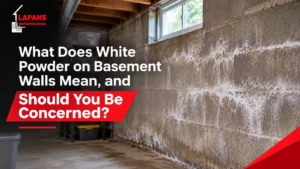
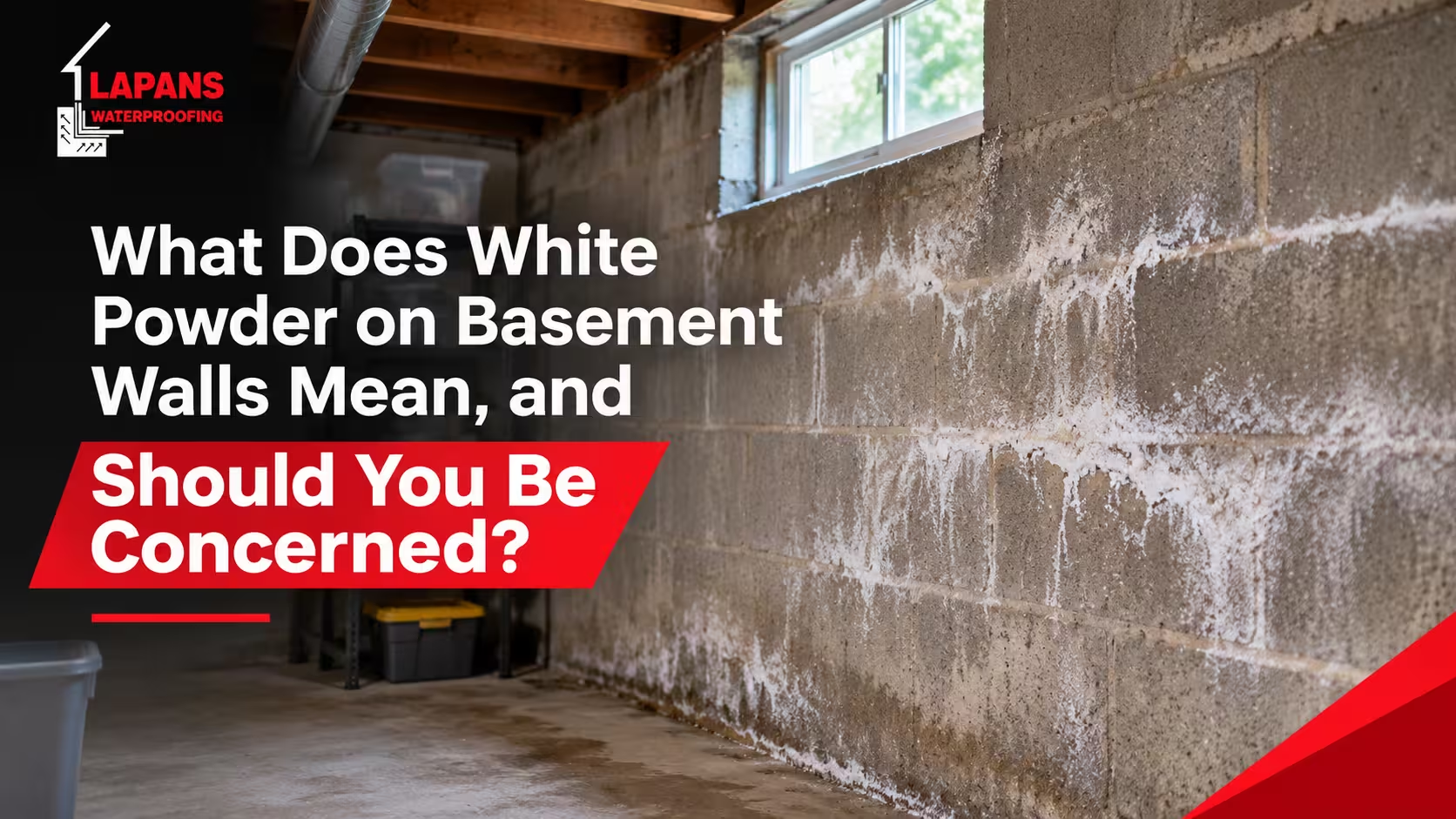
Finding white powder on basement walls can raise questions about mold, water damage, or foundation problems. This white buildup often develops when water passes through concrete, brick, or mortar and leaves mineral deposits as it dries. Although the residue itself is generally harmless, its presence suggests that moisture has moved through the masonry.
A small deposit does not automatically mean the foundation is failing. Notice where it appears, whether the wall stays damp, and whether the powder returns. In Lowell, MA, also check how rain and snowmelt drain around the foundation.
What Is Efflorescence on Basement Walls?
Efflorescence forms when water dissolves soluble salts inside or around masonry, carries them toward the surface, and evaporates. Once the water evaporates, mineral salts collect on the surface, forming a pale coating that may resemble chalky dust or small crystals.
Concrete, CMU blocks, brick, and mortar are porous. Capillary action, groundwater pressure, or direct water entry can move moisture through them.
Efflorescence needs three conditions:
- Mineral salts that dissolve in water and are present in bricks, concrete, or nearby building materials.
- Moisture that dissolves and transports those salts.
- Evaporation that leaves the minerals on the surface.
The deposit confirms moisture movement but does not identify its source. New masonry may also release moisture as it cures.
Efflorescence or Mold: What Is the Difference?
White residue is not automatically mold. Efflorescence is made of mineral salts; mold is biological growth that develops when moisture and suitable organic material are present. They require different responses.
| What to Check | Efflorescence | Mold |
| Appearance | Chalky, dusty, or crystalline | Fuzzy, spotted, or patchy |
| Typical color | White or light gray | White, green, black, or other colors |
| Composition | Mineral salts | Biological growth |
| Common surface | Concrete, brick, mortar | Drywall, wood, paper, stored items |
| What it suggests | Moisture carried salts to the surface | Conditions support fungal growth |
Efflorescence is generally cosmetic, but its moisture source may support mold on nearby cardboard, wood, carpet, or drywall. Investigate musty odors or suspected growth separately; appearance alone cannot confirm an unknown substance.
What Causes White Deposits to Form?
Moisture may come from outside, within the wall, or inside the basement:
| Possible Source | How It Affects the Wall |
| Wet soil against the foundation | Allows moisture to migrate into porous masonry |
| Poor grading or standing water | Keeps soil near the wall saturated |
| Short or leaking downspouts | Releases roof runoff close to the foundation |
| Cracks or open joints | May provide a direct path for water entry |
| High indoor humidity | Can contribute to condensation |
| New concrete or mortar | May release moisture as materials cure |
Water can travel through pores and mortar joints without a visible crack. A moisture meter may help assess damp areas, but readings depend on the material and testing method.
Read the Pattern, Not Just the Powder
Deposit patterns can guide an inspection:
- Along the bottom of a wall: Check for moisture entering near the floor or moving through masonry.
- Below a crack or joint: Look for a possible localized entry point.
- Across several wall sections: Consider broader soil moisture or drainage conditions.
- Returning after storms: Check gutters, downspouts, grading, and water collection outside.
These are clues, not a diagnosis; inspect the wall and exterior drainage together.
When Should You Be Concerned?
A one-time light patch may be cosmetic. Recurring deposits, dampness, or deterioration need closer attention.
Warning signs to take seriously include:
- Water seeping, trickling, or collecting along the wall.
- Damp patches that remain long after rainfall.
- Cracks that are widening or repeatedly leaking.
- Concrete or mortar that flakes, crumbles, or breaks apart.
- Paint that blisters or peels in the same area.
- Musty odors or moisture-damaged belongings nearby.
Salt crystals can contribute to surface deterioration, but efflorescence alone does not prove structural damage. Assess significant cracks, movement, or crumbling separately.
Example: A homeowner brushes away a small patch near the basement floor. It returns after heavy rain. That pattern makes it worth checking exterior drainage and soil moisture; repeatedly cleaning the spot will not address the source.
How to Remove the Residue Without Missing the Cause
For a small, dry deposit, photograph the area, wear gloves and eye protection, and gently brush away loose material. Avoid breathing dust and follow product guidance before using a cleaning solution.
Avoid harsh acids and do not paint or seal over active deposits. Continuing moisture can bring salts back and cause coatings to blister.
Remember: Cleaning removes the visible residue; it does not control moisture. If the wall is wet, the powder returns, or masonry is deteriorating, identify the water source before choosing a repair.
What Lowell, MA Homeowners Should Check Outside
Rain and snowmelt can leave Lowell foundation soil wet. Check these drainage details first:
- Make sure gutters are clear and do not overflow beside the house.
- Check that downspouts discharge away from the foundation.
- Look for low spots where water collects after storms or snowmelt.
- Confirm the ground slopes away from the house where practical.
If deposits return, an assessment can help identify groundwater, cracks, drainage, or another moisture source. Lapans Basement Waterproofing helps homeowners evaluate moisture concerns and determine whether basement damp proofing is suitable for the property.
Frequently Asked Questions
Is white powder on basement walls harmful?
Efflorescence is generally not a direct health hazard. The moisture behind it may create conditions for mold on nearby organic materials, so investigate persistent dampness, musty odors, or suspected growth separately.
Does efflorescence mean my foundation is failing?
No. It indicates that moisture has carried mineral salts to the surface, not that the foundation has necessarily lost strength. Cracking, movement, or crumbling needs a separate professional evaluation.
Will a dehumidifier stop efflorescence?
A dehumidifier may reduce indoor humidity and condensation, but it will not necessarily stop groundwater entering through a foundation wall. The moisture source must be identified.
Should I paint over white powder?
Not while deposits are active or returning. Moisture can continue carrying salts to the surface and cause paint or coatings to blister and peel. Address the moisture issue first.
Why does the powder return after cleaning?
It returns when moisture continues moving through the masonry and carrying soluble salts. Cleaning removes the visible deposit, but it does not stop the water pathway.
Final Thoughts: Find the Moisture Source Behind the White Residue
White residue on basement walls is commonly caused by efflorescence and does not automatically indicate mold growth or foundation damage. Its pattern can help explain moisture movement, but cleaning alone will not address the source.
If deposits keep returning or appear with leaks, dampness, or crumbling masonry, arrange a closer assessment. Lapans Basement Waterproofing can help evaluate basement moisture conditions and discuss an appropriate next step.