A sump pump that keeps cycling can raise questions when there is no visible rainwater around the property. The pump responds to water collecting in its basin, not directly to rainfall. Groundwater may still be moving toward the foundation, while a mechanical fault can make the pump restart sooner than it should.
The important question is whether water is continually entering the sump pit or flowing back after each cycle. Those problems have different causes. Occasional operation may be normal during seasonal groundwater changes, but repeated starts with very short pauses deserve attention because they increase wear on the motor and switch.
Why the Pump Runs When It Has Not Rained
Rainfall is only one source of water around a foundation. Groundwater can continue moving through soil after a storm, while snowmelt, saturated ground, and foundation drain tile can feed the sump basin. A dry-looking yard does not necessarily mean the soil below ground has stopped releasing water.
Lowell has a relevant seasonal pattern. A USGS study of the Lowell area explains that much of the region’s groundwater recharge typically occurs from mid-October through April, when dormant vegetation allows more rain and snowmelt to soak into the ground. This helps explain why a basement pump may remain active between precipitation events.
Four Causes of Repeated Sump Pump Cycling
Frequent starts can reflect real water inflow or a system that is not emptying the pit efficiently. The pattern often points toward one of these issues:
| Possible cause | What happens | Clue to look for |
| Groundwater inflow | Water keeps entering through foundation drainage | Basin level rises gradually |
| Faulty check valve | Discharged water returns to the pit | Water rises soon after shutdown |
| Float switch problem | Switch activates at the wrong level | Starts occur at inconsistent levels |
| Restricted discharge or pump issue | Water leaves too slowly | Long run time or weak discharge |
1. Groundwater Keeps Entering the Sump Pit
Drainage pipes installed around the foundation channel groundwater into the sump basin for removal. If groundwater remains elevated, the basin may refill soon after each cycle even without fresh rain. The pump may be working properly; frequent operation may simply reflect ongoing drainage demand.
Watch the water level while the pump is off. A gradual rise suggests water is entering through the drainage system. Downspouts that release water near the foundation or poor grading can also keep surrounding soil wetter.
2. A Check Valve Lets Water Flow Back
A check valve prevents discharged water from flowing back into the sump basin once the pump stops running. If it is worn or unable to seal, water may drain back into the basin. The float rises again, causing the pump to restart even when little new groundwater has entered.
A quick rise immediately after shutdown is a useful clue. A faulty valve can cause short cycling even when groundwater inflow is modest.
3. The Float Switch Is Sticking or Misadjusted
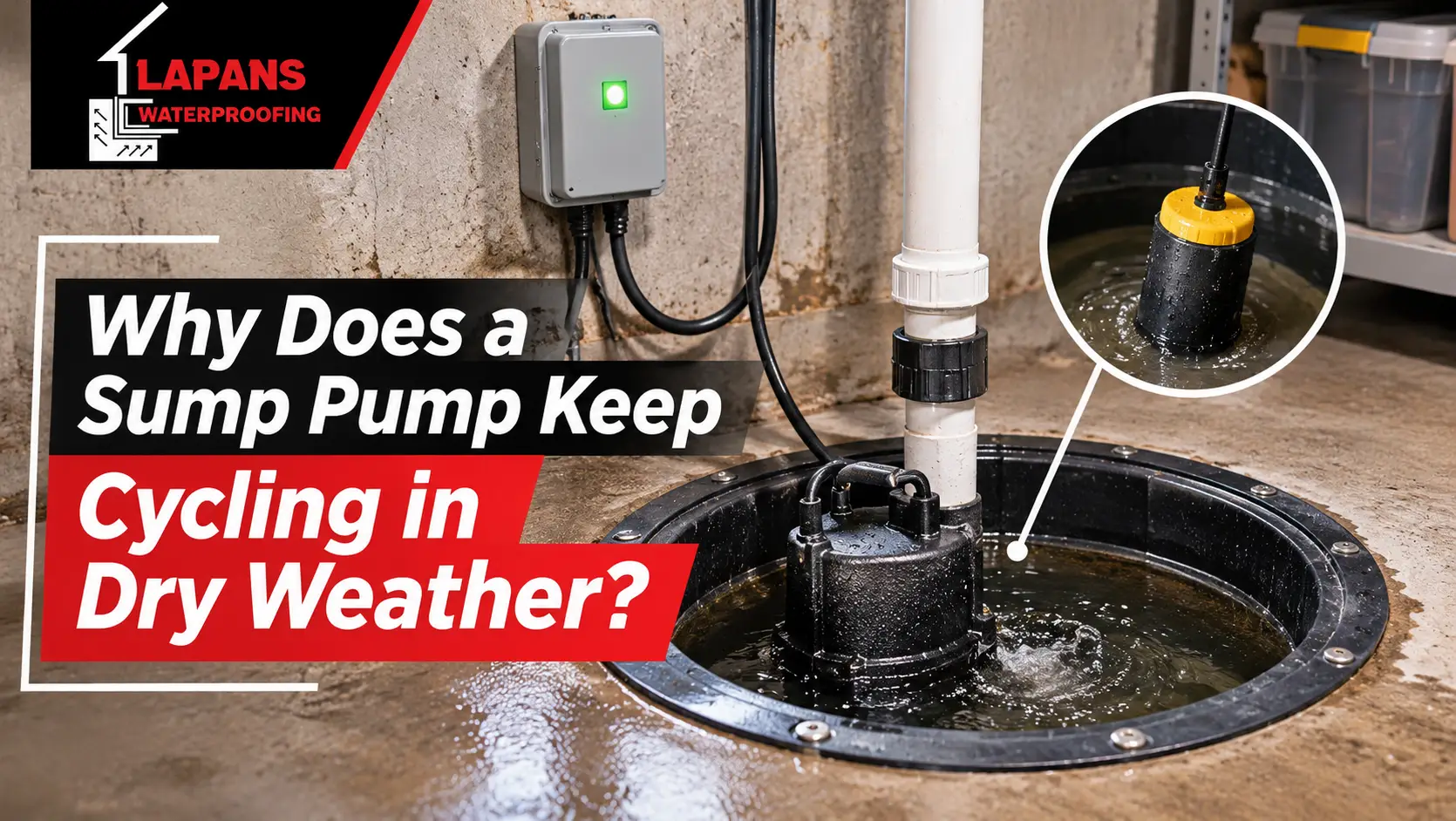
A float switch regulates the pump’s operation by triggering it when water rises and stopping it when the level drops. If it catches on the basin wall, pump, power cord, or debris, it may activate at the wrong water level. A damaged switch can also send inconsistent signals, making the pump turn on repeatedly or continue running after the basin is low.
With the power safely disconnected, inspect whether the float has room to move freely. Do not force it or adjust it unless the manufacturer permits it. A float that sticks or fails to shut the pump off needs professional attention.
4. The Pump or Discharge Line Is Not Moving Water Properly
A blocked discharge pipe, clogged intake, damaged impeller, or poorly matched pump capacity can slow water removal. The motor may run longer while the basin level drops slowly. An outdoor outlet that is obstructed or frozen can also restrict discharge.
Look for visible blockage at the outlet and confirm that water is directed away from the foundation. If the motor runs but little water exits, arrange an inspection before it overheats.
Is It Normal for a Sump Pump to Run Every Few Minutes?
There is no universal cycle interval for every basement. Pump size, basin volume, drainage design, and groundwater conditions all affect operating frequency. Occasional starts during high groundwater periods may be normal if the pump empties the basin and then stays off for a reasonable interval.
Repeated starts every few minutes, especially when each run lasts only seconds, suggest short cycling. This is different from a normal cycle after the basin fills. Frequent starts increase wear on the motor and switch and may shorten component life. Regular sump pump maintenance helps identify switch, valve, and discharge problems before they lead to more serious failures.
What You Can Safely Check
A few observations can help narrow down the cause. Keep hands and tools away from moving parts and standing water, and never handle the pump or plug with wet hands.
- Watch the basin level: Does it rise gradually or jump up just after shutdown?
- Listen after a cycle: A rush of returning water may indicate check valve backflow.
- Observe the float: Look for contact with the basin wall, cords, or debris.
- Check the outlet: Look for visible blockage and confirm water is carried away from the home.
- Record the pattern: Note how long the pump runs and how soon it starts again.
Do not unplug the pump just to stop the noise if water is entering the pit. The basement could flood. If the basin fills rapidly, the motor overheats, or water approaches the floor, seek prompt professional help.
When to Arrange Sump Pump Maintenance
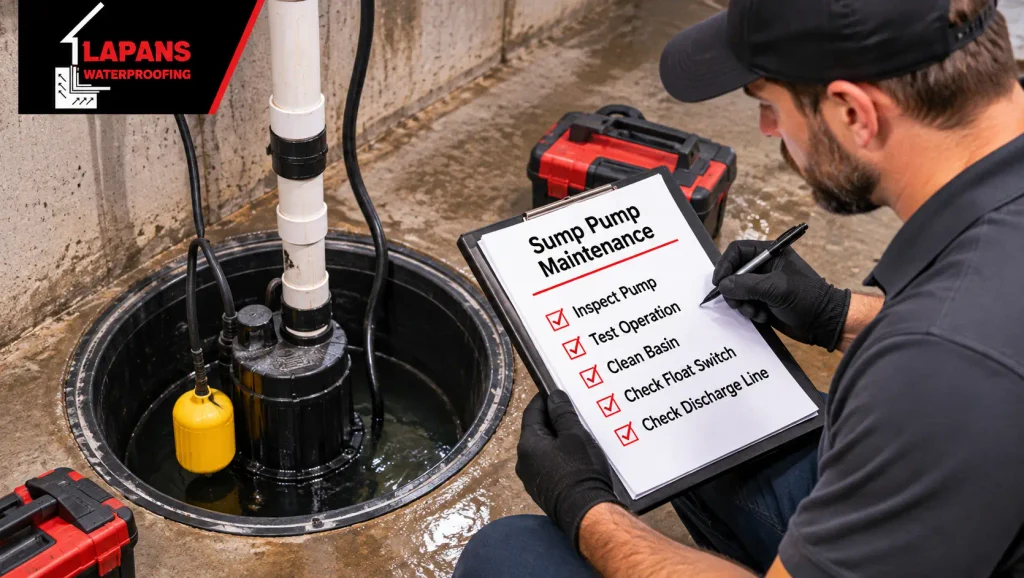
Arrange an inspection if the pump cycles every few minutes, the float behaves unpredictably, water returns through the discharge line, or the pump cannot lower the basin level. A proper assessment should include the float switch, check valve, discharge route, impeller, basin, and the amount of water entering the drainage system.
The cause should guide the repair. Replacing a pump will not fix a leaking check valve or drainage that continually sends water into the pit. Lapans Basement Waterproofing can assess sump pump operation and identify maintenance issues. Learn more about its sump pump maintenance service.
Frequently Asked Questions
Why does my sump pump run when it has not rained?
Groundwater can continue moving toward the foundation after rainfall ends. Snowmelt, saturated soil, and foundation drain tile may also deliver water to the pit. If the basin refills gradually, the pump may be responding to genuine groundwater inflow rather than a mechanical fault.
Can a bad check valve make a sump pump turn on repeatedly?
Yes. A faulty check valve may let water in the discharge pipe flow back into the basin after shutdown. That raises the water level and can trigger another cycle. A quick rise immediately after the pump stops is a useful clue.
How often should a sump pump cycle?
There is no single correct frequency because basin size, pump capacity, and groundwater inflow vary. Focus on the pattern: very short pauses, repeated starts every few minutes, or a sudden increase in activity should be investigated.
Can short cycling damage a sump pump?
Frequent starts place extra demand on the motor, switch, and electrical components. Repeated operation may contribute to premature wear or failure. Finding the cause early is better than allowing the pump to continue cycling unnecessarily.
Should I replace the pump if it keeps turning on?
Not automatically. A stuck float, leaking check valve, blocked discharge line, or high groundwater inflow may be responsible. Have the full system inspected before replacing the unit, because a new pump will not correct a drainage or valve problem.
Final Thoughts: Find the Cause Behind the Cycling
A sump pump running in dry weather may be handling groundwater still reaching the foundation. However, starting every few minutes can also signal backflow, a float fault, or restricted discharge. Track the basin level and cycle pattern, then arrange maintenance if the operation remains unusually frequent. Contact Lapans Basement Waterproofing to identify the cause before excessive cycling strains the system.