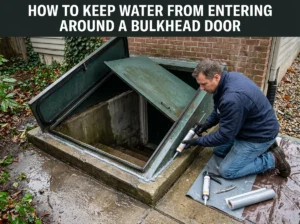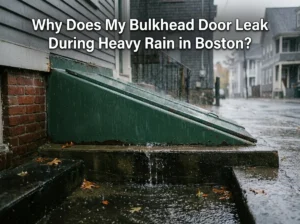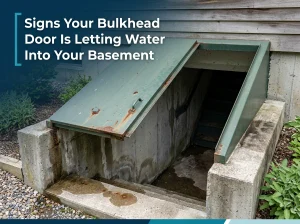
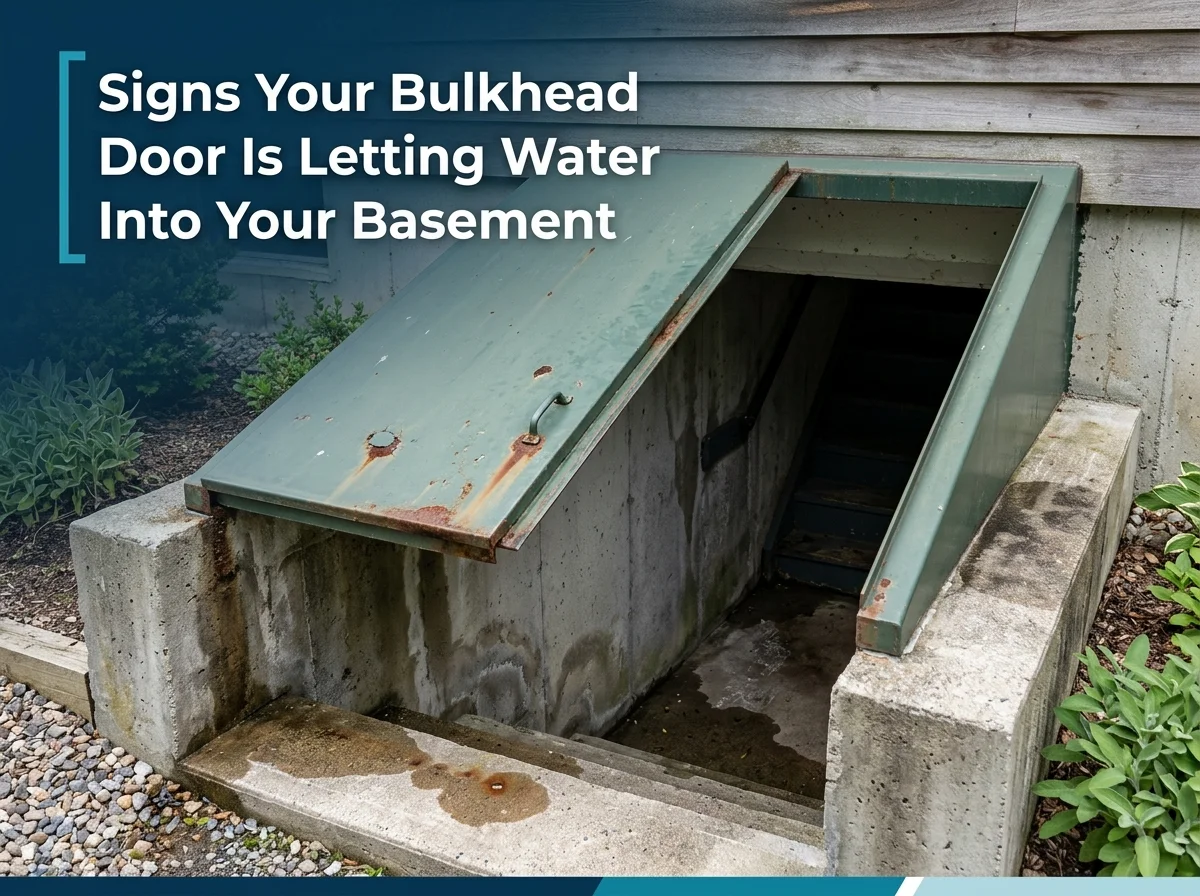
A bulkhead door makes it easy to get in and out of your basement, but it also gives water another way into your home. When the door, its frame, or even the surrounding foundation isn’t sealed properly, rainwater and moisture can slip into the basement.
Knowing the signs of a leaking bulkhead door can help you identify the problem before moisture causes more serious damage. That’s especially true in Lowell, MA, where heavy rain, snow, and the never-ending freeze-thaw cycle really put the squeeze on anything outside, especially concrete.
Why Bulkhead Doors Can Develop Water Leaks
A leak doesn’t always mean the door itself is damaged. Water sneaks in plenty of ways around the basement entrance.
Common causes include:
- Deteriorated door seals
- Gaps around the door frame
- Cracks in the surrounding concrete
- Poor drainage near the entrance
- Damaged or rusted door panels
- Separation between the bulkhead and foundation
- Water pooling at the base of the stairs
Pay close attention to where the bulkhead meets the foundation. Even a small gap there turns into a water highway when it rains hard.
7 Signs of a Leaking Bulkhead Door
At times, the alert signals are obvious; at other moments, they can be subtle and show up only following a strong storm. Check the leaky bulkhead and the basement from time to time to catch problems early.
1. Water Stains Around the Basement Entrance
If you spot brown, yellow, or just dark staining near the bulkhead opening, that’s a heads-up about water getting in. Look over the foundation walls, floor, and spots close to the door frame. Water stains that look darker right after a rainstorm are red flags. Even if the stains look old, it means moisture has found its way in before.
2. Damp Concrete or a Wet Basement Floor
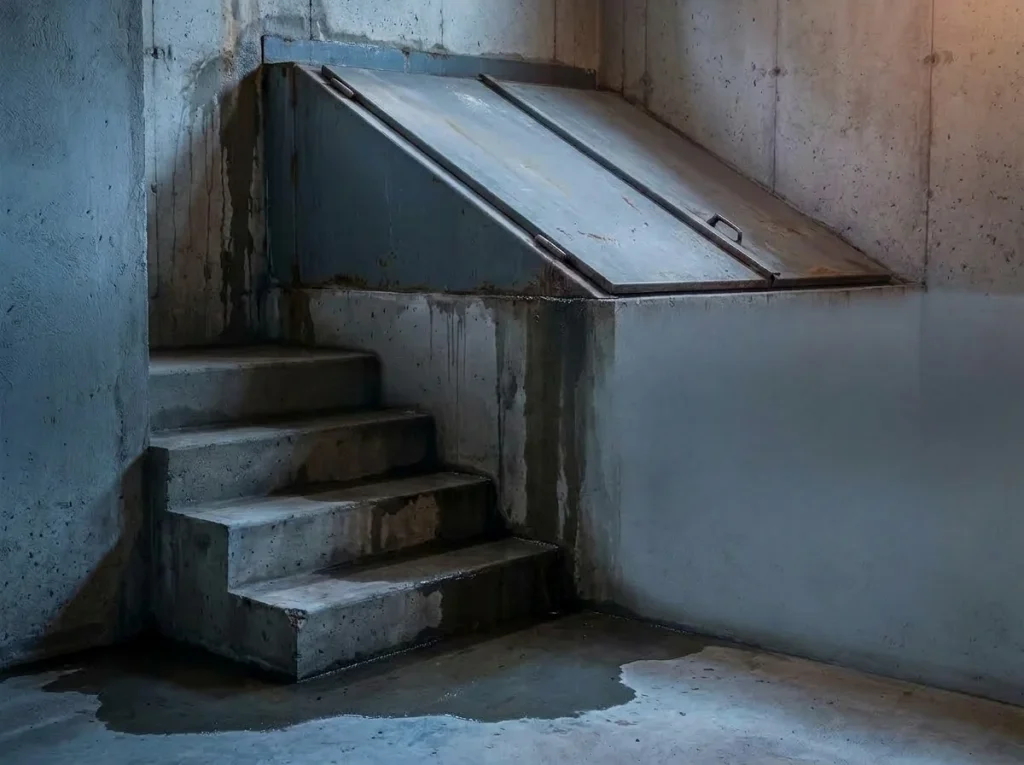
Damp concrete near the base of the bulkhead stairs is another common warning sign.
You might notice:
- Wet patches after rain
- Damp concrete walls
- Small puddles
- Water trails leading away from the entrance
- Moisture along the floor-to-wall joint
If the rest of the basement stays dry but water keeps showing up by the bulkhead, start your search there.
3. Water Pooling at the Bottom of the Stairs
Rainwater should drain away from your bulkhead, not sit at the bottom of the stairs. If water keeps puddling there, you’ve probably got a drainage problem. Sometimes, there are even gaps letting water in before it has a chance to drain. And even small pools can turn into big problems during heavy rain.
4. Rust or Corrosion on the Door
Rust on hinges, bolts, edges, or other metal parts usually means moisture’s hanging around. A little surface rust isn’t always the end of the world, but if you see lots of corrosion along with dampness, stains, or busted seals, that’s a bigger deal. As the metal gets worse, new gaps pop up, making it easier for more water to sneak through.
5. A Musty Smell or Mold Growth
If you notice a musty odor around the bulkhead, that’s usually a sign of moisture. Mold will grow wherever water hangs around too long. Check for discoloration on walls, wood, insulation, or anything else close to the door. Just scrubbing away the visible mold won’t fix things if water keeps coming in; the root problem is still there.
6. Gaps or a Deteriorated Door Seal
Check the rubber seal that lines the bulkhead. It should press up tight against the door and frame when you shut it. If it’s cracked, brittle, squashed, or missing, water can get in. See if the doors close evenly, too. If they’re out of line, water can slip through those gaps during storms.
7. Cracks Around the Bulkhead and Foundation
The concrete around your basement entrance shifts and cracks as time goes by. Lowell’s wild weather doesn’t help the freeze-thaw cycle expand little cracks with every winter. More cracks mean more water finds its way in. Cracks aren’t always a sign of big foundation trouble, but don’t ignore them if water is getting through.
How to Tell Where the Water Is Coming From
Finding moisture is step one. You also need to determine if the bulkhead is the culprit. After it rains, inspect the whole area and look for the highest spot where you see moisture. Follow the water trail down along the walls and floor. Don’t just assume the lowest wet patch is exactly where the leak started.
A simple inspection can include:
| What You Notice | Possible Source |
| Water around the door edge | Damaged seal or frame gap |
| Moisture on the foundation wall | Bulkhead joint or foundation issue |
| Puddles at the stair base | Drainage or water entry problem |
| Water after heavy rain only | Rainwater intrusion |
| Moisture through a concrete crack | Foundation crack or exterior drainage |
A simple check like this helps you start sorting things out, though it doesn’t replace a professional inspection.
Why Lowell Weather Can Make Bulkhead Leaks Worse
Lowell has all four seasons, and every season gives your basement entrance new problems. Spring brings rain, winter means snow and freezing temps, and when water creeps into cracks and freezes, it pushes everything apart. Summer storms can dump a lot of water fast, right at the basement door.
That makes proper drainage and a well-sealed bulkhead particularly important for Lowell homeowners.
What Can Be Done About a Leaking Bulkhead?
Fixing the leak depends on where the water’s getting in. Sometimes, all you need to do is swap out an old rubber seal or fix up the frame. Other times, you’ve got bigger problems like cracks in the walls or foundation, or even bad drainage outside your house.
If the bulkhead doors are rusted, warped, or falling apart, it’s usually better (and less of a headache) to just have them replaced instead of patching things up over and over. And don’t forget, sometimes the leak isn’t just at the bulkhead; water can find its way in through cracks, joints, or poor drainage all around your basement.
When Should You Call a Professional?
If you’ve sealed everything up, cleaned the gutters, and fixed your drainage, but water’s still coming in, it’s time to get help.
It’s time for a closer look if you notice any of the following:
- Water enters during multiple storms
- Cracks around the bulkhead are growing
- The foundation wall stays damp
- Mold keeps returning
- The bulkhead doors are severely corroded
- Water reaches the finished basement areas
- You cannot identify the source of the moisture
Don’t let water problems keep ruining your basement. A professional can figure out if this is just a bulkhead issue or if you need to tackle a bigger waterproofing job.
How to Reduce the Risk of Future Bulkhead Leaks
Take care of the area around your bulkhead if you want to cut down on water problems. Check those door seals at least twice a year; doing it before the wet seasons is always smart. Keep leaves and other junk out of any drainage zones nearby, and make sure your gutters and downspouts send water away from your foundation.
Look over the bulkhead after big storms. Little warning signs like water trails or a damp strip of concrete are a lot simpler to fix than cleaning up a flooded basement. If you notice recurring moisture around your basement entrance, Lapans Basement Waterproofing can help evaluate the source of the water and determine what type of waterproofing or repair may be appropriate.
Frequently Asked Questions
How do I know if my bulkhead door is leaking?
Look for water stains, damp concrete, puddles, rust, mold, musty smells, rotting seals, or fresh cracks. If you see these after it rains, odds are water’s getting in through the bulkhead.
Can a bulkhead door leak even when it looks closed?
Yes, definitely. It might seem shut, but worn-out seals, uneven doors, or cracks around the frame can let water through. Sometimes the leaks start at the joint where the bulkhead connects to your foundation.
Why does my bulkhead leak when it rains?
Usually it’s bad seals, loose doors, cracked panels, foundation cracks, or just lousy drainage outside. Heavy rain hammers on all these weak spots.
Should I replace a leaking bulkhead door?
Not always. If the door’s just leaky but still in good shape, fixing the seal or drainage is easier (and cheaper). But if it’s rusted out or warped, replacement is the way to go.
Can a leaking bulkhead cause basement damage?
Yes, if water keeps getting in, expect musty odors, mold, ruined walls or floors, and eventually, rot. Catch it early, and you’ll save yourself a lot of stress.
Final Thoughts: Do Not Ignore Bulkhead Water Intrusion
A leaky bulkhead often starts with just a tired seal or a small puddle after a storm. If you don’t fix it, it turns into a big problem fast.
In Lowell, all that wild weather means you really need to pay attention to your bulkhead, foundation joints, and drainage. When you see warning signs like damp concrete or stained walls, don’t just mop it up and hope for the best. Find out what’s wrong and fix it before your whole basement suffers.
Lapans Basement Waterproofing can help homeowners determine whether the bulkhead, foundation, or drainage system is contributing to basement water intrusion and identify an appropriate solution.