A basement can seem dry all summer, then develop dark wall patches after several days of rain. Stored boxes feel damp, paint begins to peel, or a musty smell lingers even when there is no visible puddle. These signs may mean moisture is entering through the foundation or that humid air is condensing on cool surfaces.
For homeowners in Lowell, Massachusetts, the best damp-proofing method depends on where the moisture comes from. A coating may help with minor dampness, but it will not fix every leak. The right solution may involve exterior protection, interior drainage, crack repairs, or humidity control.
Find the Moisture Source Before Choosing a Treatment
Look at when and where the dampness appears. A wet patch that grows after rain may point to water entering through a crack, wall joint, or saturated soil. Condensation on cold walls, pipes, or windows may instead indicate high indoor humidity.
Check gutters, downspouts, soil grading, and window wells, too. If roof runoff collects beside the foundation, improve drainage where practical. Covering a damp surface without addressing its cause can leave the problem hidden.
Which Damp-Proofing Method Fits Your Basement?
There is no single best treatment for every basement. The choice depends on water exposure, wall material, and whether moisture is entering through the foundation or forming on the surface.
| Method | Best suited for | Important limitation |
| Exterior membrane or coating | Soil moisture against accessible foundation walls | Requires excavation and suitable drainage; not every coating handles water pressure |
| Interior waterproof coating | Some minor dampness on properly prepared masonry | Usually cannot stop active leaks or hydrostatic pressure alone |
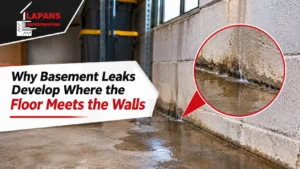
| Interior drain and sump pump | Recurring seepage at wall-floor joints | Collects and redirects water; does not waterproof the exterior wall |
| Crack or mortar repair | Localized entry through a known defect | Does not solve general groundwater pressure or poor drainage |
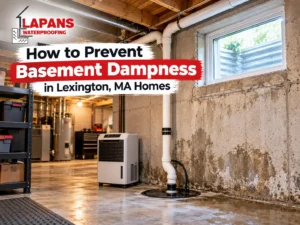
| Dehumidifier and ventilation | Condensation and high indoor humidity | Does not repair foundation leaks |
An exterior membrane may suit a wall exposed to soil moisture when access is available. If water repeatedly enters during storms, drainage and a sump system may be more effective than applying another layer of paint.
When Exterior Protection Makes Sense
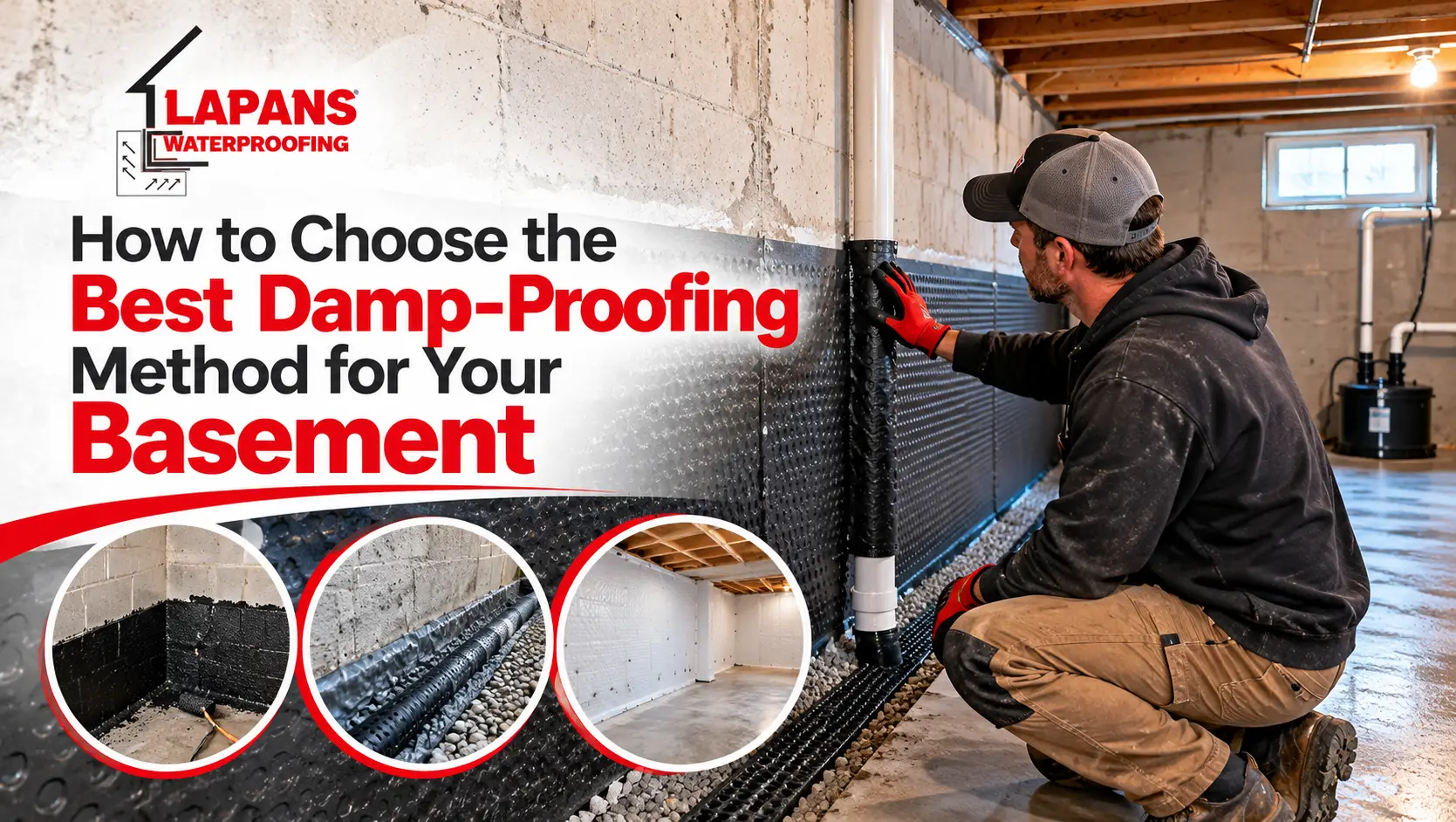
Exterior damp-proofing treats the foundation wall on the side exposed to soil. Depending on the conditions, work may include surface preparation, masonry repairs, a compatible membrane, protection board, and drainage near the footing.
This approach can help when the exterior wall is accessible, and moisture is coming from surrounding soil. Excavation can be disruptive, however, and must be planned safely. Choose materials for the wall and site conditions, not just because a product label says it seals concrete.
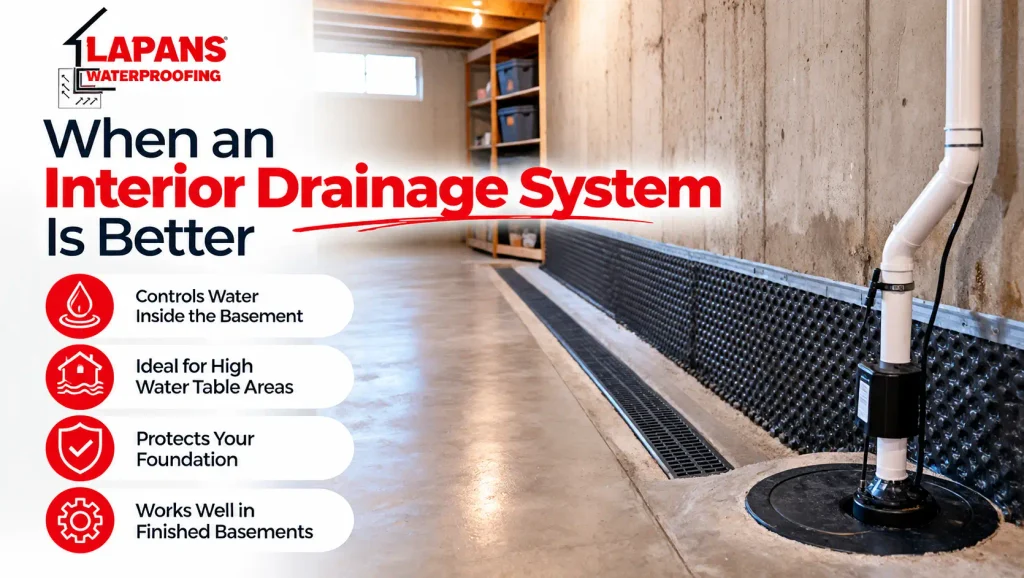
When an Interior Drainage System Is Better
Patios, additions, utilities, or nearby structures can make exterior excavation difficult. In these cases, an interior drainage channel may collect seepage along the basement perimeter and direct it to a sump pump for discharge.
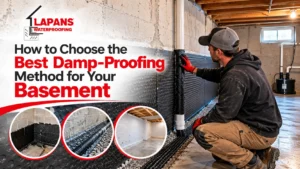
An interior membrane can sometimes guide water toward the drain, but the components must work as a system. A coating applied over an actively leaking wall may blister or fail if water pressure remains behind it. The goal is to manage water reliably, not hide the stain.
Repair Defects and Prepare the Wall Properly
A crack can become a moisture pathway, but not every crack has the same cause. Small, stable cracks may suit a compatible repair material. Widening cracks, bowing walls, or displaced masonry need professional assessment before cosmetic work begins.
Before coating, remove loose paint, dirt, efflorescence, and unsound material as the product instructions require. Concrete and masonry are porous, so treatment compatibility matters. A membrane applied over a deteriorating surface may not bond properly.
| Useful rule: If water appears after rain, investigate drainage and entry points first. If walls feel damp mainly during humid weather, check indoor humidity and condensation. |
What Lowell’s Climate Means for Basement Moisture
Lowell receives about 48.5 inches of precipitation in a typical year, based on 1991–2020 climate normals. The normal January daily low is about 16°F, so winter freeze-thaw conditions also matter. Water entering small defects can contribute to damage when it freezes.
These are long-term climate averages, not a forecast for an individual property. A home’s grading, soil, roof drainage, foundation depth, and groundwater conditions determine its actual exposure. When assessing foundation moisture, look at the whole property rather than assuming every basement needs the same product.
Prepare for a Treatment That Lasts
Move stored items away from damp walls and note where staining, peeling, or seepage occurs. Record whether the problem follows rain, snowmelt, or humid weather. Photos of recurring wet spots can help distinguish an active leak from old staining.
This basement preparation also makes the foundation easier to inspect before repairs. Lapans Basement Waterproofing assesses basement moisture conditions before selecting a suitable treatment, helping homeowners focus on the cause rather than covering up symptoms.
Frequently Asked Questions
Is damp-proofing the same as waterproofing?
No. Damp-proofing resists moisture in soil, while waterproofing systems are designed for more demanding water exposure. The correct approach depends on site conditions and expected water pressure.
Can waterproof paint solve basement dampness?
A compatible coating may help with minor dampness, but it is not a reliable fix for active leaks, failed drainage, or hydrostatic pressure. Identify the moisture source first.
Should basement walls be treated inside or outside?
Exterior treatment can protect accessible foundation walls from soil moisture. Interior drainage may be more practical when water is already entering, and excavation is not feasible.
Will a dehumidifier stop water coming through a wall?
No. It can reduce indoor humidity and condensation, but it cannot repair foundation leaks or redirect groundwater.
Are foundation cracks always serious?
Not always. Small, stable cracks may be repairable, but widening cracks, bowing walls, displacement, or repeated water entry should be assessed.
How do I choose the best basement damp-proofing method?
Identify the moisture source, inspect the foundation and exterior drainage, and match the treatment to the problem. Seek a professional assessment if the source is unclear or water returns.
Final Thoughts: Solve the Moisture Problem at Its Source
The best damp-proofing method is the one that matches the basement’s actual moisture problem. Exterior membranes can protect accessible foundation walls, interior drainage can manage recurring seepage, and humidity control can address condensation. A coating applied without diagnosing the cause may only delay another repair.
For homeowners in Lowell, Lapans Basement Waterproofing can assess moisture signs and help determine an approach suited to the foundation and site conditions. A clear diagnosis is the first step toward a drier, more usable basement.