
A damp basement can affect more than the space where you store boxes or do laundry. Peeling paint, white deposits on concrete, and musty odors can signal moisture problems that need attention before treatment begins.
Knowing how to prepare a basement for damp proofing helps Lynn, MA, homeowners get the work area ready, identify potential water sources, and avoid covering up problems that need repairs first.
Inspect the Basement Before Moving Anything
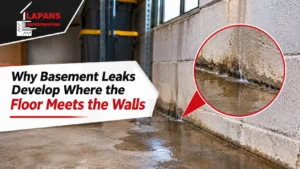
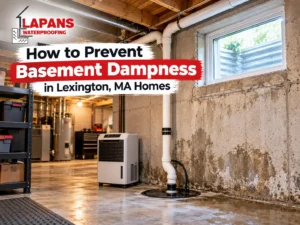
Start by walking through the basement and noting where dampness appears. Check foundation walls, corners, window wells, and the floor-wall joints. Look for changes after heavy rain, because recurring wet patches may point to drainage issues or water entering through the foundation.
Use this checklist to document what you find:
- Wall stains: Look for dark patches, peeling paint, or white mineral deposits.
- Foundation cracks: Note visible cracks, gaps, or damaged mortar joints.
- Musty odors: Check whether the smell is strongest near stored items or particular walls.
- Standing water: Record puddles and areas that remain wet.
- Damaged finishes: Look for flaking concrete, loose paint, or crumbling masonry.
Take photos before cleaning anything. These records can help a contractor compare the wall condition across different areas and understand whether the problem changes after rainfall.
When should you arrange a professional inspection?
A moisture meter can help assess dampness, but it cannot identify every source of water intrusion by itself. Ask a professional to investigate persistent seepage, recurring wet spots, or cracks that are widening. Bowing walls or substantial foundation movement also warrant prompt assessment.
Clear Stored Belongings and Create Working Space
Contractors need enough room to inspect the walls, prepare surfaces, and install the selected treatment. Move furniture, shelving, storage bins, and appliances away from the work area. If the entire basement is included, relocate belongings to a dry, protected location.
Use this preparation checklist before installation day:
- Pack smaller belongings into labeled containers.
- Move cardboard boxes and rugs away from damp areas.
- Remove furniture and movable shelving near foundation walls.
- Protect items that cannot be moved with suitable coverings.
- Keep stairs, walkways, utility panels, and shutoffs accessible.
Ask the contractor how much clearance is required. Some projects involve only wall treatment, while others require access to floor edges or drainage channels. Do not disconnect appliances or move heavy equipment without confirming the safest approach.
Prepare Basement Walls for Damp Proofing
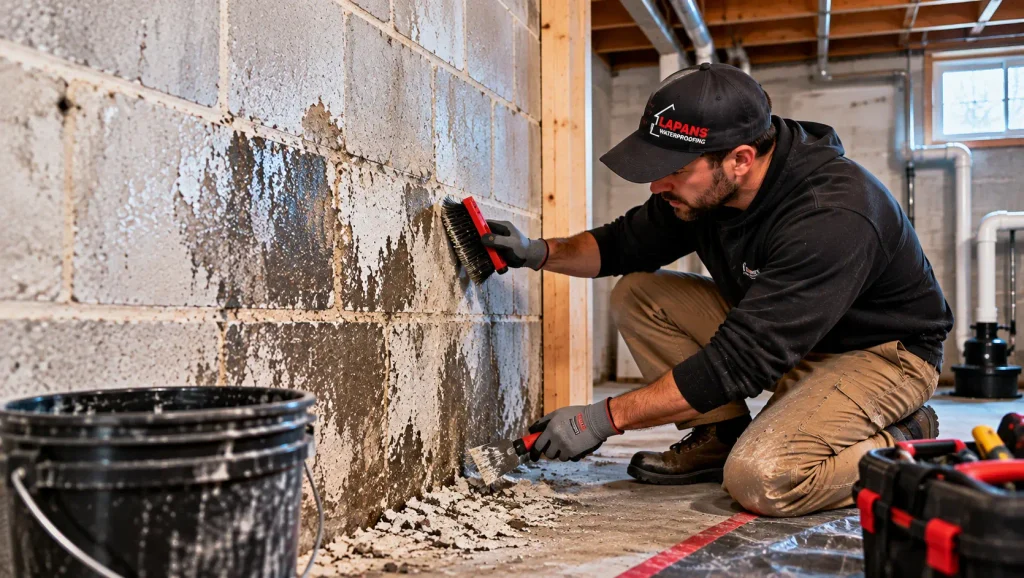
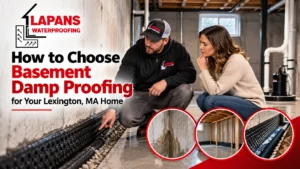
Proper basement wall preparation depends on the existing surface and the treatment being installed. Concrete, brick, and block masonry may require different cleaning and repair methods. Confirm the product requirements with the contractor before scraping coatings or applying cleaning products.
Remove loose paint and debris
Loose paint, dust, dirt, and flaking material can prevent a coating from bonding properly. Where appropriate, use a scraper or stiff brush to remove unstable material. Clean the surface with a compatible cleaner and follow the product instructions.
Do not seal over peeling paint, crumbling masonry, or visibly wet patches. Avoid aggressive grinding or disturbing unknown coatings until their safety has been assessed. Extensive mold growth may also require professional evaluation and appropriate cleanup.
Identify repairs that must come first
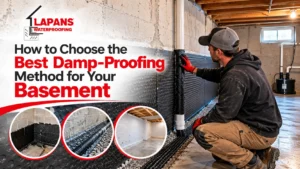
Make a list of damaged mortar joints, cracks, gaps around pipes, and deteriorated concrete. Some areas may need repairs before a damp-proofing membrane or waterproof coating can be applied.
Not every hairline crack indicates structural damage, and ordinary sealant may not stop water under pressure. The correct repair depends on the crack, the wall material, and whether water is actively entering.
| Important Tip: Damp proofing can limit moisture movement through a surface, but it is not automatically a solution for flowing water or hydrostatic pressure. If water keeps entering the basement, the underlying cause needs assessment before a surface treatment is chosen. |
Check Drainage Around the Foundation
Basement preparation should include a look at the exterior, where it is safe and accessible. Rainwater directed toward the foundation can undermine an otherwise suitable treatment. Check gutters, downspouts, soil grading, and basement window wells for visible problems.
| Area | What to check |
| Gutters and downspouts | Blockages, leaks, or discharge beside the foundation |
| Ground slope | Low spots that direct rainwater toward the house |
| Window wells | Debris, damaged seals, or pooled water |
| Drainage equipment | Visible damage or signs of malfunction |
Do not assume every wet basement needs a sump pump installation. A qualified professional should assess whether the property needs drainage improvements, crack repairs, a sump pump, a wall treatment, or a combination of solutions.
For homeowners researching how damp proofing can protect homes in Lynn, MA, this distinction matters. The right preparation depends on the source of moisture, not simply on which product can be applied to the wall.
Plan for Dust, Utilities, and Safe Access
Scraping, drilling, and masonry repairs can produce dust and debris. Ask which activities are planned so you can cover remaining belongings and prepare nearby rooms. Protective coverings should not block ventilation, access routes, or equipment that must remain operational.
Confirm these details with the contractor before work begins:
- Where workers will enter and keep their tools.
- Whether laundry equipment or utilities need temporary shutdowns.
- How dust and construction debris will be contained.
- Whether children and pets must stay away from the work area.
- Whether the walls need to meet specific moisture conditions.
If the project includes building alterations, confirm whether permits or inspections apply to your specific work. Lynn homeowners can contact the city’s Inspectional Services Department to ask about applicable requirements.
Know When Your Basement Is Ready
Before installation, make sure the work area is accessible, loose surface material has been addressed, and visible damage has been documented. The moisture source should also have been evaluated so the treatment is not expected to solve a problem it was not designed to handle.
Ask the contractor three practical questions:
- Is the wall surface ready? Confirm the cleaning, repair, and moisture requirements for the chosen system.
- What does the treatment address? Clarify whether it limits surface dampness or forms part of a broader waterproofing plan.
- Are further repairs needed? Resolve significant seepage or foundation concerns before relying on a coating alone.
Homeowners researching damp proofing signs should remember that stains, odors, and peeling finishes are clues, not a complete diagnosis. An inspection helps establish what is causing the moisture and which solution is appropriate.
Frequently Asked Questions
Do I need to empty my entire basement before damp proofing?
Not always. Clear the areas being treated and provide sufficient space for inspection and equipment. Ask whether belongings can remain in a separate, unaffected part of the basement.
Should basement walls be completely dry before treatment?
That depends on the product. Some systems tolerate slightly damp masonry, while others require a specific moisture range. Follow the manufacturer’s instructions and the contractor’s assessment.
Can I paint over damp walls before the contractor arrives?
No. Avoid adding paint or sealant before the inspection. It may conceal moisture evidence or interfere with the new treatment bonding to the surface.
Do all foundation cracks need structural repairs?
No. Crack size, location, movement, and water entry all matter. Have widening cracks or signs of significant movement assessed before the damp-proofing work proceeds.
When should I start preparing the basement?
Begin once the project is scheduled, especially if belongings need relocating or repairs may be necessary. Confirm the final preparation checklist and required wall conditions with the contractor.
Final Thoughts: Prepare for a Better Damp Proofing Result
Clearing belongings, inspecting foundation walls, preparing surfaces, and checking drainage can help prevent avoidable delays. Most importantly, identify the moisture source before choosing a treatment.
Lapans Basement Waterproofing can help Lynn homeowners assess basement moisture concerns and understand what preparation may be needed before treatment. Taking the time to prepare properly supports a more organized project and a solution suited to the basement’s actual condition.