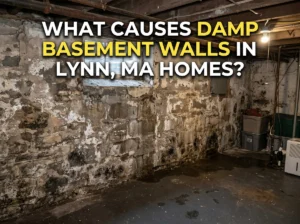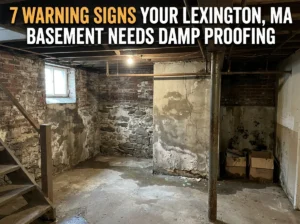
The first signs of dampness in the basement are a small water stain, peeling paint, and/or a musty odor. Excessive moisture can cause damage to stored items, create mold and mildew, and impact indoor air quality. Treatment of the moisture will vary according to source and manner of infiltration into the basement.
The first thing homeowners should do when they decide to have basement damp proofing in Lexington, MA, is to evaluate the foundation, drainage, and wall condition. A proper solution should tackle the underlying problem instead of the obvious symptoms of dampness.
Identify the Source Before Choosing a Treatment
Moisture can migrate through porous concrete, masonry joints, cracks in the foundation, and openings between the wall and the floor. But not all damp basements are the victim of water intrusion. Condensation can occur when humid indoor air comes into contact with cold foundation walls or pipes.
Look for clues to help determine the cause. Any wet spots that form after a rain are an indication of inadequate exterior drainage or water penetration. If minerals are dissolved and deposited in the masonry as a white, powdery surface, then there is efflorescence. Water pooling close to the ground could stem from an issue with foundation joints or drainage, and should be investigated further.
For instance, if it gets wet at one corner due to heavy rain, painting all the basement walls might not be enough to address the issue. A moisture assessment will identify if the home requires improving any drainage, filling any cracks, or providing an appropriate damp-proofing system.
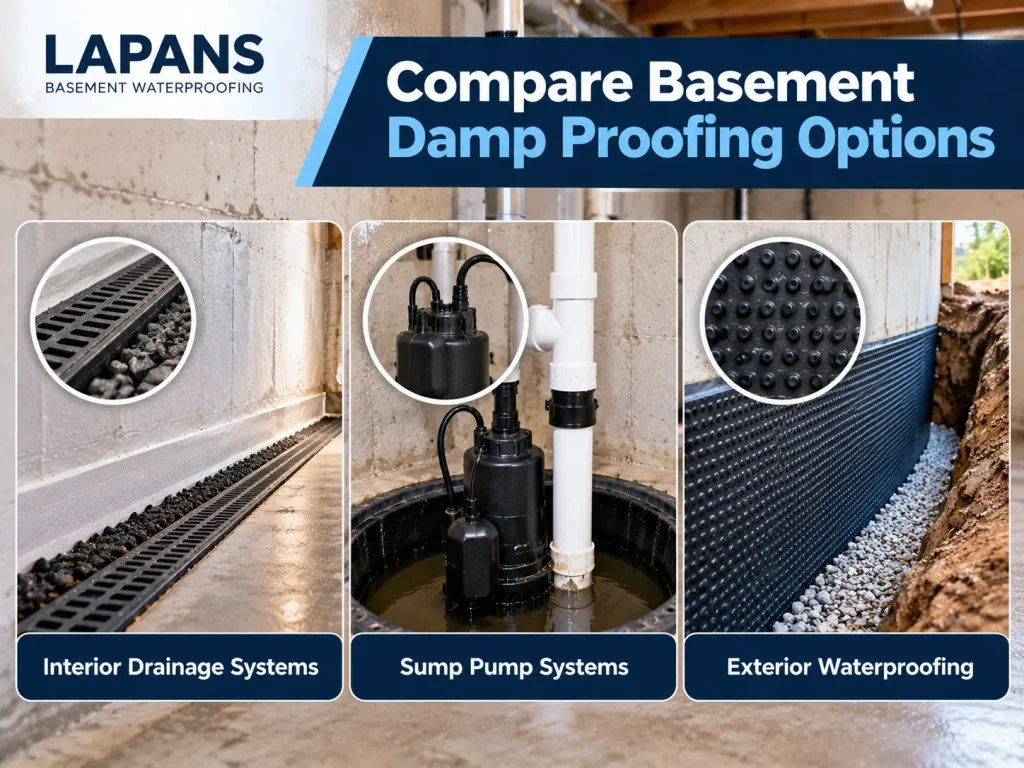
Compare Basement Damp Proofing Options
The various basement moisture treatment solutions solve various issues. This should be based on the condition of the foundation and the quantity of water entering the space.
| Treatment | When it may be suitable | What to consider |
| Exterior waterproof coating or membrane | Moisture entering through exterior foundation walls | Requires suitable wall preparation and access |
| Interior waterproof coating | Certain moisture problems on compatible surfaces | Does not solve every active leak or water-pressure issue |
| Vapor barrier or moisture-control membrane | Specific moisture-vapor problems | Must suit the wall or floor assembly |
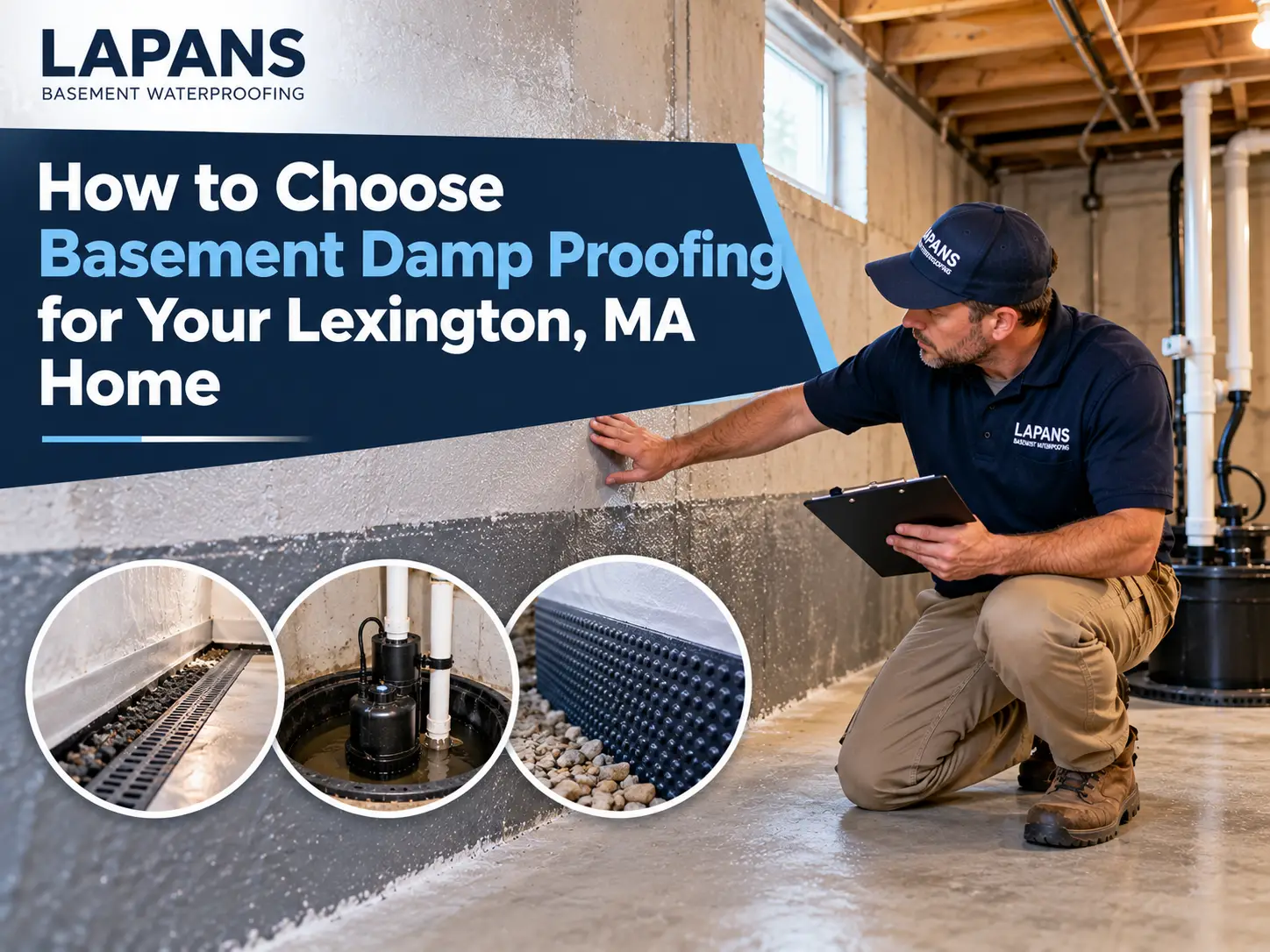
| Interior drainage system | Water entering around the basement perimeter | Requires proper drainage design and discharge |
| Sump pump | Water collected in a designed drainage system | Needs maintenance and a suitable discharge arrangement |
A coating may help protect a compatible masonry surface, but active water intrusion may require more than surface treatment. Also, a vapor barrier can be used to control moisture vapor, but it does not replace a drainage system where water is entering the basement.
Consider Lexington’s Rainfall and Drainage Conditions
Local weather is an important part of choosing basement damp proofing. The National Weather Service’s 1991–2020 climate normals report approximately 43.6 inches of annual precipitation for Boston, providing regional context rather than a precise measurement for every Lexington property. Poor grading, gutters, and downspouts may cause rainwater to pool close to the foundation, leading to excess moisture exposure.
Massachusetts residential code provisions specify that surface grading should fall at least 6 inches within the first 10 feet away from foundation walls, subject to applicable requirements and site conditions. Homeowners should check whether the ground slopes toward the foundation, whether downspouts release water close to the house, and whether soil has settled around the perimeter.
Foundation materials also affect treatment suitability. Older stone foundations, concrete blocks, and poured concrete have different surface conditions and repair needs. A product designed for sound concrete may not be suitable for deteriorating masonry or walls with structural damage.
Decide Whether Interior or Exterior Protection Fits Your Home
Exterior damp proofing stops moisture before it gets through your foundation walls. It usually means digging up the area, fixing cracks, adding waterproof membranes, and improving drainage. However, it may also require landscaping repairs and more preparation.
Interior damp proofing is worth considering when exterior access is limited or an indoor moisture-control system better suits the problem. Options include waterproof coatings, drainage channels, and sump pumps. The right choice depends on the moisture source and foundation condition.
Consider how you use your basement before choosing a treatment. If you plan to install drywall, flooring, or insulation, address moisture problems first. Regular exterior maintenance also helps prevent basement dampness and supports long-term moisture control.
Evaluate the Contractor’s Assessment and Installation Plan
A professional basement damp proofing contractor should be able to describe the reason for the dampness and why the treatment works for the property. The assessment should be based on the condition of the foundation walls, the presence of cracks, the floor-wall joints, drainage, and possible signs of water intrusion.
Before approving a proposal, ask:
- What is the suspected moisture source, and how was it identified?
- Does the recommended method address the cause or only the symptoms?
- What wall preparation, materials, and drainage work are included?
- What maintenance will the system require?
- What warranty coverage and limitations apply?
Ask for a breakdown of the costs, including repairs, materials, excavation, drainage, and clean-up. It enables you to evaluate offers on the work they offer and not just by the lowest bid.
Also determine if permits or approvals are needed. Lexington offers online permitting services on its website. Special approvals may be needed for projects that include drainage connections, excavation through public rights-of-way, or projects that are near wetlands. There are differences in the required approvals depending on the project type and site conditions.
Maintain Moisture Protection After Installation
Damp-proofing cannot replace normal home maintenance. Maintain clean gutters, inspect downspouts after storms, and fix grading issues as possible. A dehumidifier can be used to control the indoor relative humidity, and periodic water intrusion requires a thorough diagnosis. Regular maintenance also helps homeowners protect their investment, while understanding how long basement damp proofing lasts makes it easier to plan for future inspections, maintenance, and repairs.
Once installed, keep an eye on previously affected areas. Search for recurring stains, rotting surfaces, mold and mildew, or wetness that occurs following rainfall. When these symptoms are left untreated, or any other coating is applied without determining the cause, a follow-up assessment should be made.
For Lexington homeowners, Lapans Basement Waterproofing is a resource to discuss basement moisture concerns and appropriate protection options. Ask about the recommended treatment, preparation requirements, and maintenance needs before committing to the work.
Frequently Asked Questions
Can I apply waterproof coating to a damp basement wall?
That depends on the product and the wall itself. Some coatings need a clean, solid surface and won’t work on walls with active water leaks. Always check what the manufacturer says, and fix the moisture issue before you start.
Is interior damp proofing as effective as exterior protection?
Each method has its place. Exterior protection goes after moisture right at the foundation, while interior systems manage or collect water that makes it inside. The best option depends on where the moisture’s coming from, the foundation’s shape, and how easy it is to get to the affected area.
Does a musty basement always mean there is a leak?
No. Sometimes high humidity or condensation makes things smell musty even though there’s no obvious leak. Look for water stains, damp spots, or signs of condensation. If the odors keep coming back, look more closely to find out where the moisture’s from.
Should I repair foundation cracks before damp proofing?
Yes. Check cracks before you pick your damp-proofing solution. Some cracks need proper sealing, but if there’s movement or structural damage, you’ll want a closer look. Covering a crack without knowing its cause might simply conceal the real problem.
Do basement damp proofing projects require permits in Lexington, MA?
Permits are not the same for every job. Surface treatments are not the same as excavation, connecting to drains, or doing structural work. Before you start, review Lexington’s current permitting rules.
What questions should I ask before choosing a contractor?
Ask how they found the moisture issue, why they recommend their system, for a detailed estimate, how the installation works, what the warranty covers, and how to maintain it. Make sure the contractor explains exactly how their fix suits your home.
Final Thoughts: Choose Protection That Fits Your Foundation
The right basement damp-proofing starts with knowing where the moisture comes from and what condition your foundation’s in. Check out both interior and exterior choices, review drainage, and make sure the proposed work actually solves the problem.
Lapans Basement Waterproofing can help homeowners with their basement moisture concerns and determine which protection options deserve consideration. A well-planned approach combines suitable treatment with ongoing drainage maintenance to support a drier basement.