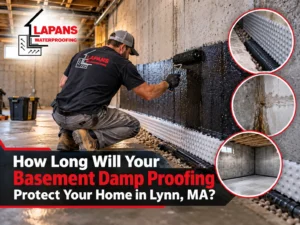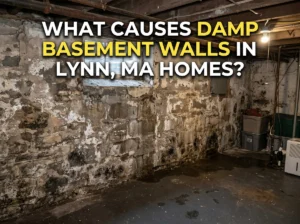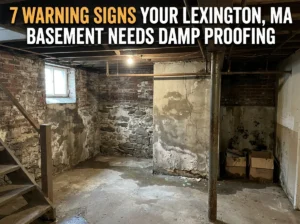
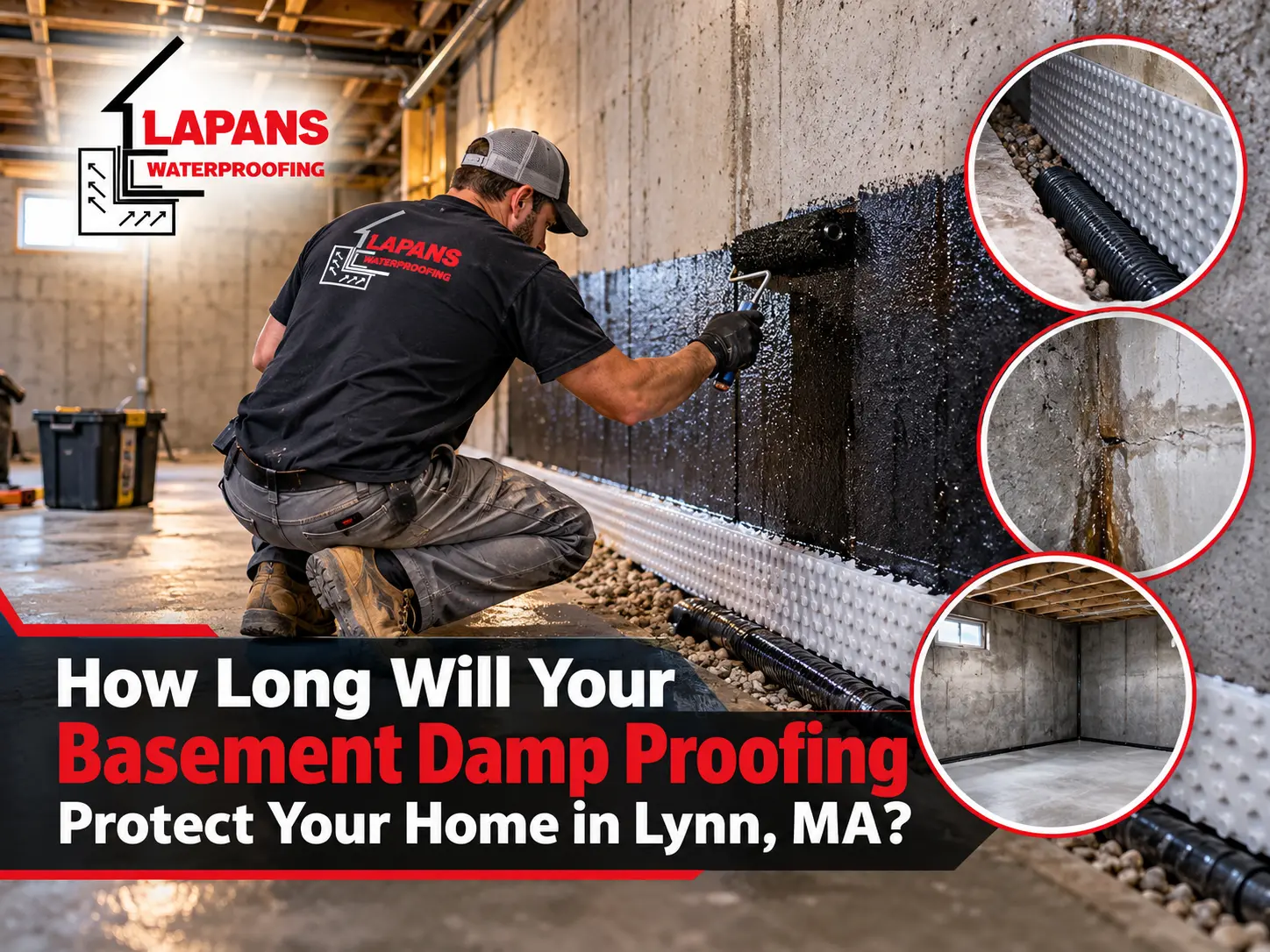
A basement moisture barrier shields foundation walls from dampness seeping in through the surrounding ground. But no treatment will last forever and will vary depending on materials used, installation methods, foundation condition, and exposure to water.
For homeowners in Lynn, MA, understanding these factors is especially important. The area receives approximately 48 inches of precipitation annually, based on 1991–2020 climate averages from a nearby weather station in Marblehead. That regular exposure to rain and seasonal moisture makes drainage and foundation maintenance important parts of long-term basement protection.
How Long Does Basement Damp Proofing Usually Last?
There is no simple ” lifespan” for basement damp proofing, but it can last many years. A membrane placed over the foundation wall, or a drainage system, will have different performance characteristics than a coating applied to the foundation wall.
The ranges below are only planning estimates, and not guaranteed, service lives:
| Damp-proofing method | General lifespan consideration |
| Interior waterproof coating | May need renewal after several years, depending on conditions |
| Exterior damp-proofing coating | Can provide long-term protection when correctly applied and protected |
| Exterior waterproofing membrane | Often designed for long-term service, depending on the product and installation |
| Crack repair | Depends on the repair material, crack movement, and water pressure |
| Drainage system and sump pump | Performance depends on maintenance, component condition, and proper operation |
Always check the manufacturer’s specifications and warranty for the actual product installed. An anti-moisture coating is not necessarily suited to high groundwater pressures.
What Affects the Lifespan of Basement Damp Proofing?
There are some conditions that influence the performance of a moisture barrier over time.
Installation quality and surface preparation
A damp-proofing membrane requires an appropriate surface for adhesion. Dust, loose masonry, existing coating failures, and untreated cracks can interfere with application.
Preparation and installation can help to minimize weak points that can allow moisture to enter. A good product can still go bad if it is applied incorrectly or if used on a wall that it wasn’t meant for.
Water pressure and drainage
Water that pools near the foundation may lead to increased exposure to moisture. The clogged drains, improperly directed downspouts, and sloping soil that draws water towards the house can aggravate the problem.
Water management is pertinent because of Lynn’s seasonal rainfall. Maintaining clean gutters and ensuring water is diverted from the foundation can help minimize unnecessary moisture exposure, but cannot be a substitute for a compromised damp-proofing system.
Foundation movement and wall condition
Cracks, movement of masonry, and crumbling concrete can allow water to seep through. While another coat of paint may be a temporary solution, it does not fix the problem if a foundation crack is still shifting.
It is important to see the barrier and the wall beneath it for a moisture inspection. It is important to tackle the underlying cause in order to have reliable and lasting protection.
Signs Your Basement Damp Proofing Needs Repair
The damp proofing can get worse over time, so it’s best to keep an eye out for changes instead of waiting for water to appear.
Common warning signs include:
- Recurring damp patches on basement walls
- White, powdery deposits on masonry
- Peeling paint or blistering coatings
- A persistent musty smell
- Water entering through cracks or wall joints
- New staining after heavy rain
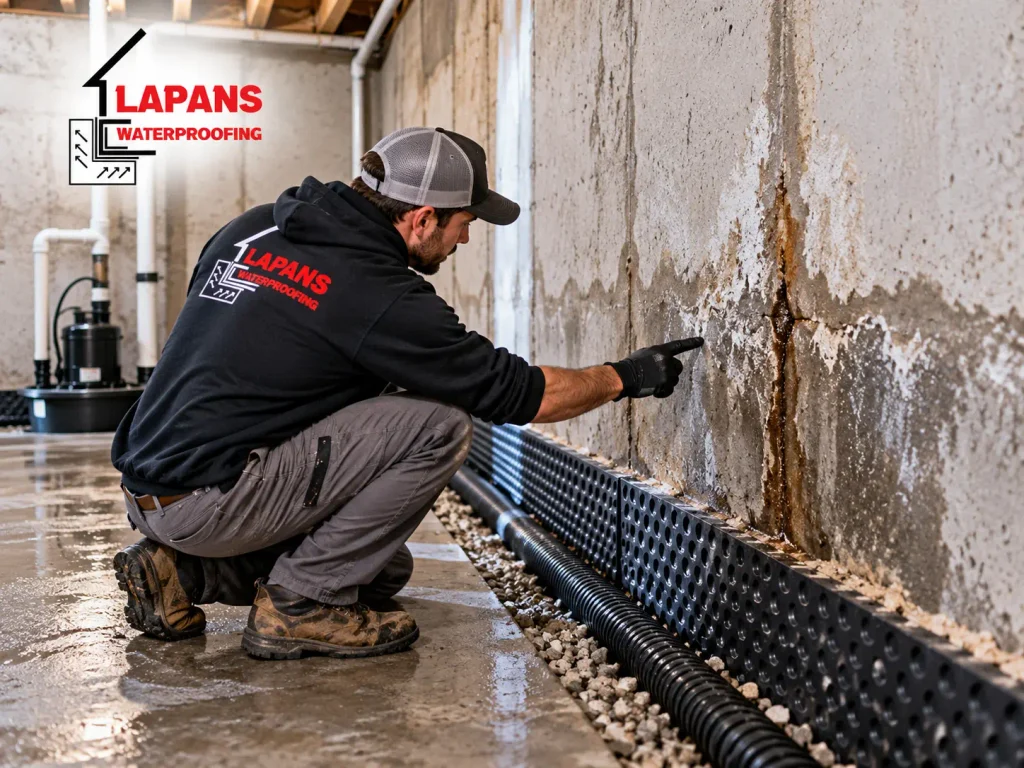
White deposits can indicate moisture moving through masonry, but they do not prove that a particular membrane has failed. Likewise, condensation can be a source of moisture in the basement and not water entering the foundation. A moisture meter could be used to locate wet spots, and a professional inspection could be done to determine if it’s condensation, seepage, or plumbing leaks.
How Can You Make Damp Proofing Last Longer?
Routine upkeep preserves the existing treatment and catches issues before they worsen.
Use this practical maintenance checklist:
- Inspect after heavy rain. Look for new damp patches, water entry, or changes around foundation cracks.
- Maintain gutters and downspouts. Remove blockages and direct roof runoff away from the house.
- Check soil grading. Soil should generally slope away from the foundation, so water does not collect against the walls.
- Monitor basement humidity. Use a dehumidifier when needed to manage condensation and damp indoor air.
- Maintain drainage equipment. Test the sump pump according to its manufacturer’s instructions and check the discharge line for blockages.
- Address damage early. Repair leaks and investigate recurring moisture instead of repeatedly painting over stains.
There is no standard timing for replacement of all damp-proofing coatings. Follow the product instructions and arrange an inspection when the coating deteriorates or moisture returns.
Is Damp Proofing Enough, or Do You Need Waterproofing?
The processes of damp proofing and waterproofing are similar, but not identical. Typically, damp proofing restricts absorption of moisture through foundation walls. Waterproofing is designed to offer greater resistance to water penetration, and particularly a higher degree of water exposure.
For basements that experience periodic dampness on the walls but not continuous water infiltration, a proper damp-proofing treatment can be considered. If water is getting through cracks, pooling on the floor, or coming through after a long period of rain, then a more comprehensive waterproofing might be necessary.
For help comparing available options, read the best damp proofing method for a basement. The right choice depends on the wall material, moisture source, groundwater conditions, and existing drainage.
It is also useful to understand how basement damp proofing helps with foundation moisture, especially when deciding whether a surface treatment alone will address the problem.
Frequently Asked Questions
Does basement damp proofing last forever?
No. Coatings and membranes can deteriorate, and foundation movement or changing drainage conditions can impact performance. Routine checks reveal when maintenance or repair work becomes necessary.
How often should basement damp proofing be inspected?
Inspect the basement on a regular basis and after heavy rainfall, especially if there have been moisture issues in the past. Arrange a professional inspection if damp patches return, cracks change, or the coating begins to peel.
Can I apply a new coating over old damp proofing?
Not always. The coating should be compatible with the new coating, and any areas that have been damaged or poorly bonded should be removed. The wall is also to be prepared as per the product requirements.
Will a dehumidifier fix basement wall seepage?
No. A dehumidifier lowers humidity and helps with condensation, but it doesn’t fix cracks in the foundation or stop groundwater from seeping through your walls.
Is exterior damp proofing better than interior treatment?
Exterior treatment keeps moisture from getting through the foundation wall in the first place, but whether it’s right for you depends on site access, soil, and where the water comes from. Interior systems can handle moisture in other situations, so it’s best to let an assessment guide your decision.
Final Thoughts: Protect Your Basement for the Long Term
When you pick the right kind of basement damp proofing, and it’s installed properly, you get years of protection. How long it lasts depends on the coating, drainage, soil moisture, and whether cracks or other issues show up later.
For homeowners in Lynn, MA, regular moisture checks and proper water management are sensible ways to protect a basement. Lapans Basement Waterproofing can help assess recurring dampness, identify possible causes, and determine which moisture-control approach best suits the foundation.