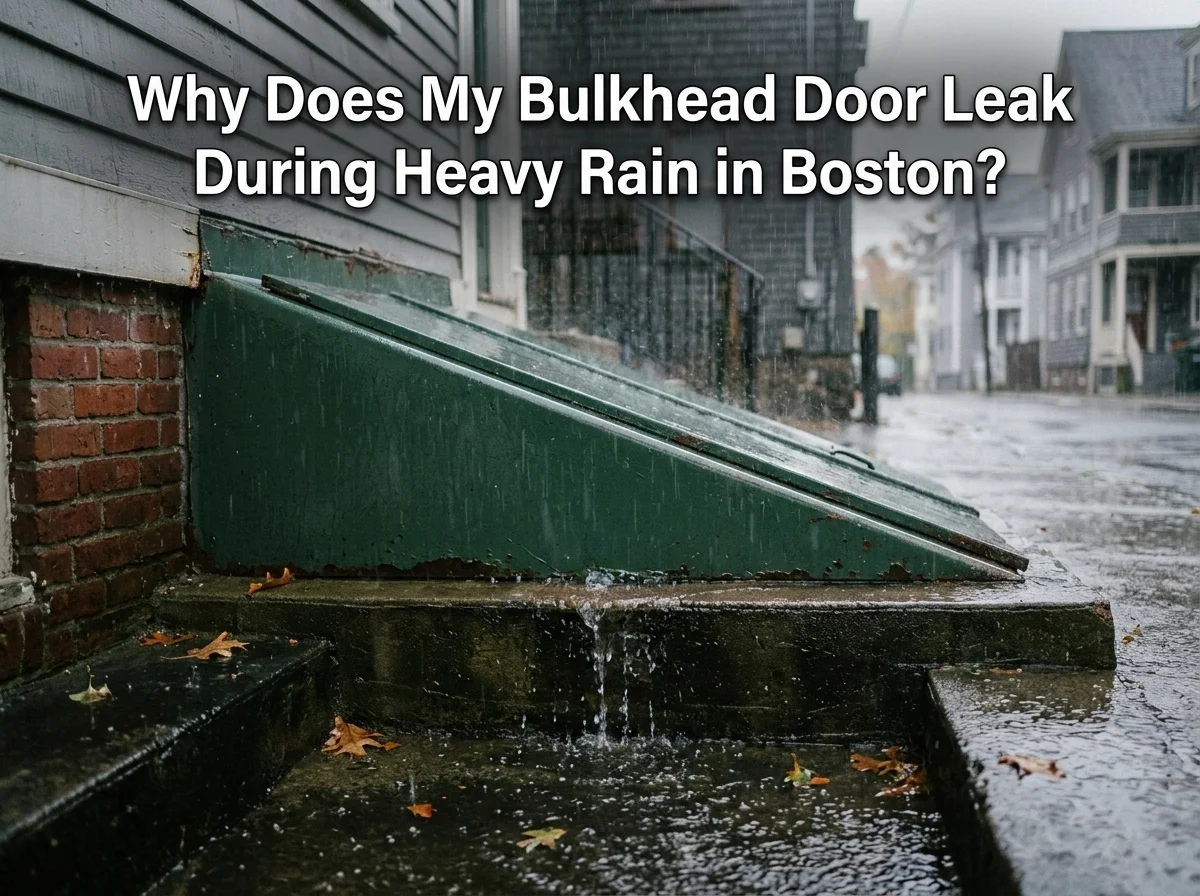
The purpose of a bulkhead door is to keep rain, snow, and outdoor moisture out of your basement entrance. However, during a storm, if water begins to seep in, the door may no longer be doing the job it was designed to do for your basement.
This can be a greater issue for residents of Boston and its suburbs, where seasonal fluctuations, freezing temperatures, and the abundance of heavy rain occur more frequently. The snowfall during one 24-hour period on February 23, 2025-2026, in Boston was 17.1 inches and was a single event that had a tremendous amount of water flowing quickly over a property.
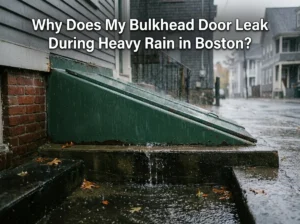
So why does a bulkhead door soak in the rain during a heavy rain? It can be due to a faulty seal, inadequate drainage, failing concrete, or water seeping in between the bulkhead and the foundation.
Why Bulkhead Doors Leak During Heavy Rain
A bulkhead does not have to be completely damaged to allow water into a basement. When the water flow around the basement crack is sufficient due to heavy rain, even a small gap may become the main entrance.
The most common causes include:
Damaged Door Seals
Rubber seal or weatherstripping around the bulkhead door to seal gaps between the door and frame. Over the years, the seal may lose shape, become hard, and fail to seal the gap completely. If the seal is not flexible, rainwater may flow through the openings and pool at the foot of the stairs. When the water keeps moving towards the basement door, moisture may eventually get to the inside.
Poor Door Alignment
If a bulkhead door no longer opens or shuts evenly, it may leave gaps between the door and the frame, or it may leave gaps at the bottom. Alignment may be misaligned due to rust, damaged hinges, settling, or wear. The door may be difficult to close, or one side may be higher than the other. These are early indicators of possible water protection failures.
Deteriorated Flashing and Joints
It’s important to pay careful attention to the area where the bulkhead connects to the concrete foundation. The purpose of flashing and sealant is to assist in directing water away from this critical joint. Once these materials break down, the rainwater may flow behind the bulkhead instead of draining away. When water gets to the foundation joint, it can penetrate the basement through cracks or gaps.
Drainage Problems Around the Bulkhead
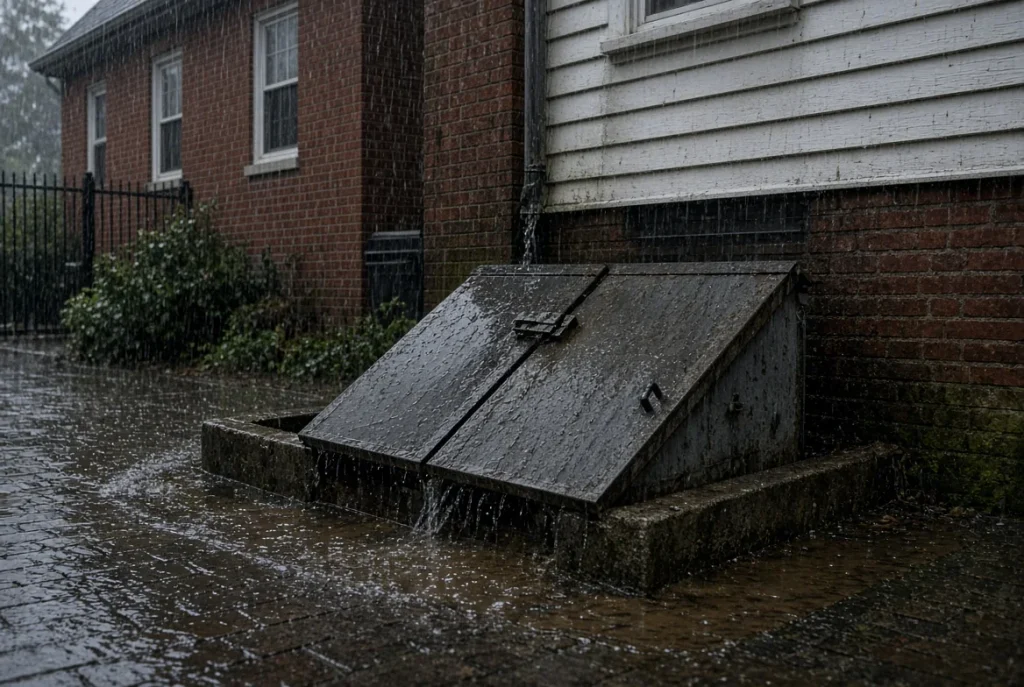
Sometimes the door itself is not the primary problem. Drainage may just be blocked, or the surrounding surface may not direct water away from the bulkhead, causing the water to collect around it. Drainage can be blocked by leaves, soil, debris, and ice. Another risk of poor grading is that roof runoff or stormwater may flow toward the basement entrance, rather than away from it.
How Heavy Rain Makes a Small Problem Worse
Slight drips along the small bulkheads might not be noticed during light rain. When it rains heavily, it’s different; a lot more water is hitting the same ground in a short time. Hoisted water around the entrance can press against seals, joints, and cracks. Hydrostatic pressure can also be a factor in water movement in some cases in leaking areas of the foundation.
Seasonal inspection is particularly helpful in Boston because of the city’s weather conditions. From December 2025 to February 2026, Boston’s average winter temperature was 29.3°F, with minimum temperatures hitting 4°F.
Frequent freeze-thaw cycles may cause damage to the concrete and sealants at a bulkhead and to other items.
Signs Your Bulkhead Is Allowing Water Inside
Not all leaks have an easy-to-see flow of water. Pay attention to smaller signs following rain, particularly if the issue recurs.
Common warning signs include:
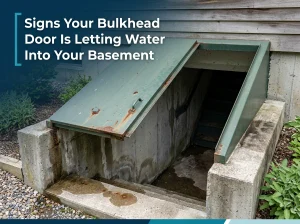
- Water stains around the basement entrance
- Damp concrete near the bulkhead stairs
- Puddles at the base of the stairs
- Wet or discolored foundation walls
- Peeling paint near the basement entrance
- Musty odors after storms
- Mold or mildew around damp areas
- Rust on the bulkhead door or hardware
- Visible gaps around the door frame
- Water trails leading toward the basement
If these signs appear after nearly every heavy storm, the issue is probably more than a one-time drainage problem.
Could the Foundation Be Part of the Problem?
Yes. A leaking bulkhead may sometimes reveal another problem with the foundation. Rainwater can also seep in through cracks in the concrete around the bulkhead, particularly where it meets the foundation wall. Deteriorated concrete can also allow water to flow through areas that were previously sealed.
That’s why just caulking the obvious gap in the door might not work. It may be from behind the door, under the bulkhead, or around the foundation joint. An appropriate inspection should be carried out to decide if the water is getting in through the door or through the surrounding concrete (or both).
Why Some Quick DIY Fixes Do Not Last
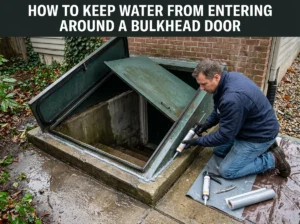
One way homeowners attempt to repair their leaky bulkhead is by employing exterior caulk, roofing tar, hydraulic cement, or temporary weatherstripping.
Sometimes these products will help to stop a small amount of leakage from the surface of the appliance, but they may not solve the problem. Sealing the visible opening, where water may be entering, if it is from deteriorated concrete or a foundation joint, may not stop the water from entering the rest of the pathway.
The other issue is that if water isn’t directed to where it needs to go, you may end up trapping it or diverting it to a different location.
How to Prevent Bulkhead Leaks in Boston
There are a few easy maintenance tasks that will help minimize the possibility of water infiltration.
Keep drainage paths clear. Remove leaves, dirt, branches, and other debris from around the bulkhead so rainwater can move away freely.
Inspect the seal. Check the rubber seal and weatherstripping for cracks, shriveling, or broken parts.
Watch the grading. Post-storm, check water pooling locations. If it is persistent and pools next to the bulkhead, then the drainage around the bulkhead may need to be addressed.
Check the concrete. Inspect for any new cracks, crumbling, or spaces in the foundation joint.
Inspect after major storms. Do not wait until water reaches the basement floor. Check the bulkhead after heavy rainfall to catch problems early.
Address winter damage. Boston’s freezing temperatures can place additional stress on concrete and exterior materials, making seasonal inspections worthwhile.
When Should You Call a Professional?
If your basement keeps getting wet every time it rains, it’s time to get your bulkhead and foundation checked out. Don’t brush it off, especially if you spot cracks, crumbling concrete, standing water, rust, or water seeping through the foundation joint. These issues are way beyond a simple door seal replacement.
A professional will pinpoint exactly where the water’s coming in and figure out if you need bulkhead repairs, new seals, better drainage, foundation crack repair, or maybe a mix of fixes. If you keep ignoring repeated leaks, moisture will wreck your floors, walls, and anything you store down there, and you’re setting the stage for mold.
Frequently Asked Questions
Why does my bulkhead door leak when it rains heavily?
Intense rainfall is problematic for a faulty drainage system near your bulkhead, particularly when water accumulates near the basement entrance. Sometimes it’s worn-out weatherstripping, defective flashing, spaces around the frame, cracks in the foundation, or a door not properly aligned. It mainly depends on the place where the moisture is truly sneaking through.
How can I tell if my bulkhead door is leaking?
Look for water stains, damp spots on concrete, puddles at the bottom of the stairs, rust, peeling paint, musty smells, or water trails after a storm. Check your door seals and foundation for cracks or gaps. If you keep seeing moisture after storms, that’s your sign to get an inspection.
Can a damaged door seal cause basement water intrusion?
Absolutely. If the seal’s worn or busted, it leaves gaps between the bulkhead door and frame. When it rains hard, water comes right through and collects inside. Swapping the seal could fix a small leak, but if you’ve got bigger problems, it might be drainage or the foundation.
Why does water pool around my bulkhead after rain?
Water usually pools because the ground slopes toward your bulkhead, drainage paths are blocked, or storm runoff is heading straight for your basement entrance. Leaves, dirt, and debris can also clog things up. Sorting out your drainage will cut down on how much water piles up.
Should I replace my bulkhead door if it leaks?
No, a leak doesn’t mean you need a whole new door. It might be the seals, alignment, flashing, drainage, or even concrete issues. Get an inspection, and that way you’ll know whether you need a repair, some resealing, drainage fixes, or maybe a replacement.
Can freezing weather make bulkhead leaks worse?
Definitely. Boston winters can be rough. Water gets into cracks, freezes, expands, and puts extra stress on concrete and joints. When freezing and thawing happen over and over, those weak spots grow, and leaks get worse come spring.
When should I call a professional about a leaking bulkhead?
Call a professional when water keeps coming back, you see foundation cracks, concrete is breaking down, there’s standing water, or rust, or your leak persists even after some quick fixes. You need someone who can figure out if the trouble’s with the bulkhead, drainage, or what’s happening in the foundation.
How can I prevent my bulkhead from leaking during storms?
Keep your drainage paths clear, check door seals, scan for concrete cracks, make sure your grading’s right, and look over the bulkhead after big storms. Fixing small gaps or drainage problems early on stops repeat leaks and holds off bigger basement headaches.
Final Thoughts: Stop Bulkhead Leaks Before They Spread
A leaking bulkhead during heavy rain isn’t just an annoyance; it’s a real threat to your home. Bad seals, poor drainage, crumbling concrete, shaky foundation joints, or misaligned doors can let rainwater run right inside.
For Boston homeowners, seasonal weather makes routine inspections particularly worthwhile. If your bulkhead repeatedly allows water inside, Lapans Basement Waterproofing can help identify where the water is entering and what type of repair may be appropriate.
The goal is to fix the source, not just the water you can see. It is to address the weak point that allows rainwater into your basement in the first place.