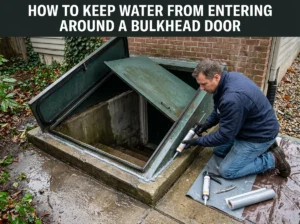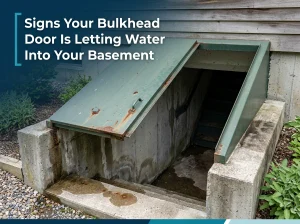

One of the most vulnerable areas of your basement is the outside entrance, which is protected by a bulkhead door. As the door begins to rust, leak, get stuck, or pull off the frame, homeowners may think about repairing the door vs. replacing it.
This will depend on the condition of the door, frame, hinges, seals, and surrounding concrete. These problems can be exacerbated by seasonal changes and moisture in Boston. The range of conditions exterior materials can expose themselves to is demonstrated by the National Weather Service’s report of a low of 9°F in Boston and 19 days with temperatures of 90°F or higher.
When Repairing a Bulkhead Door Makes Sense
Not all the damaged bulkheads have to be removed. When the main structure is still intact, targeted repairs are often sufficient to restore its function and make it water-resistant.
Worn Seals and Weatherstripping
One of the easiest issues to fix is the damage to the door seal. If the bulkhead closes properly but rainwater leaks in, it might be a simple issue of replacing the weatherstripping or seal. This is particularly important if the metal or composite door is still structurally intact.
Damaged Hinges or Hardware
Poorly fitted, rusted, or damaged hinges may not allow the doors to close. A hardware replacement could be sufficient to correct alignment without needing a total replacement. This is also true for latches and other hardware that have become worn but remain on a still-functional door.
Minor Rust or Surface Damage
Surface rust doesn’t necessarily indicate that the door is at the end of its usefulness. In some instances, areas of corrosion are treatable and can be cleaned prior to spreading to a larger area. But rust that has eaten away large areas or compromised the metal’s strength is a different matter.
Small Concrete or Joint Cracks
Minor cracks around the bulkhead may be repairable if the surrounding structure remains stable. The important point is to identify whether the crack is simply a localized issue or evidence of larger structural movement.
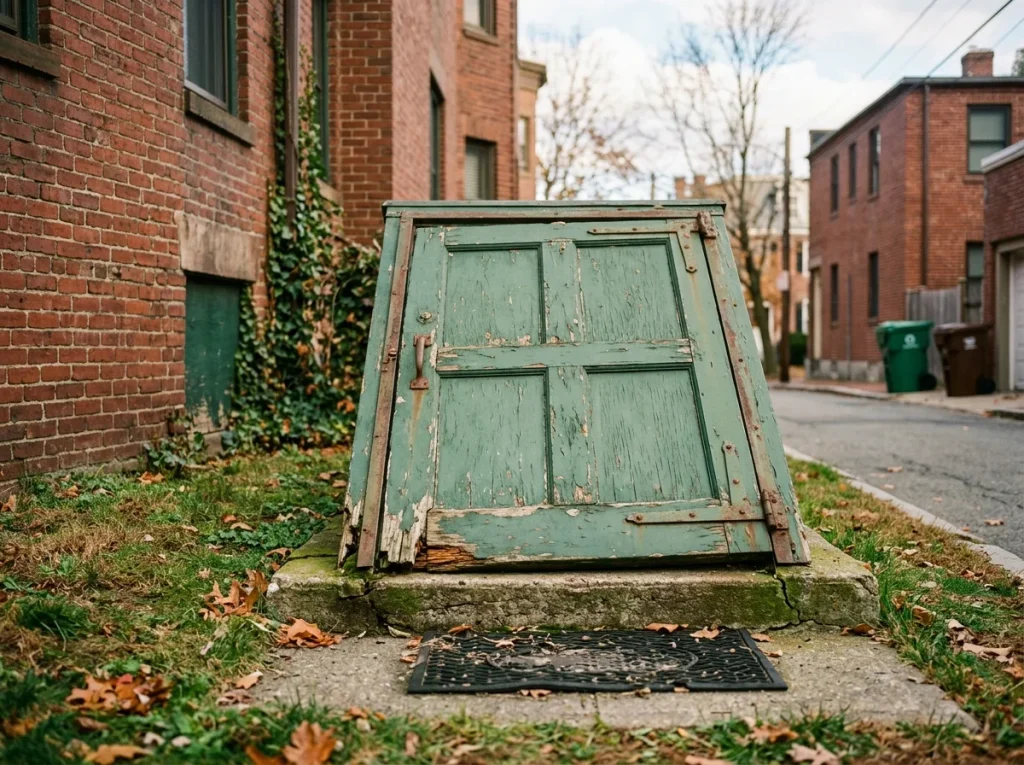
When Bulkhead Replacement Is the Better Choice
Replacement becomes more reasonable when repairs would only provide a temporary solution or when several components have reached the end of their useful life.
Extensive Rust and Corrosion
If the corrosion is found throughout the door, frame, hinges, or the structural area, patching the area may not strengthen the bulkhead. Deep rust can also provide water ingress points. A replacement offers a new weatherproofing system, not just more repairs to worn-out metal.
The Door No Longer Aligns Properly
A bulkhead that has become badly warped or shifted may not close evenly. If the issue is not just a hinge adjustment but a damaged frame or movement of the structure, it may be more feasible to replace it. Correct alignment is important because if it is off just a bit, rain and snow can enter the basement entryway.
Recurring Water Intrusion
If water is still getting in during storms after replacing seals or repairs, this is an issue that needs further investigation. If leaks occur repeatedly, it may mean that the flashing is worn, there are gaps between the bulkhead and the foundation, the drainage is inadequate, or there is damage to the door that is not related to the door itself.
Deteriorated Concrete Around the Bulkhead
A new door will not solve a structural problem in the concrete foundation. Crumbling concrete, large cracks, or movement around the bulkhead can require foundation-related repairs before or alongside replacement. That’s why it’s important for homeowners not to make their decision just on the condition of the door panel.
Repair vs. Replacement: What Does It Cost?
Cost depends heavily on the type of damage and how much surrounding work is required.
As a general comparison, Boston door repair is approximately $266, but this does not include repairs for the bulkhead.
The current estimates for replacement of the bulkhead are typically in the range of $1,300 to $3,000 installed per bulkhead, depending on the timing and location. Another 2026 cost guide places Massachusetts replacement projects around $1,500 to $3,500, depending on materials, labor, and site conditions.
A simple comparison looks like this:
| Situation | Usually Makes More Sense |
| Worn weatherstripping | Repair |
| Damaged hinge | Repair |
| Minor surface rust | Repair |
| Small seal failure | Repair |
| Extensive corrosion | Replace |
| Warped or structurally damaged door | Replace |
| Repeated leaks after repairs | Inspect, then consider replacement |
| Major frame or concrete deterioration | Professional assessment |
These are planning ranges, not guaranteed Boston quotes. It can end up being more expensive due to concrete repair, unobstructed access, custom-made size, disposal, and drainage.
Boston Weather Can Affect Your Decision
A bulkhead is subjected to all the same seasonal influences as other external elements of the structure, but because of its placement, water management may be a significant concern.
Boston’s 2025 climate report recorded an average annual mean temperature of 52.2°F, with a lowest temperature of 9°F. Freeze-thaw cycles can place additional stress on concrete, seals, and joints when moisture enters vulnerable areas and freezes. That means a bulkhead that appears acceptable during summer may show new problems after winter.
If you are considering replacement, inspect the surrounding concrete and foundation joint at the same time. Replacing a door without addressing the source of water intrusion may leave the basement vulnerable.
How to Decide Between Repair and Replacement
Start with four questions:
Is the structure still solid? If the door and frame are solid, then it may be worth repairing.
Does the door close and seal properly? If the original structure remains, alignment and weatherstripping issues can be resolved.
Has the problem returned after previous repairs? Recurring leaks or repeated hardware failures may indicate that replacement is the more cost-effective long-term option.
Is the surrounding concrete damaged? Sometimes, if the foundation or bulkhead opening is dilapidated, the project will require more than simply replacing the door.
A professional condition assessment can help you avoid spending money on repeated short-term fixes when the bulkhead has already reached the end of its service life.
Why Professional Assessment Matters
If you’re trying to figure out where water’s getting into your basement, you can’t always tell just by glancing around. It’s tough to spot whether the leak’s coming through the door, the frame, the foundation joint, or even the concrete around the area. That’s where a proper inspection really pays off. Professionals know how to pinpoint the actual weak spot, and they’ll tell you if you should fix it or if you’re better off replacing it altogether.
For Boston homeowners, Lapans Basement Waterproofing can assess the condition of the bulkhead and surrounding area before you commit to a larger repair or replacement project.
Frequently Asked Questions
How long does a bulkhead door usually last?
A quality bulkhead can last for decades when properly maintained, but there is no universal lifespan. There’s no magic number, though. Rust, constant water, shoddy installation, or letting seals go bad can cut that lifespan way down. Don’t go by age alone; pay attention to what kind of shape it’s really in.
How much should I budget for bulkhead replacement in Massachusetts?
In case you are organizing plans for 2026, anticipate spending approximately $1,500 to $3,500 in the majority of situations. Certainly, basic changes might be less expensive, but factor in concrete repairs, difficult access, a custom-fit door, or drainage solutions, and the cost increases.
Is it cheaper to repair or replace a bulkhead?
Generally, repairing items is cheaper if you are just handling worn seals, rusty hinges, or light corrosion. However, if the metal is damaged in multiple spots, or you keep needing repairs repeatedly, changing out the whole item becomes a more sensible option. If the main structure is solid, a few hundred bucks on repairs is a smart move.
Can a leaking bulkhead be repaired without replacing the door?
Most of the time, yes. If the problem’s in the weatherstripping, the joints, some clogged drainage, or a small crack in the concrete, you can usually get by without a new door. But if the door or frame is totally rusted or twisted out of shape, a patch job won’t hold up for long.
Should I replace my bulkhead before winter?
If you’re seeing serious rust, a crooked fit, bad seals, or the same old leaks every time it rains, you’re better off dealing with it before winter strikes. Boston’s cold seepage can make shaky bulkheads a lot worse, especially if water gets into existing cracks or gaps.
Final Thoughts: Make the Right Bulkhead Decision
Go the repair route if the door’s sturdy and you’re just fixing small stuff. But if rust, warping, leaks, or real structural trouble keep coming back, replacing the bulkhead is a smarter investment.
Before spending money, have the complete basement entrance evaluated rather than judging the door alone. Lapans Basement Waterproofing can help Boston-area homeowners determine whether repairing the existing bulkhead or replacing it is the better long-term solution.