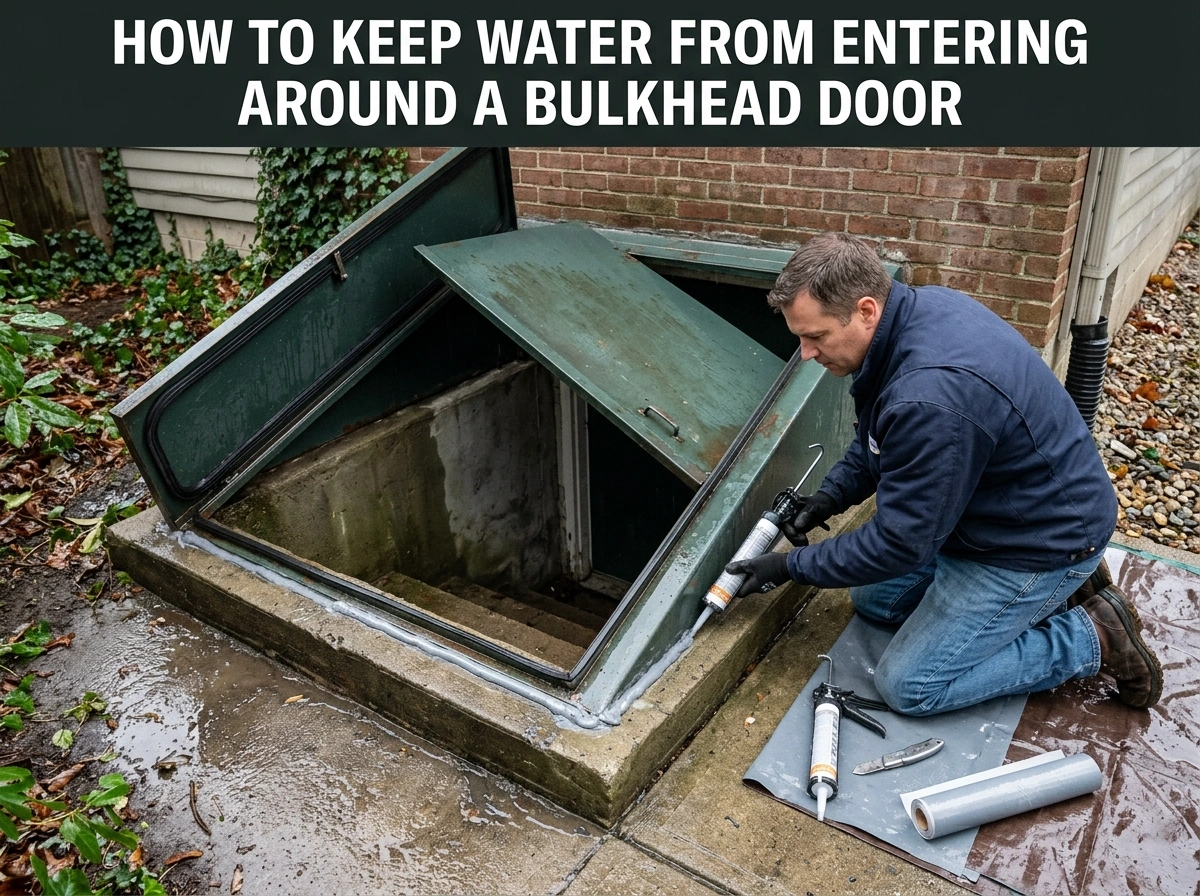
A bulkhead door will provide easy access to the basement, but also provide an additional source of rainwater into the foundation. These conditions of repeated freeze-thaw cycles, snow, freezing, and heavy rain in Boston and Massachusetts can cause weak seals, cracks, and drainage issues around the entrance.
Learning how to prevent water from entering around a bulkhead door starts with more than sealing the door itself. The surrounding concrete, soil, drainage path, door frame, and foundation connection should all help to push water back out of the basement.
Why Does Water Enter Around a Bulkhead Door?
There are a number of reasons bulkhead leaks may occur. The door seal can at times be faulty. However, in other instances, the actual issue is water pooling around the entry, infiltrating through cracks or joints.
Common causes include:
- Damaged or missing door seals
- Worn weatherstripping around the frame
- Cracks in concrete stairs or sidewalls
- Failed caulking around joints
- Poor surface grading
- Water is collecting at the bulkhead threshold
- Gaps where the bulkhead meets the foundation
- Damaged flashing
- Hydrostatic pressure around the foundation
Massachusetts stormwater guidance focuses on grading surfaces away from buildings and on using basement waterproofing effectively to limit water intrusion.
Start With the Bulkhead Door and Frame
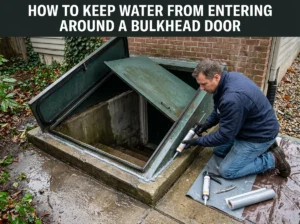
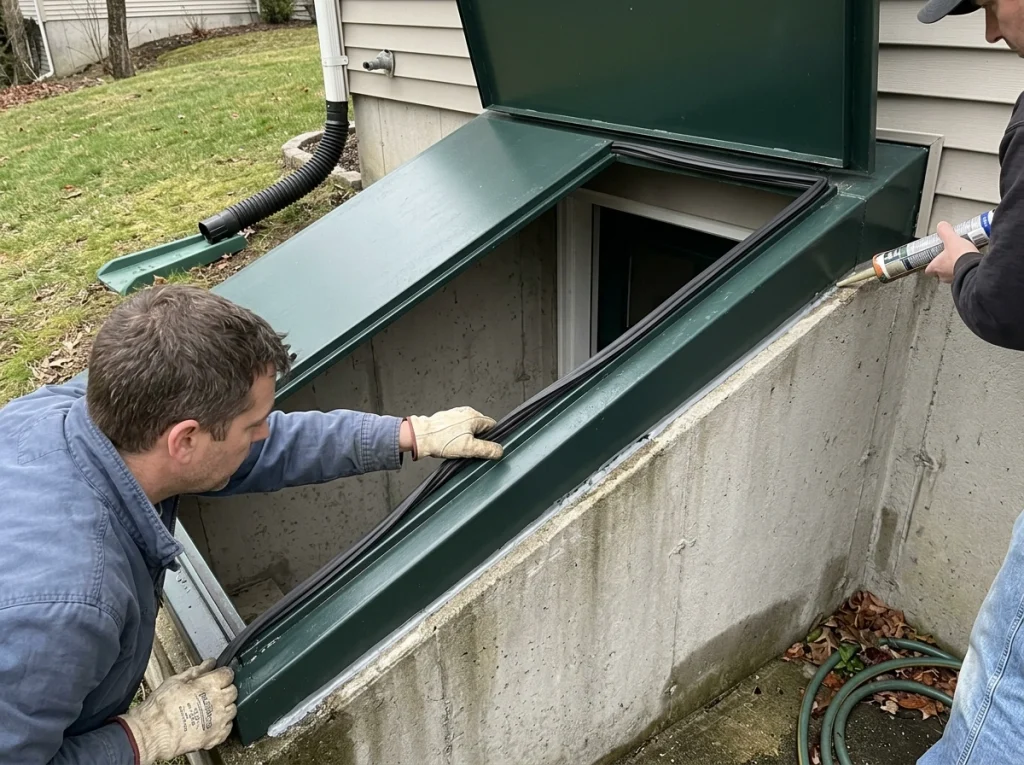
The door itself is one of the first places to inspect when you want to prevent water from entering around bulkhead door openings. Check the weatherstripping along the door edges. Rainwater can seep in during a storm if it’s cracked, compressed, or doesn’t feel tight. Also inspect the door frame and door jamb. Old caulking can pull away from concrete or metal and create small gaps behind the frame.
Worn weatherstripping and the installation of an exterior sealant can prevent minor leaks. However, sealing the door will not solve the problem if water is already collecting around the bulkhead.
Check the Bulkhead Threshold and Concrete Joints
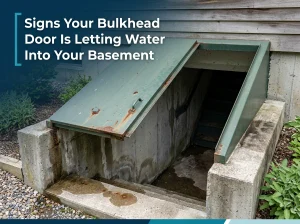
The threshold is particularly significant as it is located in a low-lying area where water can accumulate. Check for cracks, gaps, broken concrete, and open joints at the sidewalls and threshold. These openings can allow water to seep in and enter the basement.
Concrete repairs should be carried out on the actual opening, instead of just on the surface, and should be made of a thick layer of caulking. If the crack was caused by movement, settlement, or repeated freeze-thaw damage, the underlying problem might need to be addressed before the new seal can be effective.
The Massachusetts Building Code is also aware of how water pressure can impact basement and foundation walls, so drainage is critical in protecting below-grade spaces.
Improve Surface Grading Around the Entrance
A very effective means of keeping rainwater out of bulkhead entrances is to prevent it from even reaching the entrance. It is important that there is sufficient ground and a hard surface around the bulkhead area that allows water to flow away from the structure. Rainwater may pool directly against the bulkhead if the slope of the soil, mulch, pavement, or other surface is toward the entrance.
Check the area after a heavy rain. The area around the entrance is filled with water, which is a sign that the drainage channel is not functioning properly. The Massachusetts stormwater guidance suggests that runoff should not be directed towards the foundation, and to prevent focused runoff, the preferred approach is to adopt suitable drainage and infiltration practices.
Check Your Gutters and Downspouts
A leaking gutter or a downspout that is not placed correctly can direct a large amount of water to a bulkhead. Ensure that roof water is directed away from the foundation and not towards the front door. Massachusetts guidance also suggests that rain gutters and downspouts be directed away from foundations to prevent flooding and water intrusion issues.
Repair Cracks Before Applying Waterproofing
When there are cracks or concrete deterioration, don’t use a surface sealant to prevent bulkhead water intrusion. Small stable cracks can be patched with a suitable material for the location and type of concrete. Openings that persist after repair, or larger cracks, or periodic opening may suggest settlement and/or movement, which requires professional assessment.
The relationship between the bulkhead and the foundation wall is the same. If this joint is separated, the water is coming in behind the bulkhead and not through the door itself. A good bulkhead door waterproofing strategy should thus start with the location of the water entry site, then proceed with the type of repair.
Consider Flashing and a Moisture Barrier
Flashing will be useful to try to guide water away from fragile joints around the bulkhead. It’s especially valuable when suitable waterways naturally lead to a connection between the bulkhead structure and foundation. In addition to exterior membranes, compatible sealants, drainage materials, and other measures to control moisture, exterior waterproofing may require these.
The Massachusetts construction guidelines acknowledge a number of exterior waterproofing techniques, such as rubberized asphalt and sheet membrane systems, and stress adequate drainage of structures below grade. The correct solution will vary according to the construction that already exists. Don’t simply put on more caulk if a joint is already damp or in trouble, as it will not necessarily stay in place.
Do Not Ignore Boston’s Freeze-Thaw Conditions
Boston-area homeowners also need to consider winter conditions when trying to stop bulkhead door water leaks. When water gets into the cracks, it can freeze and expand. Repeated freezing and thawing can cause the cracks to grow and can further weaken the existing concrete.
Snow and ice can also accumulate around the entrance. Boston’s cold-weather guidance recommends keeping basement doors and windows shut tightly and addressing openings that allow cold air into the basement.
Prior to winter, check the door seals, concrete, flashing, drainage path, and adjacent grade. Water intrusion after storms is typically more difficult to deal with than preventive repairs.
When Does a Bulkhead Need Professional Waterproofing?
Some homeowners can handle basic maintenance such as replacing weatherstripping or cleaning drainage paths. Professional evaluation becomes more important when water continues to enter after those steps.
Consider getting an inspection if you notice:
- Water entering after normal rainfall
- Standing water around the bulkhead
- Repeated basement dampness
- Cracks that continue to reopen
- Efflorescence or moisture marks on foundation walls
- Musty basement odors
- Deteriorating concrete
- Water entering through the foundation connection
Lapans Basement Waterproofing can help identify whether the problem comes from the door, concrete joints, drainage, grading, or a larger foundation waterproofing issue.
A Simple Bulkhead Leak Prevention Checklist
Before the next big storm rolls in, take a look at these areas:
- Inspect the door seals and weatherstripping.
- Replace cracked or damaged caulking.
- Check the bulkhead threshold for standing water.
- Inspect concrete stairs and sidewalls for cracks.
- Confirm that surface grading moves water away.
- Check gutters and downspouts for improper discharge.
- Look for gaps between the bulkhead and foundation.
- Repair drainage problems before applying new sealant.
- Inspect the area again after heavy rainfall.
- Address recurring leaks before winter freeze-thaw cycles.
This approach helps protect the bulkhead from rainwater instead of treating every leak as a door-seal problem.
Frequently Asked Questions
How do I stop rainwater from entering my bulkhead?
Start with the door seals, weatherstripping, threshold, concrete joints, grading, and nearby downspouts. If water pools around the entrance, fix the drainage first. If leaks keep happening, you might need concrete repairs, flashing, exterior waterproofing, or some foundation drainage work.
What is the best way to waterproof around a bulkhead door?
There is no single solution for every bulkhead. The strongest solution usually mixes solid drainage, well-sealed joints, working weatherstripping, fixed-up concrete, and waterproofing where the bulkhead meets the foundation.
Can caulking stop a bulkhead leak?
Caulking can seal up small gaps around the door frame or a stable joint, but it doesn’t fix leaks from bad grading, cracked concrete, water pressure, or a moving foundation. If water still gets in after caulking, find the real source instead of piling on more sealant.
Why does my bulkhead leak only during heavy rain?
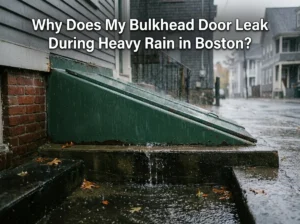
Heavy rain can flood weak drainage systems and push more water toward your bulkhead entrance. Water collects against the foundation and sneaks in through cracks or joints. If leaks only show up during storms, check the grading, downspouts, threshold, and the foundation connection.
Final Thoughts: Keep Your Bulkhead Dry With Better Water Control
The best way to stop basement water from coming in through bulkhead entrances is to keep water away from the door to begin with. Good grading, working gutters, sealed joints, solid weatherstripping, and repaired concrete all make a difference.
If water still finds its way in even after basic maintenance, the issue might sit at the bulkhead-to-foundation connection or point to a bigger drainage or waterproofing problem. Fixing the source gives you a longer-lasting fix than endlessly sealing the same old leak.
Lapans Basement Waterproofing can evaluate recurring bulkhead leaks and help determine whether the right solution involves sealing, drainage improvements, concrete repair, or broader basement waterproofing.