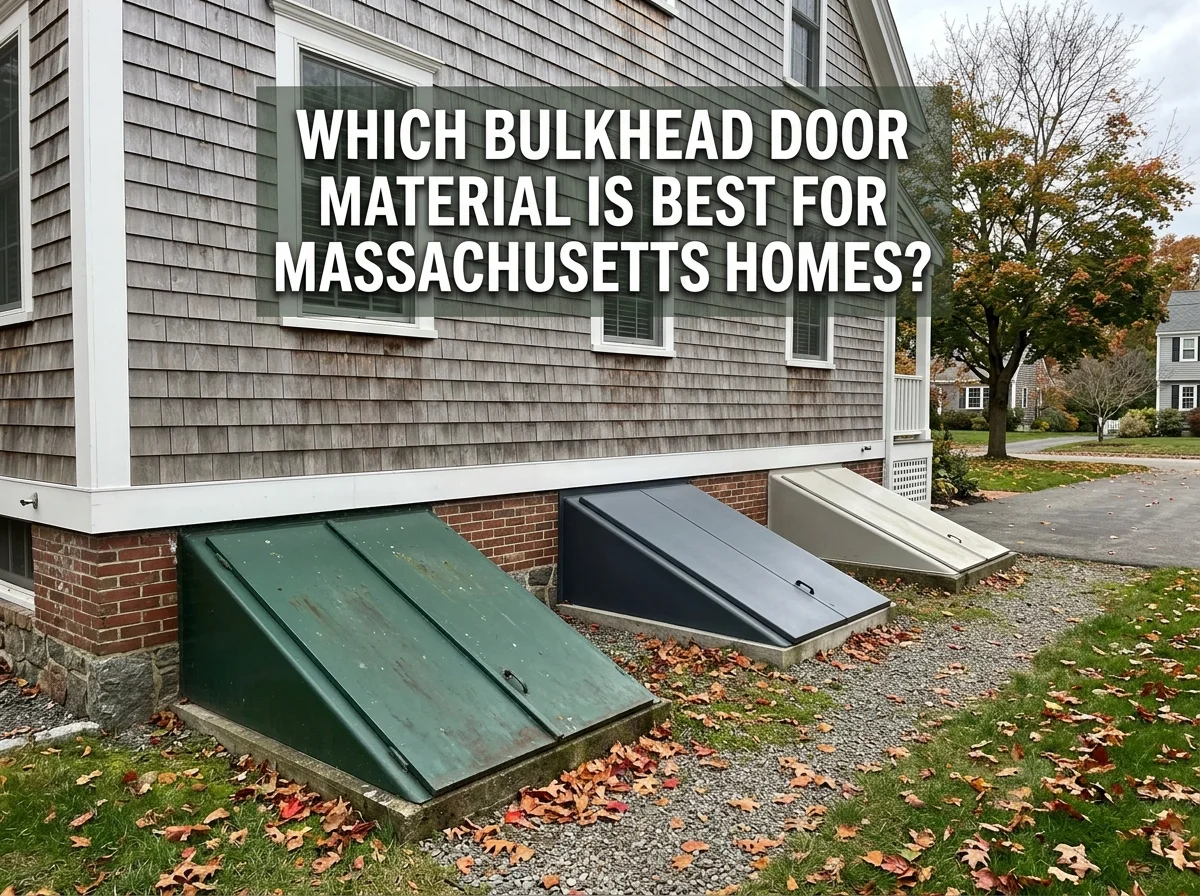
Choosing the best bulkhead door material for Massachusetts requires more than comparing appearance and price. The basement entrance in Massachusetts must be able to withstand rain, snow, freezing, and repeated freeze-thaw cycles, as well as additional moisture and storm exposure in coastal Massachusetts.
The two best materials for most homeowners are steel and polyethylene composite materials, and selecting the best material depends on the home’s location, maintenance requirements, and existing foundation opening. BILCO, a major manufacturer of residential basement doors, currently offers heavy-gauge steel and polyethylene bulkhead doors.
What Makes a Bulkhead Door Material Good for Massachusetts?
There are a number of conditions that will shorten the life of an exterior basement door in Massachusetts. State climate assessments point to increasing amounts of precipitation, flood events, high winds, and freeze-thaw events as significant infrastructure issues. Exposure to storms and flooding may be compounded for coastal properties.
These are some of the most significant features to consider when relating bulkhead door materials to each other:
- Corrosion resistance
- Resistance to snow and moisture
- Ability to handle temperature changes
- Low maintenance requirements
- Durable hinges and hardware
- Good weather sealing
- Compatibility with the existing foundation
- Long-term structural integrity
The material is important, but proper installation matters just as much. A high-quality door can still leak if the frame, flashing, threshold, or foundation connection is poorly installed.
Steel Bulkhead Doors: A Strong Traditional Choice
Steel bulkhead doors continue to be one of the most popular choices for basement bulkhead doors. In today’s BILCO steel doors, heavy-gauge steel and stainless steel concealed hinges are used for all-season and outdoor use.
A properly finished steel door is a pretty good combination of strength, durability, and availability for many Massachusetts homes.
Advantages of Steel
Steel bulkhead doors offer:
- Strong resistance to impact
- Rigid construction
- Wide availability in standard sizes
- Long service potential with proper maintenance
- Multiple finish options
Factory powder coating can provide additional protection. BILCO’s powder-coated steel doors use a polyester coating designed to provide a weather-resistant and scratch-resistant exterior finish.
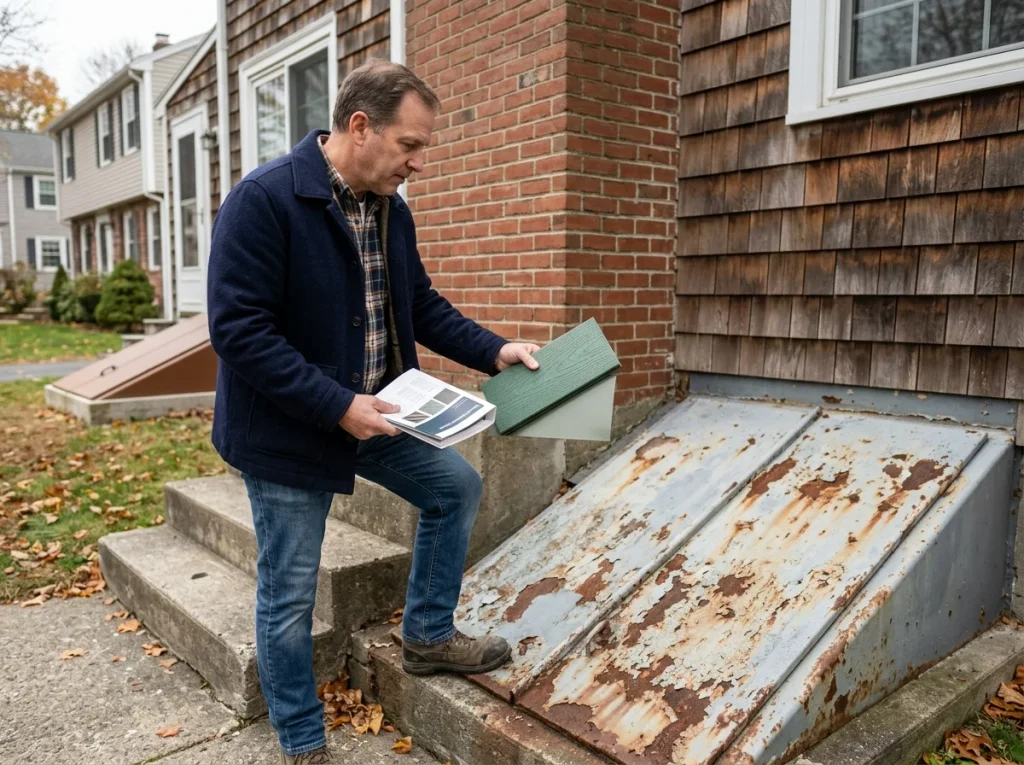
What About Rust?
Rust is the main concern with steel. Scratches, damaged coatings, exposed edges, and neglected maintenance can eventually allow corrosion to develop.
This matters more for homes near the Massachusetts coast, where moisture and salt exposure can be harder on exterior metal. BILCO specifically excludes salt-spray exposure within five miles of the coast from its powder-coat finish warranty, showing why coastal conditions deserve extra consideration.
This is more important when the home is located close to the Massachusetts shoreline,e where exposure to moisture and salt can be more damaging to exterior metal.
Polyethylene: A Low-Maintenance Alternative
If low maintenance is desired, then polyethylene should be considered. BILCO’s Ultra Series is made of high-density polyethylene and is engineered to allow you to access the basement without rusting, rotting, or needing to be painted to protect from the elements.
This makes polyethylene more appealing to homeowners who don’t want to repaint or constantly check on a metal surface for signs of corrosion.
The material also avoids one of the biggest disadvantages of steel: rust. Its molded construction provides a different appearance from traditional metal bulkheads, with a simulated wood texture available on the Ultra Series.
For homeowners asking about the most durable bulkhead door material, durability should therefore be considered in terms of the specific problem you are trying to avoid. Steel offers rigid heavy-duty construction, while polyethylene offers excellent resistance to rust and rot with very little maintenance.
Fiberglass vs. Steel Bulkhead Doors
Fiberglass is sometimes suggested as a weather-resistant option for exterior doors, but homeowners should check the actual product being considered rather than assuming all bulkheads use fiberglass construction.
Current BILCO products focus on steel and polyethylene, not on an existing fiberglass bulkhead line, for typical residential basement bulkheads. If a contractor recommends a fiberglass bulkhead, ask for the manufacturer’s specifications, warranty, hardware details, and replacement-part availability.
In other words, fiberglass vs. steel bulkhead door should be a product-specific comparison rather than a general assumption that fiberglass is automatically better for Massachusetts weather.
What About Aluminum Bulkhead Doors?
Aluminum offers corrosion resistance and is lightweight, but it is not the main component in many common residential bulkhead systems.
For this reason, aluminum bulkhead doors can be appropriate for some custom uses, but homeowners should decide on the entire system instead of the aluminum itself, since it won’t rust when exposed to water like untreated steel.
Consider the doorframe, hinges, fasteners, seals, finish, and installation method, as well as the panel material.
Steel vs. Polyethylene: Which Is Better for Massachusetts?
The right choice varies from one home to another.
| Material | Main Strength | Main Concern | Best Fit |
| Steel | Strength and rigid construction | Rust if the finish is damaged | Many inland homes |
| Polyethylene | Rust-free, low maintenance | Different appearance and product options | Low-maintenance homes |
| Fiberglass | Weather-resistant potential | Less common for standard bulkheads | Specific custom products |
| Aluminum | Lightweight, corrosion-resistant | Less common in standard residential systems | Specialized applications |
When strength and traditional appearance are important, steel that has a quality protective finish is a good option for a typical Massachusetts home. When the homeowner is looking for easy-to-maintain bulkhead doors and doesn’t want to battle against rust, polyethylene can be extremely alluring.
What About Coastal Massachusetts Homes?
Coastal location changes the material decision. Massachusetts has a long coastline, and its guidance considers coastal storms and flooding, coastal erosion, and other coastal hazards as important factors for properties near the coast. Corrosion protection is especially important if your home is located close to Boston Harbor, Cape Cod, the North Shore, the South Shore, or another area that is exposed to the coast.
For steel, a durable factory finish and regular inspection for scratches or exposed metal are important. A rust-resistant material such as polyethylene can reduce maintenance concerns, although the entire installation still needs proper weather sealing and drainage.
Do Not Overlook the Installation
The best material used for bulkhead doors will not function properly if installed poorly. The contractor should examine the foundation opening, door frame, door threshold, door flashing, door seals, and surrounding concrete. Do not allow water to pool around the basement door.
Homeowners dealing with a Leaky Bulkhead should have the seals, flashing, drainage, and foundation connection inspected before replacing the entire door.
This is particularly important in Massachusetts, where the snow and ice can persist around the bulkhead throughout the winter, and the alternation of freeze-thaw cycles can impact surrounding concrete and joints.
BILCO’s sloped-wall steel doors use flanged construction to shed water and keep ice and snow from binding the doors.
Which Bulkhead Material Should You Choose?
For many Massachusetts homeowners, steel is the best all-around choice when strength, availability, and traditional appearance are priorities. Go for a high-quality protective finish and pay attention to any scratches, spots of exposed metal, or early signs of corrosion.
Polyethylene is a solid alternative if you care more about keeping maintenance easy and avoiding rust than sticking with a traditional metal look.
If your home’s near the coast, think about corrosion risks and storm conditions before picking steel. Massachusetts has its own rules for building and coastal properties, and heavy work or reconstruction in regulated coastal spots often means you’ll need local approval.
Lapans Basement Waterproofing can help homeowners evaluate the existing bulkhead, foundation opening, and water-management needs before selecting a replacement material.
Frequently Asked Questions
What is the best material for a bulkhead door in Massachusetts?
Steel and polyethylene are both smart options for homes here. Steel has tough, rigid construction, while polyethylene keeps rust and rot out and needs very little maintenance. Pick the one that suits your home’s location, moisture exposure, appearance preference, and how much upkeep you want.
Are steel bulkhead doors good for Massachusetts winters?
Yes. Good-quality steel bulkhead doors with solid protective finishes hold up well in Massachusetts winters, as long as they’re installed right. BILCO’s steel doors work year-round, and if you seal and maintain them properly, they’ll handle moisture, snow, and freeze-thaw cycles.
Are polyethylene bulkhead doors better than steel?
Not necessarily. Polyethylene is easier if you want low maintenance and rust resistance. Steel makes sense if you want real rigidity and that traditional look. Both materials do well if they’re installed properly and match the property.
What is the best bulkhead material for coastal Massachusetts?
Polyethylene stands out for coastal homes since it won’t rust at all. A well-finished steel door can work too, but you’ll need to stay on top of corrosion and how the finish holds up. Massachusetts also knows that coastal properties face extra storm and flooding risk.
Final Thoughts: Choosing the Right Bulkhead Material for Massachusetts
The right bulkhead door material depends on where your home is and what matters most to you. Steel still delivers durability and the classic basement access, while polyethylene is a great choice for skipping rust and keeping maintenance minimal.
Most importantly, pick a solid bulkhead system and get it installed correctly. Doing things like sealing, flashing, managing drainage, and connecting to the foundation properly can make as much difference in performance over time as the material itself.
Lapans Basement Waterproofing can help you determine whether your existing bulkhead needs a different door material, better sealing, or more extensive foundation and waterproofing work.