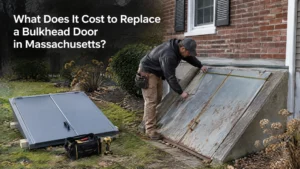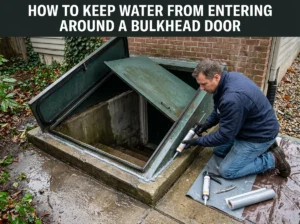

A basement bulkhead is more than a means to get outside. It helps prevent rain, snow, debris, and moisture from getting into the basement doorway and provides a convenient entry and exit for homeowners. Because it sits directly outdoors, however, the bulkhead door is exposed to weather throughout the year.
For Boston homeowners, regular bulkhead door maintenance is particularly important. Hinges, seals, fasteners, drainage areas, and metal surfaces may be impacted by cold winters, snow and ice, moisture, and repeated freeze-thaw cycles. Some basic maintenance practices will help prevent problems from ever becoming costly repairs.
Your Bulkhead Maintenance Checklist at a Glance
Homeowners can conduct a simple inspection routine to avoid a leak or stuck door. Inspect all sections of the bulkhead for movement, drainage, and weather protection by walking around the entire area.
| Area to inspect | What to look for |
| Door panels | Rust, dents, peeling coating, or visible deterioration |
| Hinges | Stiff movement, squeaking, corrosion, or loose hardware |
| Fasteners | Missing, loose, or damaged screws and bolts |
| Weatherstripping | Gaps, cracking, compression, or deterioration |
| Door frame | Misalignment, corrosion, or separation |
| Drainage area | Leaves, soil, snow, or standing water |
| Interior basement | Dampness, staining, or signs of water intrusion |
This quick check can become part of your bulkhead door inspection routine, particularly before and after harsh weather.
Keep Water Away From the Basement Entrance
One of the most important parts of basement bulkhead maintenance is keeping water from collecting around the entrance. Leaves, dirt, branches, and other debris can clog drainage openings and stop water from flowing away from the bulkhead. That water can also raise the likelihood of water getting in around the door frame, door, or the foundation.
Massachusetts building guidance recognizes the importance of proper drainage around below-grade construction, while local maintenance standards also emphasize keeping basement drains clear and free of debris.
During your inspection:
- Clear leaves and dirt from drainage openings.
- Remove snow from the door and stair area.
- Check for standing water after heavy rain.
- Keep nearby gutters and downspouts functioning properly.
- Look for soil or landscaping that directs water toward the bulkhead.
- Check the basement side for new damp spots or staining.
If the water is still getting in, it could be a problem with the door, the frame, the surrounding masonry, or the foundation.
Give Hinges and Hardware Some Attention
Hinges can be easily overlooked since they are small in comparison to the bulkhead itself. But if the hinges are stiff or rusted, it can make the door very hard to open and close and can eventually lead to alignment issues.
Check whether both doors move smoothly through their normal range. Listen for grinding or persistent squeaking, and look for rust around hinge points. Hinge lubrication should follow the door manufacturer’s recommendations. Never just pick any lubricant and expect that to solve the problem. If a hinge is very corroded, loose, or broken physically, the lubrication won’t fix it.
Check for looseness or corrosion of screws, bolts, handles, and other hardware. Use proper fasteners to replace damaged fasteners, not leave them waiting to continue to deteriorate.
Check the Seal Before Boston’s Wet and Cold Weather
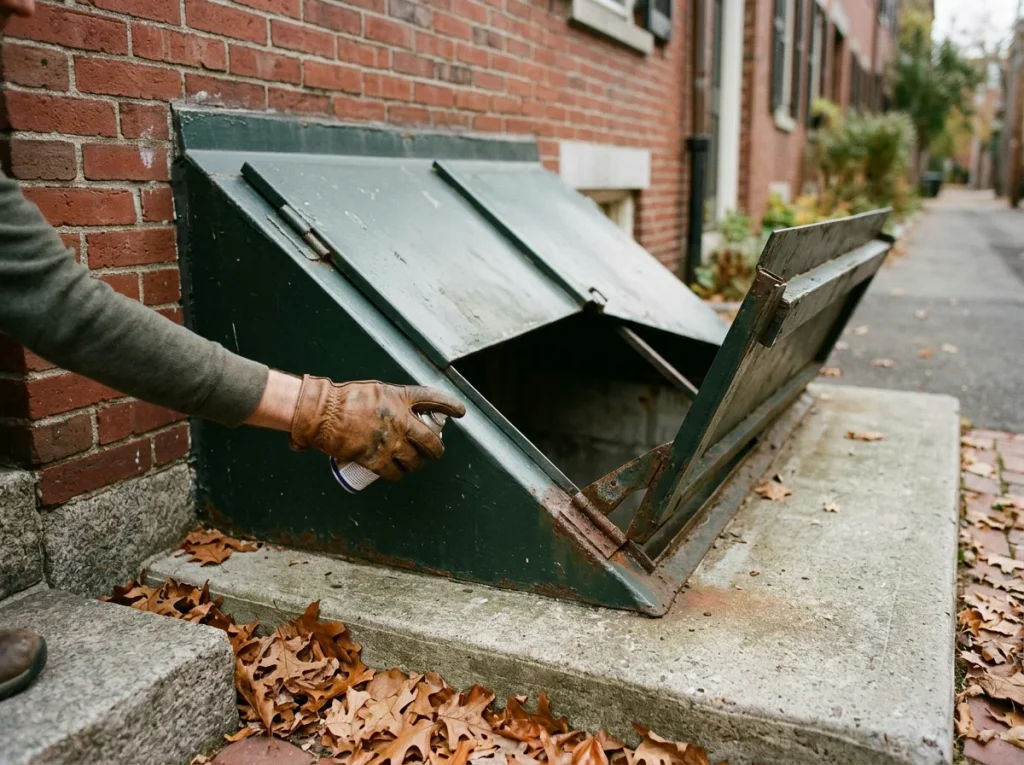
While the bulkhead doesn’t have to be completely impervious to water, worn or compromised weatherstripping and worn door seals can let more water, drafts, and moisture in at the door to the basement.
Move your hand around the closed door and check the door seal for:
- Cracks or splitting
- Flattened sections
- Missing pieces
- Visible gaps
- Separation from the frame
Before just replacing the weatherstripping, confirm that the door is properly aligned if it does not close evenly against the weatherstripping. If the door is not installed properly, it can continue to leak even after the new sealing material is applied. This is an important part of bulkhead door care because seals are relatively simple to inspect but can make a meaningful difference in protecting the basement.
Prepare Differently for Boston’s Seasons
Boston’s weather makes seasonal inspections worthwhile. The National Weather Service recorded a 2025 annual average maximum temperature of 59.5°F and an average minimum of 44.9°F, while winter conditions regularly bring freezing temperatures and snow.
Before Winter
As part of regular bulkhead maintenance, clear drainage areas, inspect seals, lubricate appropriate moving components, and check for corrosion or loose hardware. These steps support proper drainage system maintenance and help prevent water from collecting near the basement entrance. Ensure that the bulkhead does not stick when opened or closed. Massachusetts also recommends that homeowners take precautions against freezing and keep gutters and roofs clear so water can flow away from the foundation.
During Winter
Never let accumulated snow and ice build up against the bulkhead. Carefully remove accumulations; do not use tools to strike metal doors, as this may damage the surface or seals.
In Spring
A detailed bulkhead door inspection is best done in the spring. Check for corrosion, broken or worn fasteners, weatherstripping deterioration, winter moisture and freeze-thaw movement problems, and drainage issues.
Before Heavy Rain
Make sure that drainage routes are clear and water is not being diverted to the basement entry. A clear drainage route is one of the simplest ways to help prevent water from collecting around the bulkhead.
Know When Cleaning Is No Longer Enough
Regular maintenance will resolve minor issues, while others will need the expertise of a professional.
If you see these symptoms, call a trained expert:
- Significant rust or corrosion
- A door that will not close correctly
- Repeated water leaks
- Separation around the frame
- Damaged foundation areas
- Severely deteriorated hardware
- Cracks that continue getting worse
- Structural movement around the entrance
If the cause of the leak is not known, do not use sealant as a solution for a recurring leak. Similarly, if there is extensive corrosion, it may be a better idea to replace the door than to repair it.
The Massachusetts State Building Code currently includes specific requirements concerning basement emergency escape and rescue openings. A July 2026 BBRS interpretation also confirmed circumstances in which a bulkhead enclosure may be used over a basement EERO area, provided applicable requirements are met, including operation from inside without a key or tool.
When homeowners are assessing bulkheads, they need to not only think of the protection against the weather, but they also need to think about the safe operation of the bulkhead.
A Practical Long-Term Maintenance Routine
You really don’t need any fancy tools to handle basic bulkhead maintenance. Just stick to a simple routine, and inspections get much easier:
Every few months: Check the hinges, seals, hardware, look for corrosion, and make sure drainage is working.
Before winter: Clear the area, see how the door operates, and fix anything that looks off.
After major storms: Look for standing water, moved seals, new rust, or moisture getting into the basement.
Every spring: Go over everything and look for freeze-thaw damage or anything that winter may have worn down.
Whenever a leak appears: Find the source instead of simply covering the visible symptom.
For homeowners who notice deterioration during an inspection, Lapans Basement Waterproofing can evaluate the bulkhead and surrounding basement conditions to help determine whether maintenance, repair, or replacement is appropriate.
Frequently Asked Questions
How often should I inspect a bulkhead door?
Examining it every few months is smart. Throw in extra checks before winter hits, after bad storms, and during spring cleaning. If your bulkhead is quite old, regularly exposed to moisture, or already has signs of corrosion or leakage, look it over more often.
What is the most important part of bulkhead maintenance?
Water management is one of the most important areas to monitor. Always keep drainage clear, check those seals, watch how the ground around the door slopes, and look out for any standing water. If you still get moisture in the basement, dig into the cause; don’t just rely on surface sealants to fix the issue.
How do I maintain a steel bulkhead door?
Check for rust, keep drainage paths open, inspect hardware and hinges, and fix any damaged coatings. Don’t let small spots of corrosion slide; moisture will keep rust spreading, and pretty soon, it’ll weaken the steel.
When is it time to replace a bulkhead door?
Replacement is the way to go when corrosion is widespread, the door won’t line up or close anymore, structural parts are damaged, or you keep repairing water intrusion and never solve the problem. A professional can inspect and help you decide if repair or replacement is best.
Final Thoughts: Keep Your Boston Bulkhead Ready Year-Round
Regular bulkhead door maintenance is a small part of home upkeep that can help protect a much larger area: your basement. Stay on top of drainage, seals, hardware, and corrosion, and get ready for Boston’s winters to catch problems before they grow.
When maintenance reveals persistent leaks, deterioration, or damage around the entrance, Lapans Basement Waterproofing can help homeowners determine the next appropriate step for protecting their basement entrance.