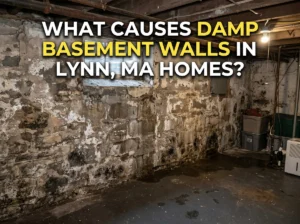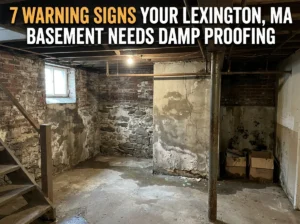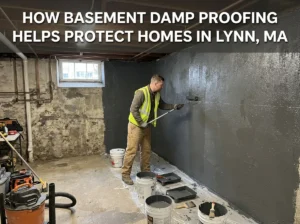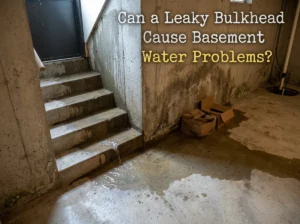
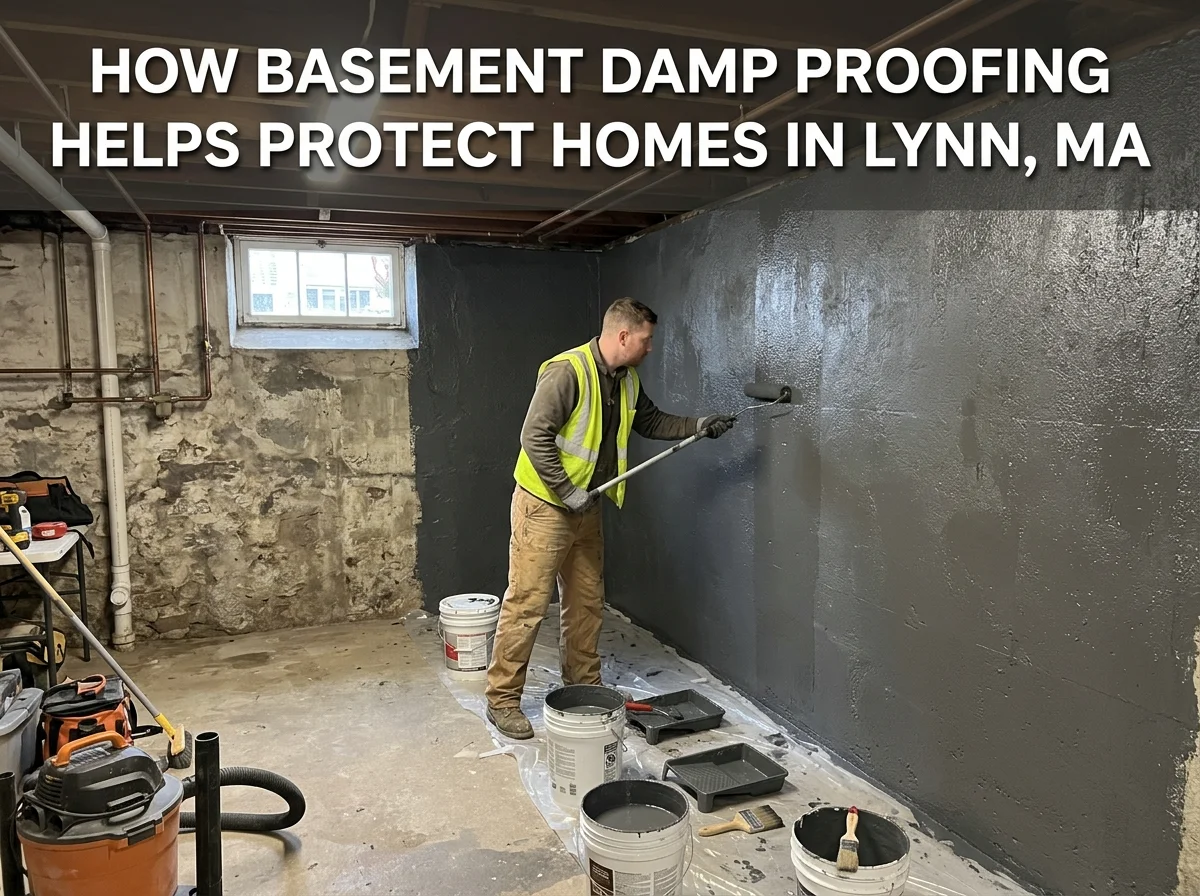
A basement does not need to be flooded to have a moisture problem. Moisture moving through foundation walls may be indicated by damp walls, a musty odor, flaking paint, or a basement that is always damp.
Basement damp proofing in Lynn, MA can minimize that exposure by providing a barrier between the foundation and surrounding moisture. However, the solution varies depending on the source of the moisture, the extent of it seeping in, and whether the basement is experiencing dampness or water intrusion.
Why Lynn Basements Deal With Persistent Moisture
Basement moisture protection planning is dependent on local conditions. The new NOAA Climate Normals period is 1991-2020, and nearby Marblehead, MA data indicates approximately 48 inches of precipitation for the year and approximately 5 inches for October.
This does not imply all Lynn properties get the same quantity of rain. It does illustrate why foundation walls often experience wet soil and moisture fluctuations. Lynn has also created flood risk maps. On the FEMA map page of the city, panels are mapped around the Saugus River, Lynnway, East Lynn, and Lynn Shore Drive.
Each house is unique and will have its own moisture problems, and the best basement solution depends on the property’s unique conditions.
Dampness Is Not the Same as Standing Water
One of the first things to establish is what the basement is actually experiencing.
| What you notice | What it may indicate |
| Cool, clammy walls | Humidity or moisture migration |
| White powder on masonry | Moisture moving through masonry |
| Peeling paint | Persistent dampness behind the surface |
| Musty odor | Ongoing moisture and poor drying |
| Water at the wall-floor joint | Possible groundwater or drainage issue |
| Puddles after storms | Active water entry or drainage failure |
The main purpose of damp proofing is to restrict moisture movement at the surface of foundations. It should not be presented as a cure for every basement water problem.
If moisture is seeping in at ground level, building up on the surface, or still coming in after heavy rain, then drainage or waterproofing may be required as well as or instead of a standard damp-proofing treatment.
How Damp Proofing Creates a Moisture Barrier
Below-grade foundation walls are always in contact with moisture, as it is in the surrounding soil. Concrete and masonry are not completely impervious to water vapor, and moisture will travel through pores and small pathways.
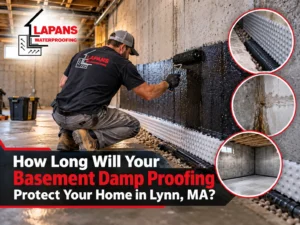
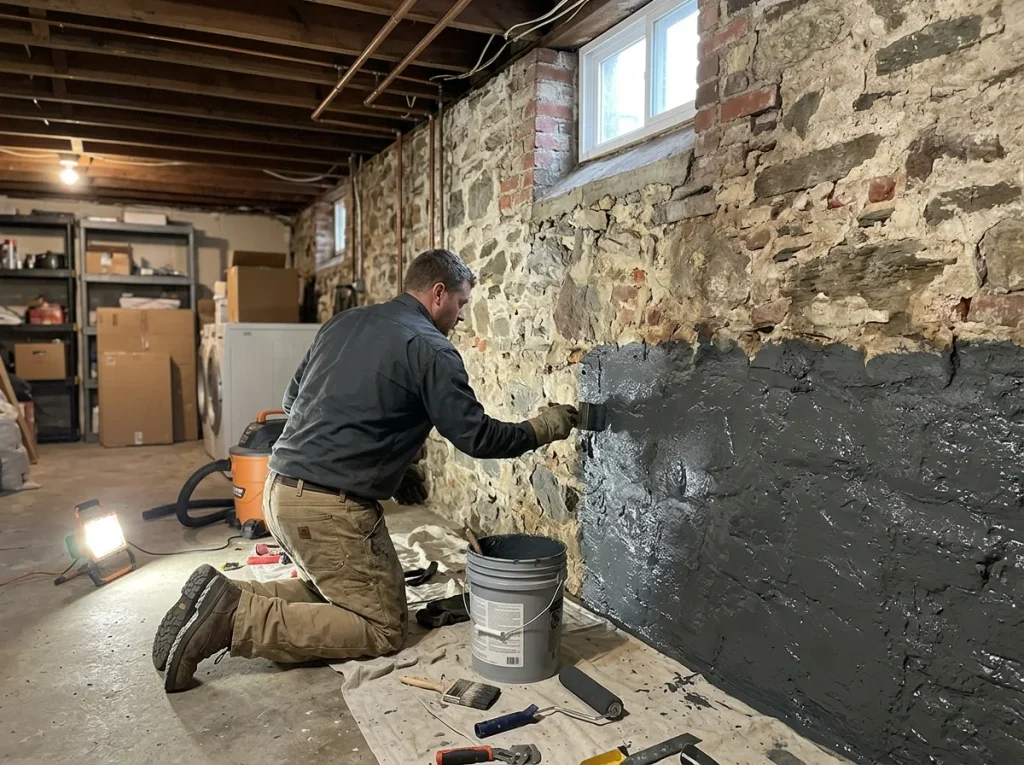
A damp-proofing system is a layer of protection that forms a barrier over the surface of the foundation. This can be a suitable coating, membrane, or other waterproofing material depending on the type of construction and the chosen system.
The important part is not simply covering the wall. Surface preparation, repair of damaged surfaces, and appropriate installation of the chosen material must be carried out according to the requirements of the material.
Where the Protection Starts
The foundation should be the starting point for a basement moisture treatment.
Professionals typically look for conditions such as:
- Cracks or open joints
- Deteriorated masonry
- Previous coating failure
- Signs of water movement
- Poor exterior grading
- Downspouts releasing water near the foundation
- Damp areas that become worse after storms
This investigation is useful to distinguish between surface moisture and a more significant drainage or foundation problem.
For example, coating a wall during roof runoff next to the foundation does not fix the source. The coating could be beneficial, but the site still has to control the water that touches the structure.
Exterior and Interior Conditions Both Matter
The first place to check is often the outside of the house since the foundation wall is in direct contact with the soil. All grading, gutters, downspouts, drainage systems, and soil conditions can affect the amount of moisture entering the foundation. Fixing these conditions in some homes can be a part of the moisture control plan.
The interior treatments are different. These treatments can help to control dampness on the surface or to create a barrier to dampness along the walls of basements when access is restricted. But it is not advisable to cover up active leakage, which requires a different solution, with an interior coat.
The most suitable system will depend on the building and the source of moisture.
What Happens When Moisture Stays in the Basement?
Excess water in the basement has more impact than just on the moisture.
Staining or deterioration can occur on concrete and masonry surfaces. The adhesion of paint and finishes may be lost. Items stored in the basement might be subject to dampness, and a high level of humidity in the basement can make it more difficult to maintain a comfortable environment.
Moisture can also contribute to the potential for mold growth. Damp proofing is not a substitute for ventilation or humidity control, but a reduction in moisture coming in through foundation surfaces can eliminate one source of excessive basement moisture.
Lynn’s Flood Risk Makes Site Assessment Important
A property should not be deemed safe or unsafe because of its street name alone. Each location has its own set of FEMA flood zones, and Lynn’s mapped areas have multiple flood zones. The city’s hazard mitigation documentation identifies the zones of the city: A, AE, AH, X, and VE, and defines Zone VE as a coastal flood zones that also have wave hazards.
That distinction matters when evaluating basement moisture.
The owner of a house in a flood-risk area may be required to have a more comprehensive water management plan than someone with damp masonry issues following a normal rainfall. These factors should be taken into consideration when choosing the basement moisture protection method: flood exposure, groundwater and drainage system, and foundation building.
A Proper Treatment Is More Than a Wall Coating
Before any work begins, the plan should provide clear answers to the following questions:
Where is the moisture coming from?
Different responses are needed for soil moisture, surface runoff, condensation, groundwater, and plumbing leaks.
How is it entering?
Water may be entering through cracks, gaps, wall-floor joints, or other weak areas in the masonry.
Is the problem seasonal?
Rainwater that is seen after heavy rains is very different from ongoing dampness that occurs all year long.
What happens after treatment?
It may still be necessary to provide exterior drainage, humidity control, sump equipment, or other devices.
This is where professional assessment becomes valuable. Treatment should be based on the moisture situation rather than on the symptoms that are visible.
Massachusetts Code Also Recognizes Foundation Moisture Protection
The 10th Edition of Massachusetts’ State Building Code went into effect on October 11, 2024, right after the earlier concurrency window. This code is based on the 2021 International Codes, with amendments unique to Massachusetts.
For new builds or foundation work, what you need to do for waterproofing and damp proofing depends on your foundation type, soil-water conditions, and how that below-grade space will be used. That’s exactly why you can’t treat moisture problems in existing homes like every basement deals with the same conditions.
When Damp Proofing Makes Sense
Damp proofing works when the main issue is moisture transfer instead of substantial water penetration. It can be part of an overall basement moisture management plan in situations like:
It may be part of a larger basement moisture control plan when you are dealing with:
- Damp foundation walls
- Moisture moving through masonry
- Recurring surface dampness
- Foundation moisture prevention during construction
- A need for additional wall protection
It’s a different story if water is actually coming in, pooling, or pushing its way through your foundation. In those cases, it’s time to seriously consider drainage and waterproofing options.
Frequently Asked Questions
Is basement damp proofing the same as waterproofing?
No. Damp proofing fights against moisture and water vapor getting through basement walls, while waterproofing handles harsh, active water exposure. If you’re seeing leakage or dealing with hydrostatic pressure, you’ll need a full waterproofing and drainage system.
Can damp proofing stop water from coming through basement walls?
Damp proofing can reduce moisture coming in, but it won’t guarantee to stop actual water intrusion. If water is entering through cracks, joints, or because of outside groundwater, you have to figure out where it’s coming from before picking your fix.
When should homeowners inspect their basements for moisture?
There’s no single “right” schedule. Homeowners should pay close attention after heavy rains, melting snow, or any changes in drainage. Look for fresh stains, musty smells, flaking paint, or new dampness. Catching issues early makes them much easier to solve.
Does every Lynn home need basement damp proofing?
No. Homes vary in foundation type, drainage, soil, age, flooding risk, and past moisture problems. The best approach is to inspect the property and decide whether it needs damp proofing, drainage work, waterproofing, or something else.
Final Thoughts: Building a Drier Basement From the Outside In
Basement damp proofing in Lynn, MA helps protect home foundations and cut down on repeated moisture problems. Still, the best results come when you really dig into the source of the problem and match the solution to the home’s particular conditions.
Lapans Basement Waterproofing approaches basement moisture as a property-specific problem rather than assuming one treatment fits every home. With the rain Lynn gets, its location on the coast, and flood areas mapped out, the smartest moisture protection starts with figuring out what your foundation actually faces.