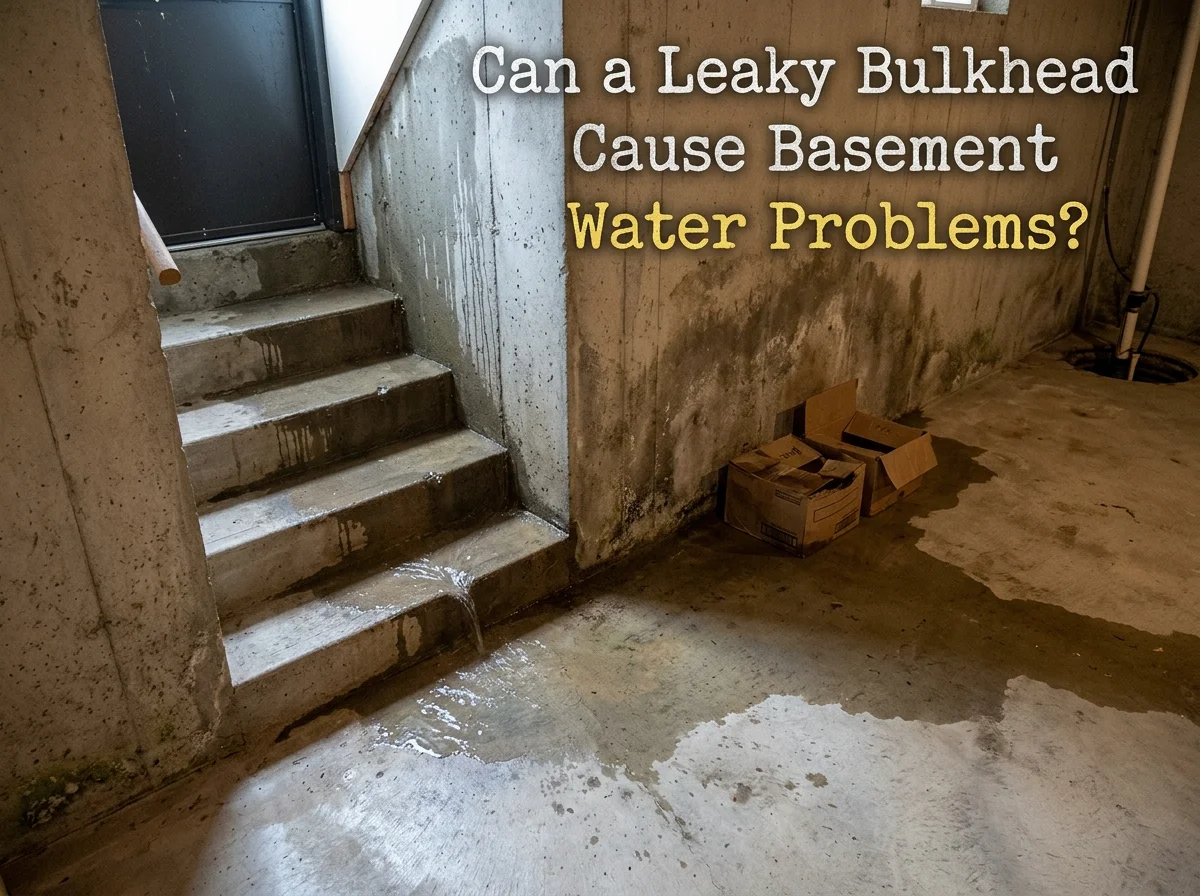
Yes. Rain, melting snow, and surface runoff can enter a basement directly through a leaking bulkhead. Once water gets past the bulkhead door or surrounding joints, it can reach basement walls and floors, creating damp surfaces, staining, excess humidity, and eventually more serious moisture damage.
For Boston homeowners, this deserves particular attention because the bulkhead is exposed to changing weather throughout the year. Boston’s 2025 annual average minimum temperature was 44.9°F, while the winter of 2025–26 recorded an average minimum of 22.6°F from December through February. Those repeated temperature changes can place additional stress on exterior components and surrounding joints.
How Water Gets From a Bulkhead Into the Basement
Even if there is not a large hole visible, a bulkhead can leak into a basement. There are a number of ways water can get in through the seals, especially when they become worn or if the perimeter drainage is poor.
Before reaching a weak point, rainwater can collect on or around the bulkhead. It can then pass through the door opening, the door frame, the stair opening, the opening in the foundation, or cracks around the opening.
Common entry points include:
- Worn door seals
- Failed weatherstripping
- Gaps around the bulkhead frame
- Deteriorated joints
- Cracks around the foundation opening
- Blocked drainage areas
- Poor surface grading
- Damaged or corroded door components
When water moves to the inside of the bulkhead, it can flow either over or along the basement floor or against the foundation wall.
The Bulkhead May Be the Entry Point, Not the Entire Problem
One important distinction is that a bulkhead causing basement leaks does not always mean the bulkhead door itself is defective. Water may also flow towards the entry due to the drainage around the house. More water can be directed toward the bulkhead area if the gutter is clogged, the downspout is not installed properly, the soil is saturated, or the grade is a problem.
An alternate pathway can be formed because of hydrostatic pressure. When the soil around the foundation is saturated, the water pressure against the foundation below-grade ground surfaces will increase. Water may seep through into the bulkhead connection or around the weak foundation, if one is present.
This is why it is important to know where to enter. Sealing the point of visible water without taking steps to find the source may just be a short-term fix.
What Happens After Water Enters?
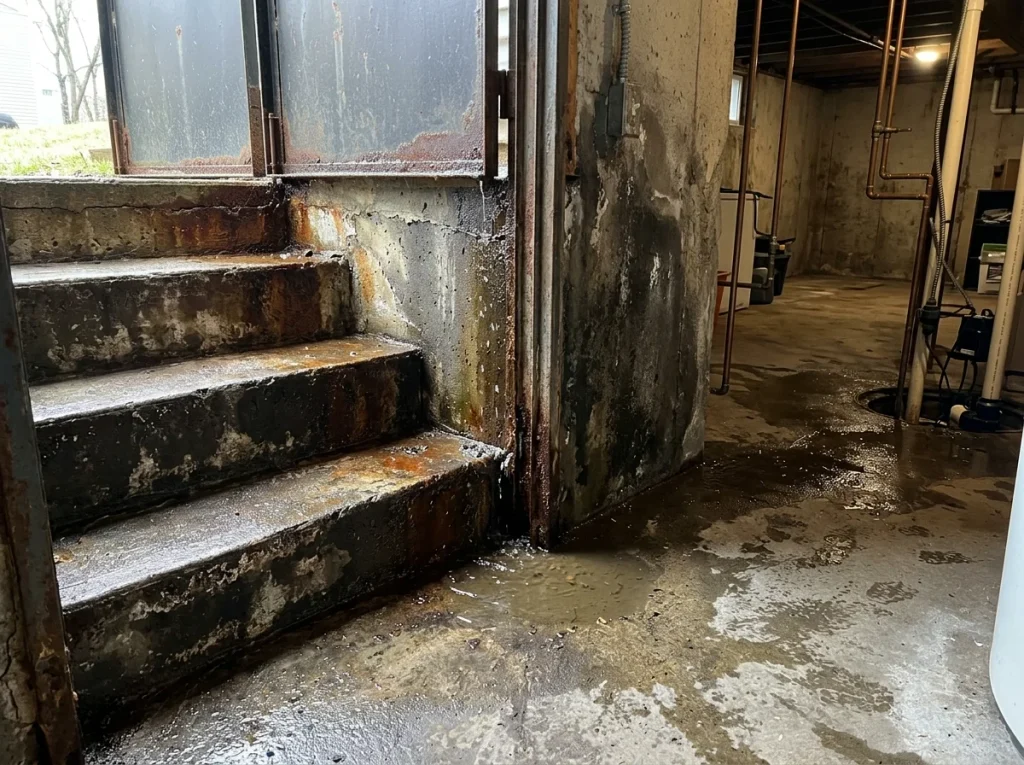
A small leak may initially appear harmless. After heavy rainfall, a wet spot may be seen, or after a period of wet weather, small quantities of water may be seen near the basement entrance. But repeated exposure can cause increasingly severe issues.
Basement Walls and Floors
Water from repeated rainfall can result in stains, wet spots, or discoloration on basement walls and floors. Moisture can also cause some materials near the problem to deteriorate.
Drywall and Insulation
Water can start to seep through walls into drywall and insulation in finished basements. Materials that remain damp may eventually require repair or replacement rather than simple drying.
Wood and Flooring
Wood trim, framing components, flooring, and stored materials can also be affected by repeated moisture. The longer the water is in place, the more damage can be spread.
Humidity and Odors
Recurring bulkhead water intrusion into the basement can increase moisture levels indoors. In addition to the obvious standing water, homeowners may notice a musty smell or increased humidity in their homes.
Why Boston Weather Makes Bulkhead Protection Important
Boston’s seasonal conditions can expose bulkheads to rain, snow, freezing temperatures, and repeated thawing. During the 2025–26 winter season, Boston recorded a seasonal average maximum temperature of 35.9°F and an average minimum of 22.6°F.
Moisture entering small openings and freezing can cause extra pressure to be applied to weak joints and materials. Existing cracks, gaps, and deteriorated seals may become more obvious over time as a result of repeated freeze-thaw cycles.
Another challenge can come in the spring. If drainage isn’t functioning correctly, the melting snow and rain may cause a significant amount of water to flood the way to basement openings. For this reason, bulkhead door water problems Boston homeowners notice during one season should not automatically be dismissed as temporary.
Signs Your Bulkhead May Be Causing Basement Moisture
You do not have to wait for major flooding to investigate a potential problem.
Watch for:
- Water stains near the bulkhead
- Damp basement walls
- Wet flooring after rain
- Water collecting at the base of the stairs
- A musty smell near the entrance
- Peeling paint or damaged drywall
- Rust or corrosion on the door
- Deteriorated seals
- Water appearing after snow melts
- Recurring moisture in the same location
The timing of the moisture can provide useful information. If water consistently appears after heavy rain or snowmelt, the bulkhead and surrounding drainage should be inspected rather than assuming the basement has a general moisture problem.
What Should You Check Before Calling for Repairs?
If the homeowner has time, do a basic visual inspection without disassembling the bulkhead. Inspect any door sealings and weather stripping for cracks, gaps, or separation. Test to see if the doors open and close evenly, and if the hinges or hardware seem loose or tarnished.
Next, examine the area outside the bulkhead. Clear away leaves, soil, and other materials that may obstruct drainage. Check for puddles around the front door following rain. Inside the basement, check the floor and foundation wall around the bulkhead opening. If possible, compare conditions prior to and after rain.
Do not attempt a cosmetic solution to a leaking water system without determining the water source.
When a Bulkhead Problem Needs Professional Evaluation
Water intrusion becomes more significant if it happens repeatedly after taking some basic measures to prevent it or if the surrounding structure is deteriorating.
An inspection can help determine whether the source is:
- The bulkhead door or its seals
- The frame or connection around the opening
- Drainage around the bulkhead
- A foundation crack or joint
- Broader basement waterproofing conditions
This is important since the type of repair that is necessary will differ according to the water pathway.
Massachusetts homeowners should also keep the bulkhead’s emergency-use function in mind. A July 2026 BBRS interpretation reaffirmed that a bulkhead enclosure can be installed over a basement emergency escape and rescue opening when applicable requirements are satisfied, including being releasable or removable from inside without a key, tool, or excessive force.
A waterproofing repair should therefore not interfere with safe operation or required egress.
How to Reduce the Risk of Future Bulkhead Leaks
Preventive maintenance actually starts outside the basement. Keep drainage areas clean, make sure downspouts push water away from your foundation, and check the bulkhead after every major storm. Before winter hits, look over the door seals, hinges, hardware, and watch for visible corrosion. When spring comes, inspect the area again for any damage from snow, ice, or freeze-thaw cycles.
If you keep finding moisture, don’t wait until you see water pooling in your basement. Those small, repeated leaks build up and could eventually lead to bigger, more expensive interior water damage.
Frequently Asked Questions
Can a bulkhead door cause water damage?
Yes. If water sneaks in through worn-out seals, joints, gaps, or broken parts, it can get into your basement and damage walls, floors, drywall, insulation, wood, or anything you have stored down there. How much damage you’ll get depends on how much water gets in and how often you have the problem.
How do I know if my bulkhead is causing the basement leak?
Look for moisture right under or around the bulkhead entrance, especially after it rains or snow melts. Check out the door, seals, frame, drainage around the area, and the foundation wall next to it. Track when and where water shows up; that usually points right to the entry spot.
Can heavy rain cause a bulkhead to leak?
Yes. Heavy rain can overwhelm bad drainage near your entrance and put pressure on seals, joints, or even the foundation around it. If water’s pooling near the bulkhead, there’s a higher chance it’s going to find a way inside.
Should I repair the bulkhead or waterproof the basement?
It depends on where the water’s coming from. If the bulkhead itself is letting water in, a focused repair can fix it. If you’re seeing leaks from other spots like foundation walls or joints, then you might need a full basement waterproofing solution.
Final Thoughts: Stop Bulkhead Leaks Before Basement Damage Spreads
A leaking bulkhead absolutely makes basement water problems worse, but what you see isn’t always the whole story. Figuring out where the water’s really getting in helps homeowners avoid temporary fixes that fail to address the underlying issue.
For Boston homeowners dealing with recurring bulkhead water intrusion into the basement, Lapans Basement Waterproofing can help evaluate the bulkhead area and surrounding basement conditions to determine what needs attention.