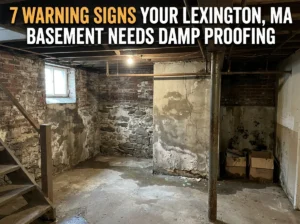
A basement does not need standing water to have a moisture problem. A musty odor near the stairs, paint that begins bubbling, or cardboard boxes that feel damp can all signal trouble. It’s easy to overlook these changes if the basement is just a storage area.
For homeowners looking for signs of basement dampness in Lexington, MA, the key is recognizing patterns. Moisture can seep in through foundation walls, pool around the floor, or condense as a result of the interaction of humid air and cold concrete. Early identification of the most probable source allows treatment to be selected before the symptoms spread.
1. Damp Patches Return After Rain or Snowmelt
If basement walls or floors become damp after a storm, note the location where the moisture is occurring. Lexington controls stormwater runoff from rain and snow, and drainage around individual properties is also important. Overflowing gutters, downspouts spilling next to the foundation, or low spots in a yard can cause water buildup around the base of the walls of a basement.
Check these areas outside your home:
- Gutters filled with leaves or debris
- Downspouts discharging close to the foundation
- Soil that slopes toward the house
- Puddles that remain near basement walls after rain
| Helpful note: If the same patch becomes wet after several storms, record when it appears. This pattern may be useful for a professional to differentiate a drainage issue from condensation or other moisture source. |
2. A Musty Smell Persists Even When the Basement Looks Dry
A musty smell can be caused by wet carpet padding, cardboard stored in a damp location, wood, or mold in an unseen space. It is often most noticeable when opening the basement door or when moving objects that are stored against a wall.
Instead of covering up the odor, check the areas where lingering moisture may be hidden.
- Behind shelving and stored boxes
- Under rugs or carpet edges
- Around baseboards and plumbing fixtures
- Inside closets or enclosed storage spaces
If the smell persists after cleaning/drying, look for the source of the moisture. Odors don’t necessarily mean that water is coming into the foundation.
3. Paint Bubbles or Peels Away From Basement Walls
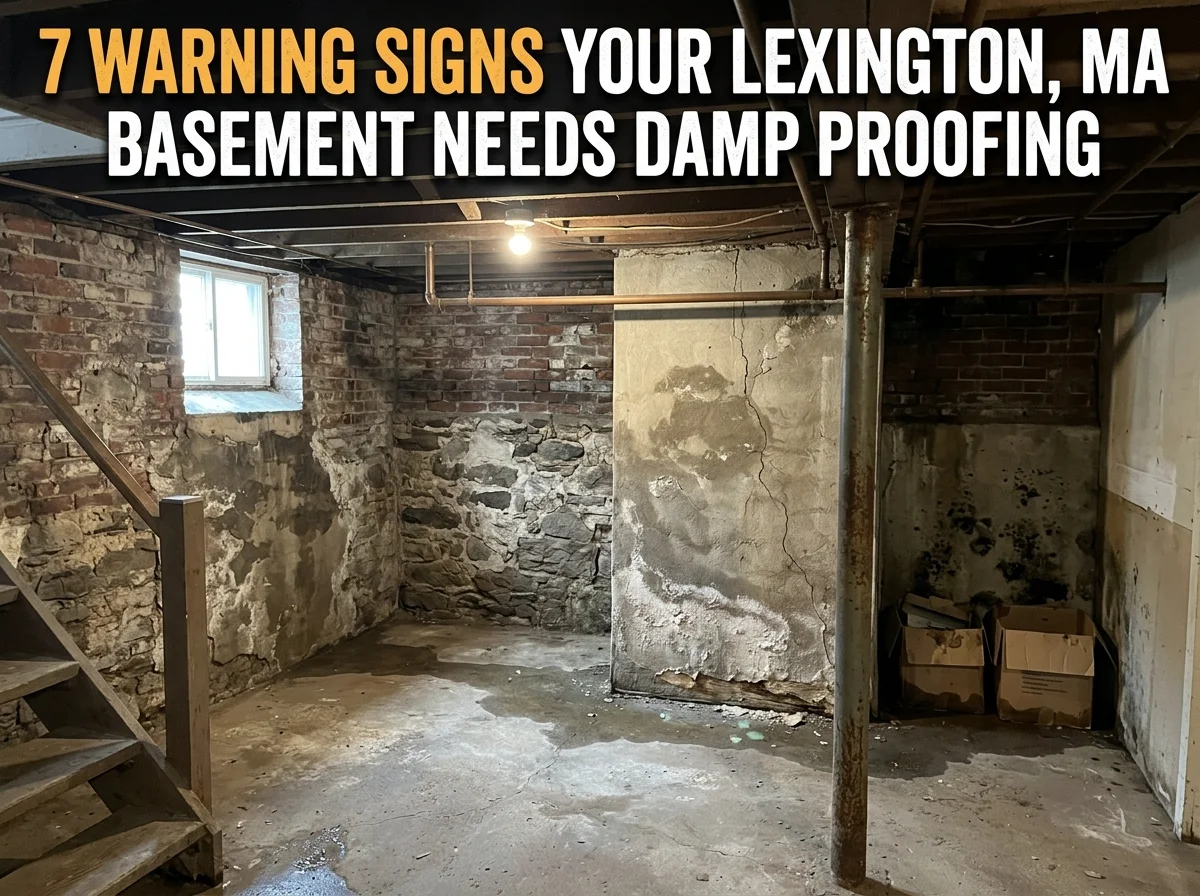
Recurring discoloration, flaking coatings, and bubbling paint can be a sign of moisture moving through the masonry or pooling behind a wall finish. You may notice these issues more clearly along lower walls, in corners, and near earlier repairs.
However, peeling paint can also occur due to inadequate surface preparation or inappropriate coating. Repainting without identifying the cause may only hide the problem temporarily.
Before applying another coat:
- Check whether the wall feels damp.
- Check for plumbing leaks nearby or problems with exterior drainage.
- Note whether discoloration returns after the surface dries.
- Investigate persistent moisture before choosing a new coating.
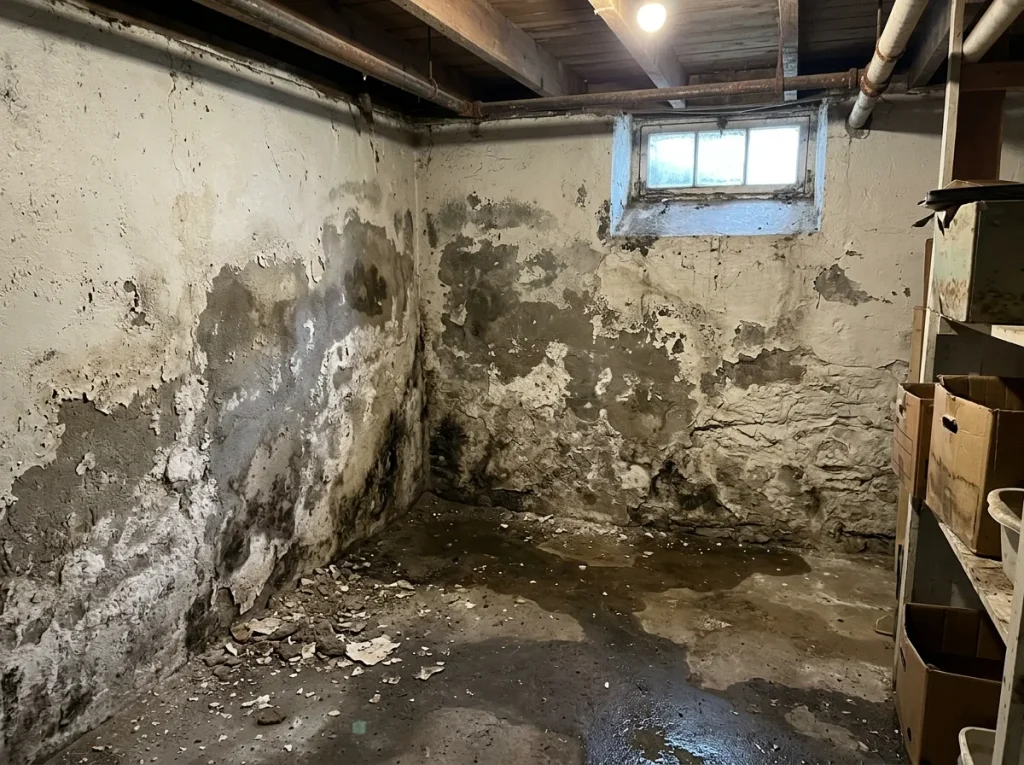
4. White Powder Appears on Concrete or Masonry
The white, powdery deposits on walls in basements are commonly referred to as efflorescence. They form when water penetrates masonry, dissolves salts, and leaves them behind as the water evaporates.
Efflorescence is not mold and does not necessarily indicate foundation problems. However, deposits that repeatedly return may indicate ongoing moisture movement.
| What you notice | What it may indicate |
| Dry, white powder | Possible efflorescence |
| White deposits with damp patches | Moisture moving through masonry |
| Peeling paint with recurring stains | Moisture behind the coating |
| Crumbling masonry or widening cracks | A need for closer assessment |
Do not seal up repeated deposits until you have found the cause of the wall’s dampness.
5. Condensation Forms on Cold Surfaces
Sometimes basement moisture is due to humid indoor air rather than water percolating through the foundation. Warm air can condense on cold concrete, pipes, or basement windows.
A basic humidity meter can help you monitor relative humidity. The U.S. Environmental Protection Agency recommends keeping indoor humidity below 60%, ideally between 30% and 50% where practical.
What to try: When necessary, use a dehumidifier, ventilate the house, and look for condensation on pipes and windows. Don’t assume humidity control is the only cure for damp areas on the wall if the wall itself is still damp.
6. Floor Edges or Stored Belongings Feel Damp
The edges of wet floors, rusted shelves, chewed cardboard, and wet carpet can indicate moisture at the base that can be difficult to see in the middle of the basement. The issue can be at the wall-floor connection, in the slab itself, or due to a plumbing leak.
Clear items off the floor and away from the wall where they are stored. This helps you easily identify dampness and minimizes direct contact between moisture and belongings. If the same area becomes wet repeatedly, arrange a moisture inspection instead of relying on surface drying alone.
7. Foundation Cracks or Masonry Damage Are Changing
Small cracks in the foundation do not necessarily indicate that the foundation is in trouble. However, cracks that widen, allow water through, or appear alongside a visibly shifting wall deserve closer attention.
Watch for these warning signs:
- Cracks that become wider or longer
- Water entering through a crack
- Horizontal cracking or noticeable wall movement
- Crumbling concrete or deteriorating masonry
Photograph changes over time, but do not delay professional assessment if a wall appears to bow or shift. Moisture is dealt with by damp proofing, and if there is serious structural damage, then the repair may be different.
What Should You Do When You Spot Basement Dampness?
The correct answer is different based on the source. Follow this quick inspection process before selecting a wall coating, drainage system, or other treatment.
Step 1: Record the pattern. Track whether dampness occurs after rainfall, in humid conditions, or at any time of year.
Step 2: Inspect the surroundings. Inspect gutters, downspouts, grade, open foundation cracks, and plumbing in the area.
Step 3: Monitor indoor humidity. Monitor indoor humidity with a meter to see whether condensation is contributing to the problem.
Step 4: Choose treatment based on the cause. A dehumidifier might be useful for condensation issues, and other moisture issues may require exterior drainage improvements, crack repairs, or a proper wall treatment.
Don’t count on one fix to solve every damp basement problem. Throwing on a coating won’t do anything for bad yard drainage, and a dehumidifier isn’t going to stop water from sneaking through a crack in your foundation.
When Should You Consider Professional Damp Proofing?
Consider a professional assessment if damp patches keep returning, white deposits reappear, paint repeatedly peels, or moisture becomes noticeable after storms. The inspection should identify the likely source before recommending a treatment.
Lapans Basement Waterproofing helps homeowners address basement moisture concerns and explore suitable treatment options. Depending on the findings, the solution may involve drainage improvements, foundation crack repairs, moisture-resistant wall treatments, or a more comprehensive waterproofing system.
Damp proofing and waterproofing are not identical in every situation. Surface treatments may limit moisture penetration under suitable conditions, while active water intrusion or hydrostatic pressure may require additional drainage or waterproofing measures.
Frequently Asked Questions
Is a musty basement smell always caused by a foundation leak?
No. Condensation, plumbing leaks, damp stored materials, and hidden mold growth may also cause musty odors. Look for recurring moisture and investigate the source.
Can a dehumidifier fix a damp basement?
It can reduce indoor humidity and help control condensation. It will not repair foundation cracks or correct water entering through walls or floor joints.
What does white powder on basement walls mean?
It is often efflorescence, a mineral deposit left when moisture moves through masonry. Repeated deposits suggest moisture movement but do not automatically prove structural damage.
When should I seek basement damp proofing in Lexington, MA?
Arrange an inspection when damp patches repeatedly return, paint keeps peeling, white deposits reappear, or moisture follows heavy rain. Seek prompt assessment for significant or worsening foundation cracks.
Final Thoughts: Catch Basement Moisture Before It Spreads
Musty odors, peeling paint, white deposits, damp floor edges, and changing foundation cracks are all reasons to investigate. Notice when and where the signs appear so you can make a better-informed decision about the next step.
If moisture keeps returning, Lapans Basement Waterproofing can help you explore appropriate treatment options. Identifying the source first is the best way to avoid repeatedly cleaning or covering the same symptoms.