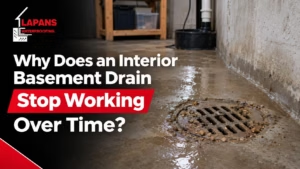
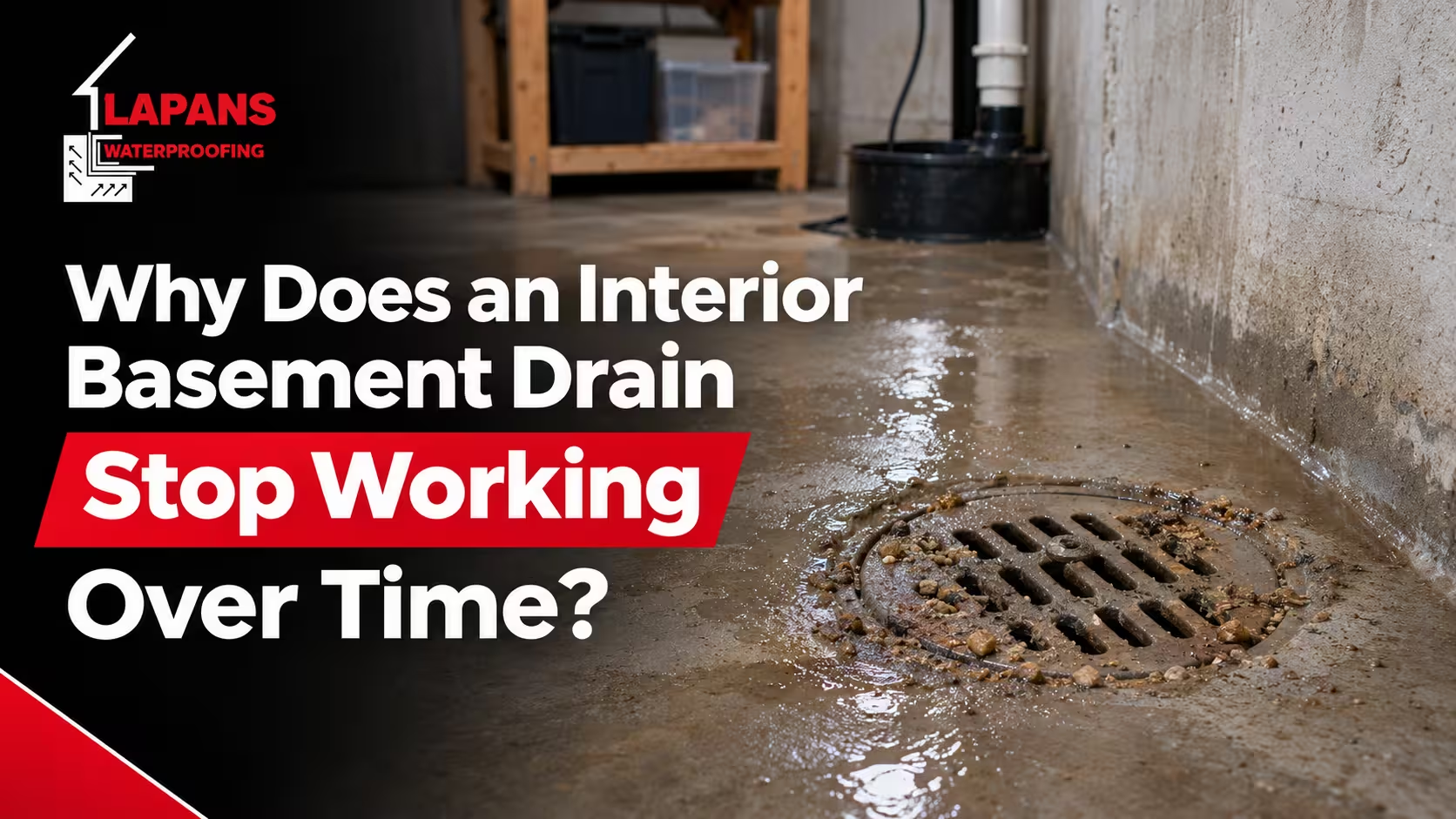
An interior basement drain may work for years before water begins pooling near the foundation or returning at floor joints. These changes can signal Interior basement drainage problems, even if the drain is still installed and the sump pump operates.
An interior perimeter drain collects groundwater beneath or along the basement floor and directs it toward a sump basin. Sediment, obstructions, damaged pipes, or higher groundwater levels can reduce its water collection efficiency.
When the Drain Stops Doing Its Job
Reduced performance may develop gradually or become noticeable after heavy rain, snowmelt, or a wet spell.
| What homeowners notice | Possible reason |
| Water pooling along one section of floor | Local drainage channel obstruction or a restricted perforated pipe |
| Sump basin receives less water than before | Water collection channel or sump basin connection may be blocked |
| Dampness returns at the same wall-floor joint | Reduced drainage flow or groundwater infiltration |
| Drain works during heavy rain but not consistently | Sediment deposits or changing groundwater conditions |
| Sump pump runs, but other areas remain wet | Water may not be reaching the sump basin efficiently |
What Can Restrict an Older Interior Drain?
Sediment accumulation: Fine soil particles can enter through the drainage gravel and perforated drain pipe. Over time, French drain sediment buildup may narrow the path water uses to reach the collection channel. A clogged interior basement drain can develop slowly, so the change may not be obvious until water starts backing up or bypassing the drain.
Pipe or channel damage: A section of pipe may become crushed, shift out of alignment, or collect deposits. Older drainage channels can also deteriorate, leaving gaps or uneven areas that interfere with flow. A basement drainage system failure may affect one section instead of the entire perimeter.
Sump connection or discharge restriction: Water may reach the end of the interior drain but fail to move freely into the sump basin. A blocked connection, pump issue, or clogged discharge line can cause water to collect in the channel or basin instead of being removed.
Groundwater changes: A system may face a higher water volume than it handled in earlier years. Extended rain, snowmelt, nearby grading changes, or groundwater conditions can increase pressure beneath the floor. The drain may not be fully blocked; it may simply be receiving more water than it can move under current conditions.
Follow the Water to Find the Restriction
Compare affected areas before assuming the whole perimeter drain has failed:
- Check whether water is appearing at one wall, several walls, or across the basement floor.
- Look for standing water, sediment, or visible debris near accessible collection points.
- Note whether the sump pump activates and whether water enters the basin.
- Compare the symptoms during dry weather and after heavy rain.
- Record any recent landscaping, foundation work, or changes to the discharge line.
Example: A wet corner after rain with little water reaching the sump may indicate a restriction between that area and the basin. If water reaches the basin but does not leave, check the pump or discharge line.
How Professionals Inspect Basement Perimeter Drain Problems
Professionals trace water movement and check accessible drain sections, the sump basin, and discharge route. A camera may help locate buildup or damage.
| Inspection point | What it helps reveal |
| Interior drainage channel | Sediment, debris, or standing water |
| Perforated drain pipe | Pipe blockage, buildup, or damage |
| Drainage gravel | Areas where soil or fine particles may restrict water movement |
| Sump basin connection | Water reaching the basin or getting held back |
| Pump and discharge line | Whether collected water is being removed correctly |
Inspectors also consider hydrostatic pressure and groundwater infiltration. Cleaning may not solve the problem if water continues entering or a damaged component remains.
Cleaning, Repair, or Replacement: Which Is Appropriate?
Repairs depend on the cause and the condition of the existing system.
| Condition found | Possible next step |
| Loose sediment or minor debris | Appropriate cleaning of accessible drain sections |
| Localized blockage | Clearing the obstructed channel or pipe section |
| Damaged or crushed pipe | Repair or replacement of the affected section |
| Failed connection near the sump | Restore the connection and confirm water flow |
| Widespread deterioration or recurring restrictions | Evaluate the system for more extensive repair or replacement |
Cleaning may restore flow when sediment is the cause, but it cannot fix a collapsed pipe or failed connection. Without correcting the underlying issue, basement water drainage issues may return.
Why Local Conditions Can Change Drainage Performance
Basements in Lowell, Massachusetts, may see seasonal moisture from rain, snowmelt, and saturated ground. During wet periods, a restricted or aging system can struggle with the added groundwater demand.
Determining whether the system is blocked, damaged, or facing increased water volume helps target the actual foundation drainage system problems.
Frequently Asked Questions
Can an interior French drain become clogged over time?
Yes. Fine soil and debris can collect in channels or perforated pipes, gradually restricting flow.
Why is water still in the basement if the drain is installed?
A blockage, damage, restricted sump connection, or increased groundwater can reduce collection. Installation does not guarantee long-term flow.
Does a sump pump problem mean the interior drain is clogged?
No. The interior drain, basin, pump, and discharge line are separate parts. Inspection can establish whether water is not reaching the basin or is not being discharged.
Can basement drainage pipes be cleaned instead of replaced?
Yes, if sediment is the cause and the pipe remains intact. Damaged or collapsed sections may need repair or replacement.
How often should an interior basement drainage system be inspected?
It depends on age, past blockages, and moisture history. Schedule one if water patterns change, sump flow drops, or dampness returns.
Final Thoughts: Restoring Reliable Basement Drainage
An interior drain may stop collecting water because of sediment, restricted channels, pipe damage, sump connection problems, or groundwater changes. Tracking where water appears helps separate a localized blockage from a wider failure.
Lapans Basement Waterproofing provides drainage maintenance and basement waterproofing services for restricted systems, damaged components, and recurring water concerns. Timely inspection and repair help restore flow and reduce ongoing moisture.