A basement can stay dry through winter, then develop damp walls or wet floors as temperatures rise. Homeowners may suspect a plumbing problem when moisture appears suddenly, but the source may be outside the house.
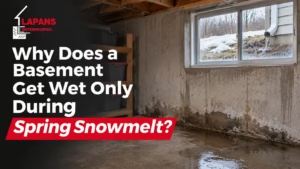
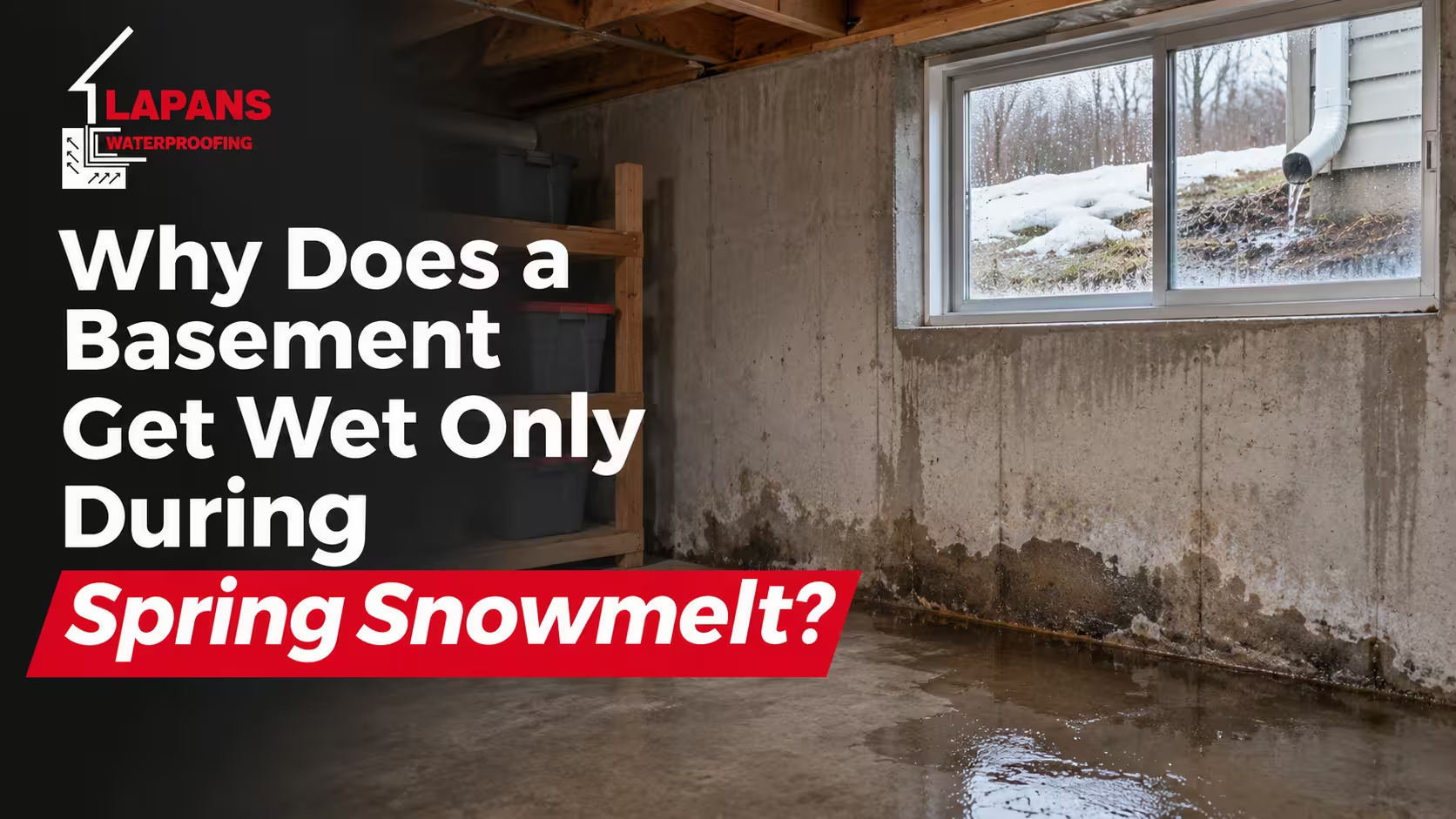
Basement water during spring snowmelt often develops when melting snow, thawing soil, and rain add moisture faster than the ground can drain it. Water may collect beside foundation walls or raise groundwater beneath the floor. Recognizing the pattern helps homeowners identify the entry point before choosing a repair.
Why Spring Creates Different Ground Conditions
Consider a Lowell home after a snowy winter. Sunny areas begin to thaw while shaded ground remains frozen. Meltwater collects beside the house, then spring rain arrives before the soil has dried. A damp line appears along one basement wall.
Local climate normals help explain this seasonal transition. Lowell’s 1991–2020 averages show about 4.32 inches of precipitation in March and 4.06 inches in April. Average high temperatures rise from 45.4°F in March to 59°F in April. These long-term averages are not a forecast, but they show how thawing and rainfall can overlap.
How Snowmelt Finds Its Way Into a Basement
Several processes can overlap, so the first visible sign may not identify the cause.
1. Snow melts close to the foundation. Snow piled beside a wall or basement window releases water as temperatures rise. If the ground slopes toward the house, runoff may collect near the foundation instead of moving away.
2. Frozen soil slows water movement. During a thaw, the surface may soften while deeper soil remains frozen. Water may travel across the surface or collect in low areas instead of draining downward.
3. Spring rain adds to the moisture load. Rain and melting snow can contribute water to the ground simultaneously. Already-wet soil has less capacity to absorb more water, increasing seepage through weak points.
4. Groundwater rises near the footing. Meltwater and rain can recharge groundwater. If the water table rises near the basement floor, hydrostatic pressure may push water through cracks, joints, or porous masonry.
A Practical Example: Why One Corner Gets Wet First
Imagine a house with a driveway that slopes toward the garage. A large snow pile sits beside the basement wall. After a few warm days, water collects near that corner, and the basement floor becomes wet along the same section of wall.
That pattern makes surface runoff worth investigating. Water through the floor or along several joints may point to groundwater pressure. Location is a clue, not proof.
Identify the Source Before Choosing a Repair
Use the pattern of moisture to distinguish seasonal seepage from other common problems.
| What you notice | Possible explanation |
| Water appears at the floor-wall joint after a thaw | Saturated soil or groundwater pressure |
| Dampness forms around one foundation crack | Localized foundation seepage |
| Water collects below a basement window | Window-well drainage or surface runoff |
| Droplets form on cold pipes | Condensation |
| Moisture continues during dry weather | Possible plumbing leak |
Quick condensation check: Dry the affected surface and watch what happens. Condensation usually forms as droplets on cold pipes or surfaces when humid indoor air meets a colder material. It does not usually leave a distinct water trail from a foundation crack.
A plumbing leak may continue regardless of weather. Check nearby supply lines, drainpipes, water heaters, and laundry equipment. If the source is unclear, arrange a plumbing inspection.
What to Inspect Outside After the Snow Starts Melting
After a thaw, walk around the property and look for where runoff travels.
- Gutters: Remove leaves and debris that can cause water to overflow near the roofline.
- Downspouts: Check that roof runoff is discharged away from the foundation, not beside it.
- Window wells: Look for standing water, accumulated snow, and blocked drainage.
- Yard slope: Notice low areas or settled ground that direct runoff toward the house.
- Snow piles: Avoid storing large piles directly against basement walls or windows.
- Sump-pump discharge: Check for a blocked or frozen outlet and signs that water is not being carried away.
| Helpful note: Take photos of the wet basement area and the matching exterior location. Record the date, recent thaw or rainfall, and whether the sump pump was running. This record can show whether seepage follows melting, rain, or both. |
Match the Repair to the Entry Point
The right repair depends on where water collects and how it reaches the basement.
| Finding | Repair direction |
| Roof runoff gathers beside the house | Correct gutter and downspout discharge |
| Yard sends meltwater toward the foundation | Review grading and surface drainage |
| Water enters through a foundation crack | Assess the crack and select a suitable repair |
| Seepage follows the floor-wall joint | Evaluate footing-level drainage |
| Groundwater rises beneath the floor | Assess sump-pump capacity and drainage design |
An interior drainage channel can collect water near the footing and direct it to a sump basin, where a pump removes it. A French drain or exterior correction may suit some properties; design depends on soil, grading, groundwater, and safe discharge.
Warning: Waterproofing paint may hide a damp mark, but it does not correct saturated soil, rising groundwater, or poor surface drainage. Do not cover the area before identifying the water source. If water reaches electrical equipment, avoid entering the affected area and arrange prompt professional help.
How Do You Know When to Contact a Basement Waterproofing Expert?
Even a damp area that disappears after the thaw deserves attention if it returns each spring. Repeated moisture can damage belongings, flooring, wall finishes, and framing, while persistent dampness encourages mold growth.
Lapans Basement Waterproofing can inspect likely entry points and determine whether the problem involves surface drainage, a foundation defect, or groundwater pressure.
Frequently Asked Questions
Why does my basement only leak in the spring?
Snowmelt and rain can saturate foundation soil and raise groundwater, allowing water through cracks and joints.
Can frozen ground cause basement flooding?
Yes. Frozen soil can restrict infiltration, causing runoff and water collection near the foundation.
Does a high water table cause spring basement leaks?
It can. When groundwater rises near the basement floor, hydrostatic pressure may push water through foundation walls, cracks, and floor joints.
Will spring basement moisture disappear on its own?
It may disappear as the ground dries, but the entry point can remain and leak again next spring.
How can I reduce water around my basement during snowmelt?
Clear gutters, direct downspouts away, keep snow away from basement windows, and correct grading. These steps manage runoff but may not solve groundwater seepage.
Final Thoughts: Understand the Spring Water Pattern
Spring basement water often reflects changing ground conditions as snowmelt, rain, and groundwater movement bring moisture toward the foundation.
Note where moisture appears and what happens outside before the leak begins. Lapans Basement Waterproofing can identify the source and assess whether surface drainage corrections, foundation repairs, or a water-management system are needed.